Glucagon-Like Peptide-1 Receptor Agonist and Gastrointestinal Adverse Effects: A Comprehensive Review
Abstract
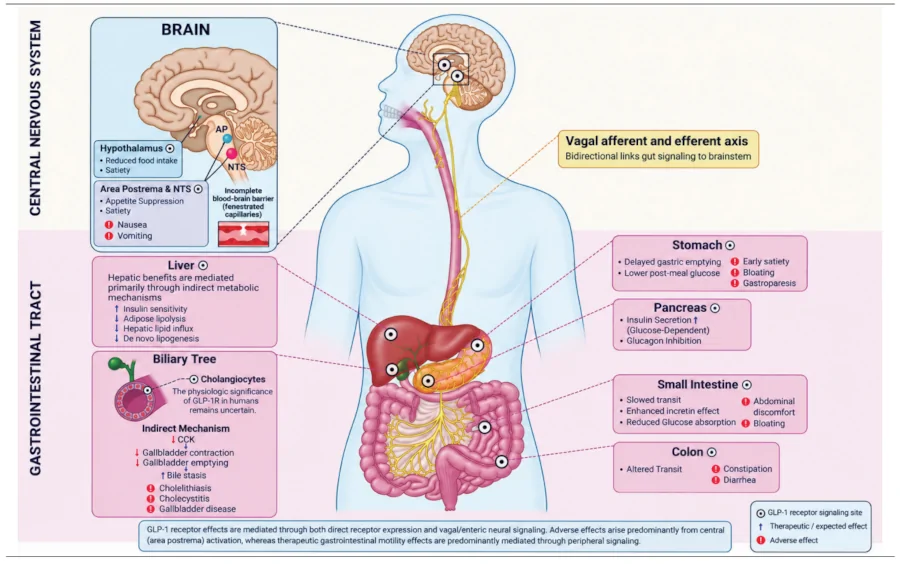
Glucagon-like peptide-1 receptor agonist (GLP-1 RA) has transformed the management of type 2 diabetes and obesity, with expanding indications now spanning cardiovascular, renal, and hepatic disease. As exposure broadens across increasingly diverse populations, gastrointestinal adverse events (GIAEs) have emerged as the dominant tolerability limitation and a leading drug-related reason for discontinuation of treatment. This review synthesizes the mechanisms, clinical spectrum, and management of GLP-1 RA-associated GIAEs. These effects arise from a dual peripheral-central mechanism: peripheral receptor activation slows gastric motility, whereas activation in the area postrema and nucleus tractus solitarius (NTS) drives nausea and emesis. This dual mechanism explains why symptom severity may correlate poorly with the measured degree of gastric-emptying delay and why centrally acting antiemetics are most widely used to relieve nausea and emesis. Across clinical trials, nausea, emesis, diarrhea, constipation, and abdominal pain follow a consistent dose- and indication-dependent gradient, with the highest incidence observed with higher-dose obesity and MASH regimens and multi-agonist molecules. Most symptoms are mild, emerge during dose escalation, and attenuate over time, though a clinically important minority of patients experience persistent symptoms, and a subset develops gastroparesis. Management should rest on anticipation and screening of gastrointestinal symptoms at baseline, pretreatment counseling, gradual up-titration, and dietary measures before pharmacotherapy. Future priorities include standardized motility measurements and endpoints, predictive biomarkers, and evidence-based management algorithms.
- Centrally acting antiemetics
- Dietary measures
- GLP1R
- GLP-1 and incretin signalling
- Abdominal pain
- Constipation
The paper
Mayo Clinic
Acta Gastroenterologica Latinoamericana, 30 Sep 2026, Open access