Immune system ontogeny-a subtle evolution to perfection
Abstract
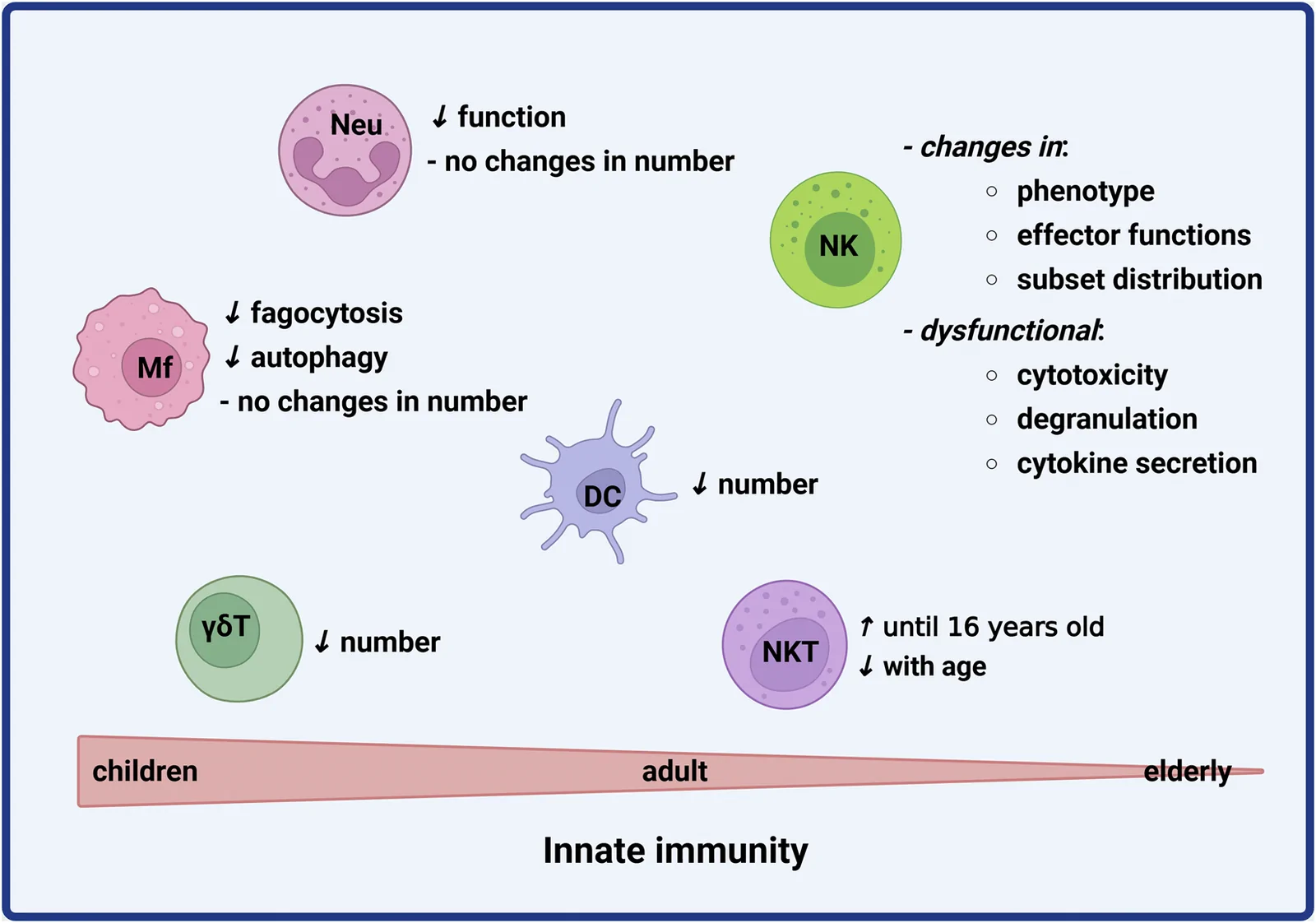
It is well known that both innate and adaptive immune systems in newborns are immature, making them highly susceptible to infection. Additionally, pre-term newborns with hindered immune systems are more prone to increased mortality and morbidity. Newborns are capable of mounting adaptive immune responses, but their capability to develop long-lasting immunity is limited. Thus, the fetus and newborn's immune system is considered "immature" due to functional disorders in immune response or suppression by regulatory cells. Aging is another factor that leads to impaired immune responses due to a state of chronic low-grade inflammation (inflammaging), which compromises defense against pathogens and malignancies and favors the onset of age-related disorders. However, in this complicated scenario, centenarians emerged as a paradigm shift due to their particular immune system that prevents inflammaging and enables them to achieve longevity. Therefore, the present review aims to provide an updated overview of immune response development through neonatal, infant, and adult life in order to highlight stage-specific mechanisms and uniquely regulated immune responses. Taken together, this information provides mechanistic insights that can be harnessed to develop age-adapted interventional strategies and prevent the onset of age-associated disorders in older adults.
The paper
Institutul National Victor Babes; University of Bucharest
Frontiers in Aging, 29 Sep 2026, Open access