Racial, sex, and geographic disparities in mortality involving stroke and chronic kidney disease: a CDC WONDER database analysis, 1999-2020
Abstract
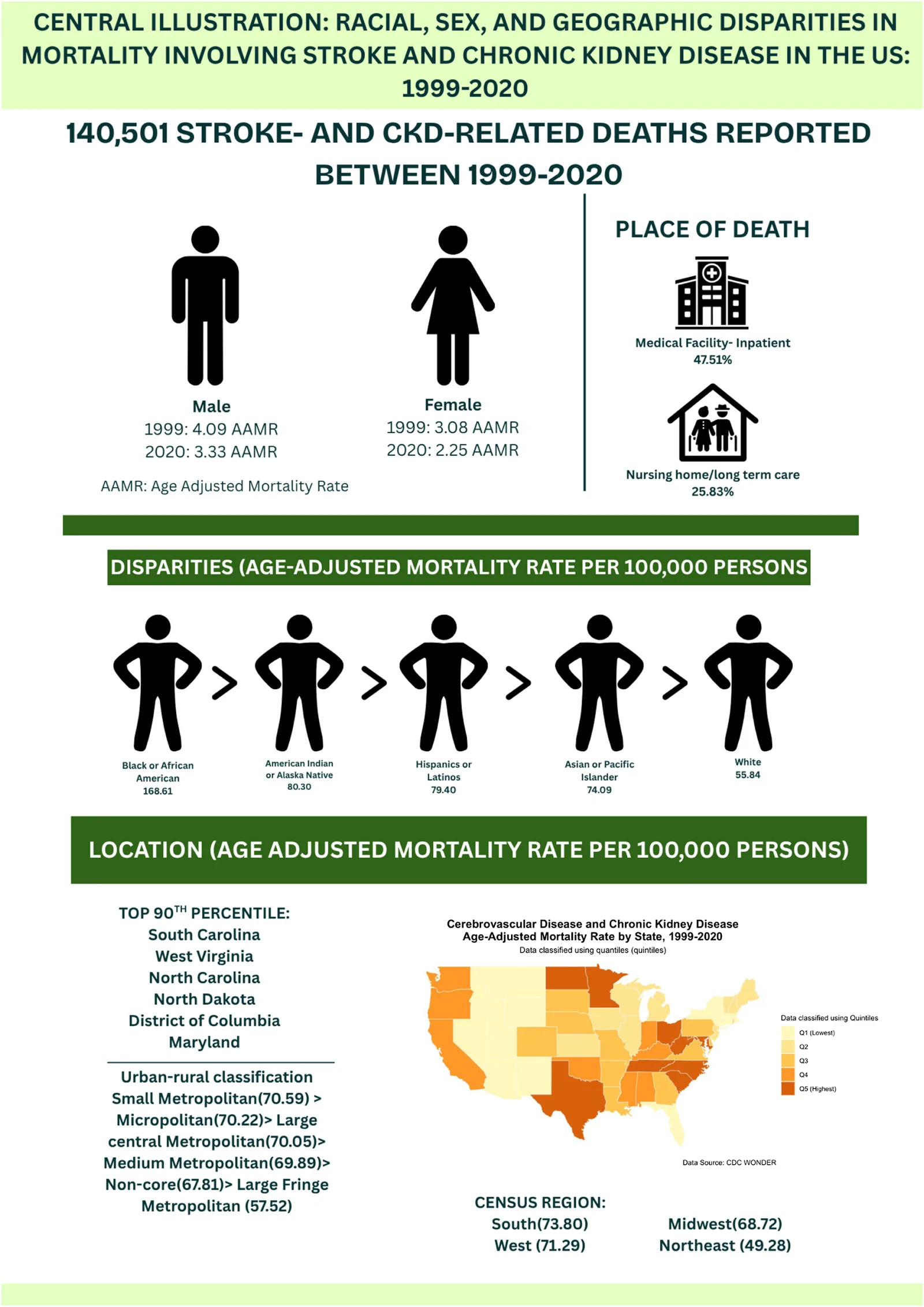
INTRODUCTION: Chronic kidney disease (CKD) increases the risk of stroke, and disparities exist in related mortality. Few studies have examined the mortality patterns involving both conditions together. This study evaluates national trends and disparities in stroke- and CKD-related mortality in the United States from 1999 to 2020. METHODS: We analyzed death certificate data from the Centers for Disease Control and Prevention Wide-Ranging Online Data for Epidemiologic Research (CDC WONDER) database using ICD-10 codes I60-I69 for stroke and N18 for CKD. Age-adjusted mortality rates (AAMRs) per 100 000 population were calculated and stratified by sex, race/ethnicity, age group, census region, and urban-rural classification. Temporal trends were analyzed using Joinpoint regression to estimate annual percent changes with 95% confidence intervals. RESULTS: Between 1999 and 2020, a total of 140 501 stroke- and CKD-related deaths were recorded. The overall AAMR declined from 3.42 in 1999 to 2.71 in 2020. Females had the most deaths, but males had slightly higher AAMRs. The Black population exhibited the highest AAMR. Mortality increased with age and was highest among those aged 85 years or older. Geographic disparities were evident, with the highest rates in the southern states (the Stroke Belt). CONCLUSION: Mortality from stroke and CKD has declined over two decades, but disparities still persist across race and ethnicity, geography, and sex. Targeted prevention and healthcare access are essential to reduce these disparities.
The paper
Tribhuvan University Teaching Hospital; Patan Academy of Health Sciences
Annals of Medicine and Surgery, 10 Sep 2026