Spatial patterns of Wnt/β-catenin signaling in the adult and aging Nothobranchius furzeri brain
Abstract
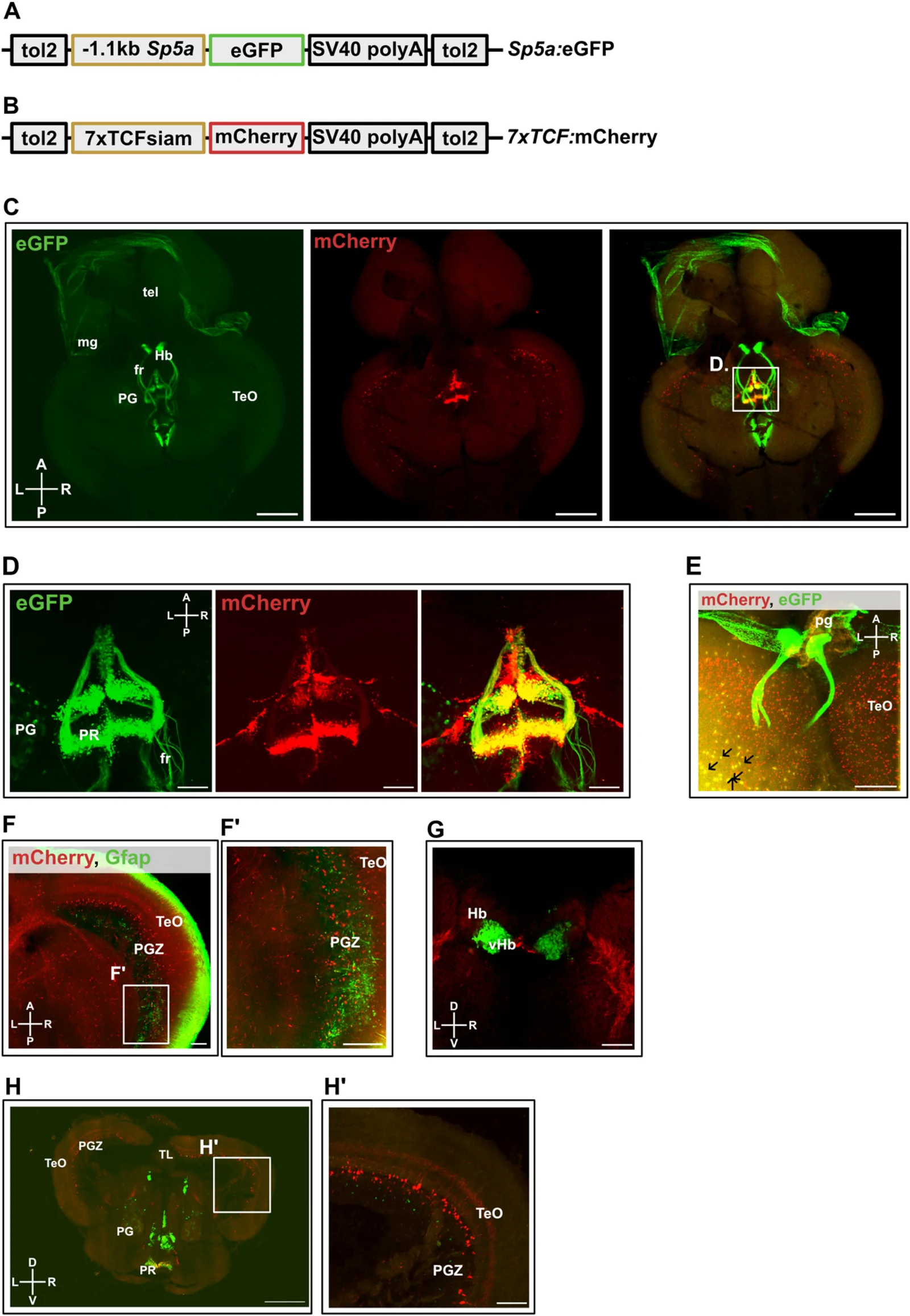
Age-related neurodegenerative diseases are a growing health concern, yet the molecular mechanisms driving neural decline remain poorly understood. The canonical Wnt/β-catenin signaling pathway regulates key aspects of neural development and adult brain homeostasis, and its dysregulation is implicated in aging. However, its spatial and temporal regulation in the aging brain is not fully characterized. The African turquoise killifish (Nothobranchius furzeri), with its short lifespan and conserved aging features, offers a valuable model for studying brain aging. Using N. furzeri as a model, we generated two novel Wnt signaling transgenic lines to track Wnt signaling: Tg(Sp5a:eGFP) and Tg(7xTCF:mCherry). We characterized their expression pattern, as well as the endogenous expression of several Wnt-related targets, throughout different regions in the adult brain. We found that there was overlapping expression in both reporters throughout much of the brain, but divergent expression particularly in the habenula and fasciculus retroflexus. Additionally, we examined how this pattern of Wnt activity changed throughout aging in both whole brains and isolated brain regions. We found that there were no significant changes across the whole-brain level; however, there were visible, sex-specific structural changes in the fasciculus retroflexus and alterations in Wnt target transcripts, axin2 and sp5, in the mesencephalon. Taken together, these results demonstrate region- and sex-specific regulation of Wnt signaling in the aging N. furzeri brain.
- Wnt/β-catenin signalling
- AXIN2 transcript expression
- SP5 transcript expression
- Wnt signaling reporter expression
- AXIN2
- Killifish
The paper
University of Houston
Aging Brain, 30 Sep 2026, Open access