Long-term GLP-1 receptor agonist therapy in obesity: expert panel recommendations for good clinical practice
Abstract
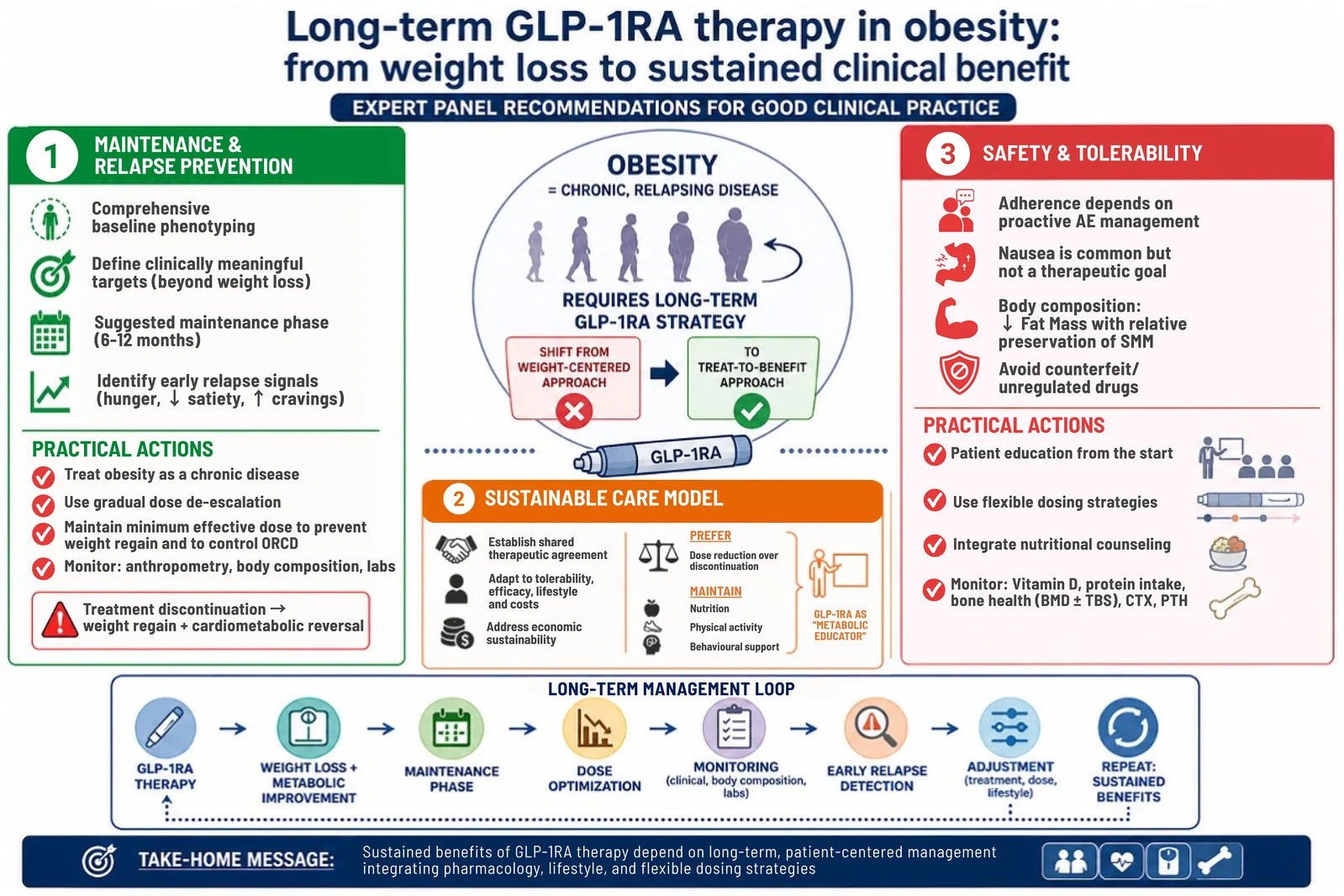
Glucagon-like peptide-1 receptor agonists (GLP-1RAs) have emerged as highly effective therapies for obesity, facilitating weight loss and improving cardiometabolic risk factors. However, several challenges persist regarding optimal long-term management in real-world clinical practice. A board of clinicians with expertise in obesity and metabolic diseases discussed practical recommendations for the sustainable long-term management of GLP-1RA therapy. Key themes included the maintenance of clinical benefits, prevention of weight regain, treatment sustainability, and long-term safety and tolerability. The panel highlighted the necessity of approaching obesity as a chronic, relapsing disease requiring long-term therapeutic strategies. Comprehensive baseline phenotyping and a treat-to-benefit approach were identified as essential for defining clinically meaningful treatment targets beyond weight loss alone. Maintenance therapy after achievement of initial outcomes, flexible dose management, and early recognition of relapse signals were considered essential for preserving benefits and preventing weight regain. Pharmacotherapy should be integrated within a multimodal care model that includes nutritional counseling, physical activity, and behavioral support, while addressing real-world barriers such as economic sustainability. Proactive management of adverse events and patient education were recognized as critical for ensuring long-term adherence. Sustainable use of GLP-1RA therapy requires integrated, patient-centered management strategies that combine pharmacological treatment with lifestyle interventions and pragmatic dose adjustment. Future collaborative real-world data initiatives may further refine these practical recommendations and help optimize long-term obesity care.
The paper
Department of Internal Medicine; University of Catania
Frontiers in Endocrinology, 28 Sep 2026