Polypharmacy and Activities of Daily Living in Older Patients Undergoing Cerebrovascular Rehabilitation: An Observational Study Using Japanese Real-World Data
Abstract
BACKGROUND: Polypharmacy is highly prevalent among older patients undergoing cerebrovascular rehabilitation and may adversely affect functional recovery. OBJECTIVE: This study examined the association between polypharmacy and the extent and pace of functional recovery in older patients undergoing convalescent rehabilitation after cerebrovascular events. METHODS: This retrospective observational study used a Japanese real-world claims database (Japan Medical Data Center claims database, accessed on 25 August 2025), and included patients aged ≥ 65 years admitted to convalescent rehabilitation wards for cerebrovascular diseases. Polypharmacy was defined as the use of six or more medications. Patients were categorized into four groups according to polypharmacy status at admission and discharge: persistent non-polypharmacy, polypharmacy resolved, incident polypharmacy, and persistent polypharmacy. Functional outcomes were assessed using the Functional Independence Measure (FIM). The primary outcome measure was FIM gain, and the secondary outcome measure was FIM efficiency. Multivariable linear regression analyses adjusted for patient characteristics, comorbidities, and hospital bed capacity were performed. RESULTS: Among 44,980 patients, 48.9% had persistent polypharmacy and 14.8% developed incident polypharmacy during hospitalization. Polypharmacy status was not significantly associated with FIM gain. In contrast, FIM efficiency was significantly lower in the polypharmacy-resolved, incident polypharmacy, and persistent polypharmacy groups than in the persistent non-polypharmacy group. The strongest negative association with FIM efficiency was observed in the incident polypharmacy group (B = -0.114, p < 0.001), followed by the persistent polypharmacy group (B = -0.069, p < 0.001). CONCLUSIONS: Polypharmacy status was not significantly associated with FIM gain, the primary outcome. Although the three polypharmacy groups had lower FIM efficiency and longer hospital stays than the persistent non-polypharmacy group, the lower FIM efficiency may partly reflect differences in length of hospital stay. These observational findings do not establish a causal relationship between changes in medication burden and functional recovery.
From the paper
- Participants
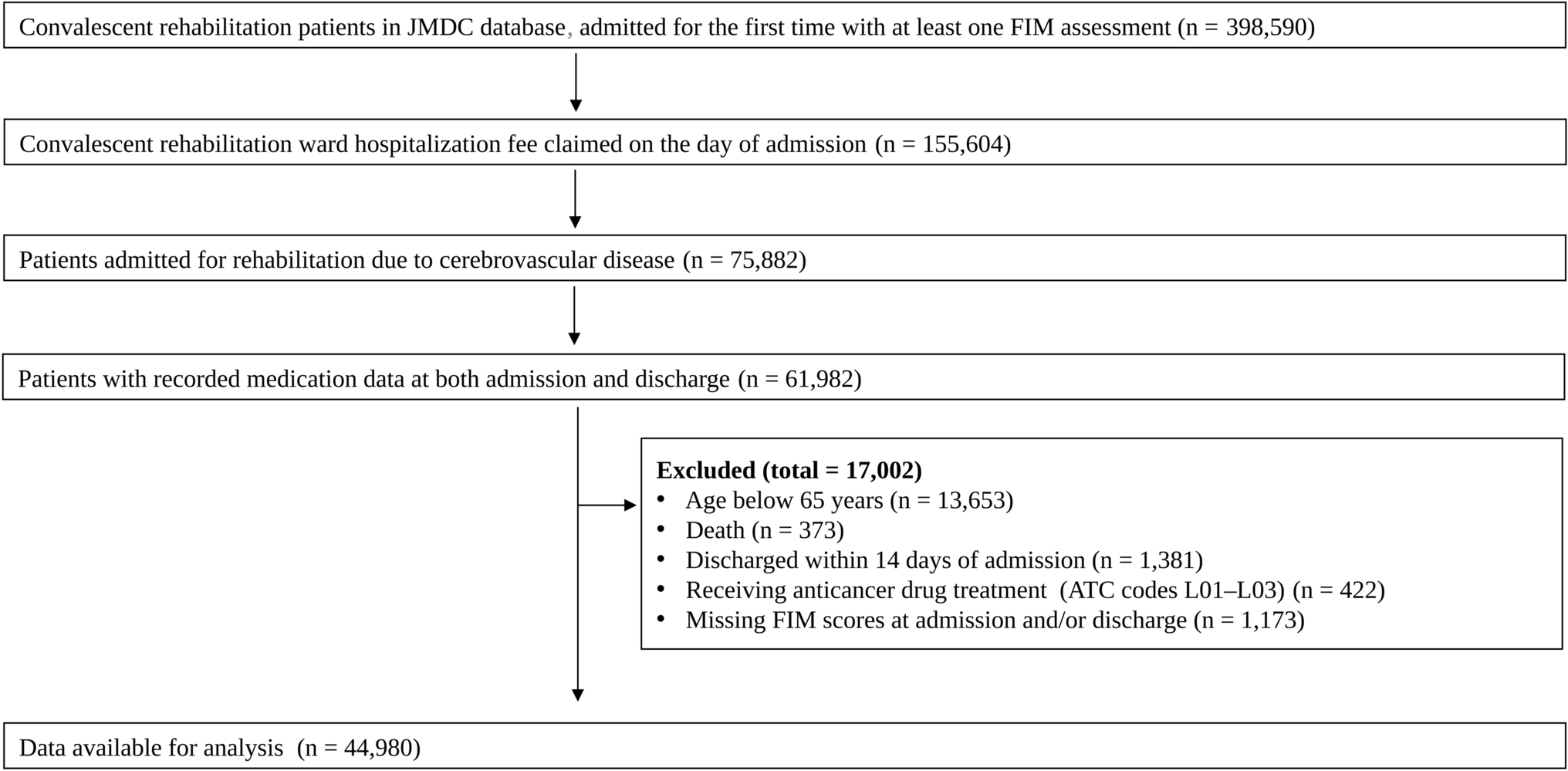
A total of 44,980 patients met the inclusion criteria.
- Limitation
First, detailed information on rehabilitation intensity and pharmacist-led intervention to optimize medication regimens during hospitalization was unavailable.
Quoted word for word from the full text on link.springer.com.
The paper
Musashino University
Drugs - Real World Outcomes, 12 Oct 2026