Social Network Theory in Behavior Change Interventions with Black Women to Reduce Inequities in Cardiovascular Health: A Scoping Review of Application and Measurement
Abstract
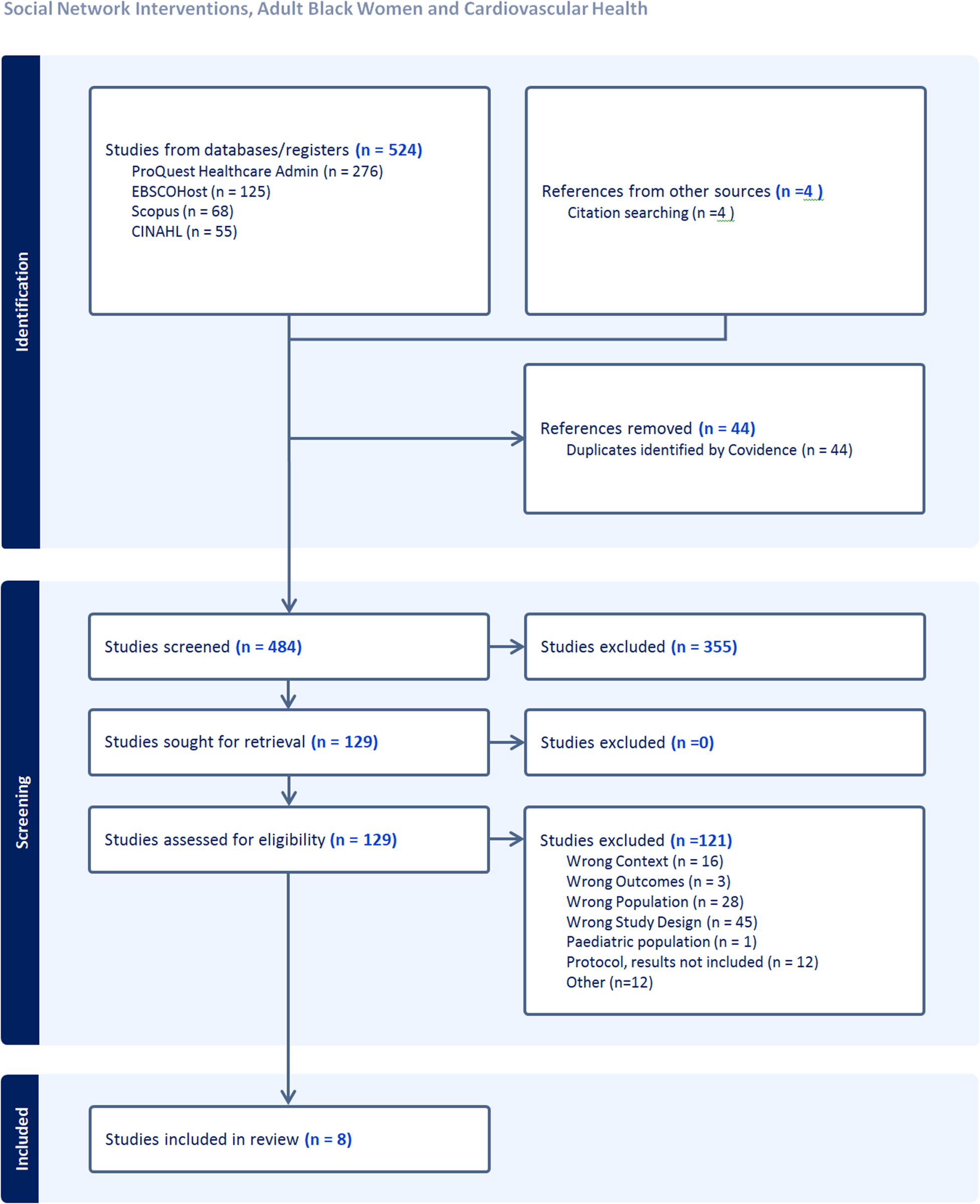
BACKGROUND: Black women in the United States face disproportionate rates of hypertension and cardiovascular disease, driven by the compounding effects of structural inequity and socially embedded stress. Social networks are a critical and underutilized lever for health promotion in Black communities. Behavioral change interventions to improve cardiovascular health are frequently delivered in group formats. Yet, it is unclear to what extent these interventions deliberately apply social network theory or measure network-level mechanisms. METHODS: We conducted a scoping review using a systematic search of 37 databases, supported by a health sciences librarian, plus a snowball search of related review articles. Studies were eligible if they targeted at least one cardiovascular health behavior, blood pressure, or a stress-reduction outcome, included a social network or social relationship measure, and enrolled samples in which at least 51% of participants identified as Black or African American. RESULTS: Of 524 records, eight articles representing six unique interventions met the inclusion criteria. Participants were predominantly middle-aged women from the Southern and Midwestern U.S. Social cognitive theory was the predominant theoretical framework. Network processes, including network size, cohesion, and relationship strength, were measured in half the studies and were positively associated with physical activity and weight loss outcomes. CONCLUSIONS: The existing literature consistently underutilizes social network theory and rarely measures how network dynamics contribute to, or constrain, intervention outcomes. Future research should integrate network measurement as both a process and outcome variable and attend to the dual nature of social ties as sources of both support and strain.
The paper
University of South Carolina
Journal of Racial and Ethnic Health Disparities, 11 Oct 2026