Combined test scores predicted later thinking problems
An overall thinking score matched an established measure in classifying progression to mild cognitive impairment, with a performance score of 0.70.
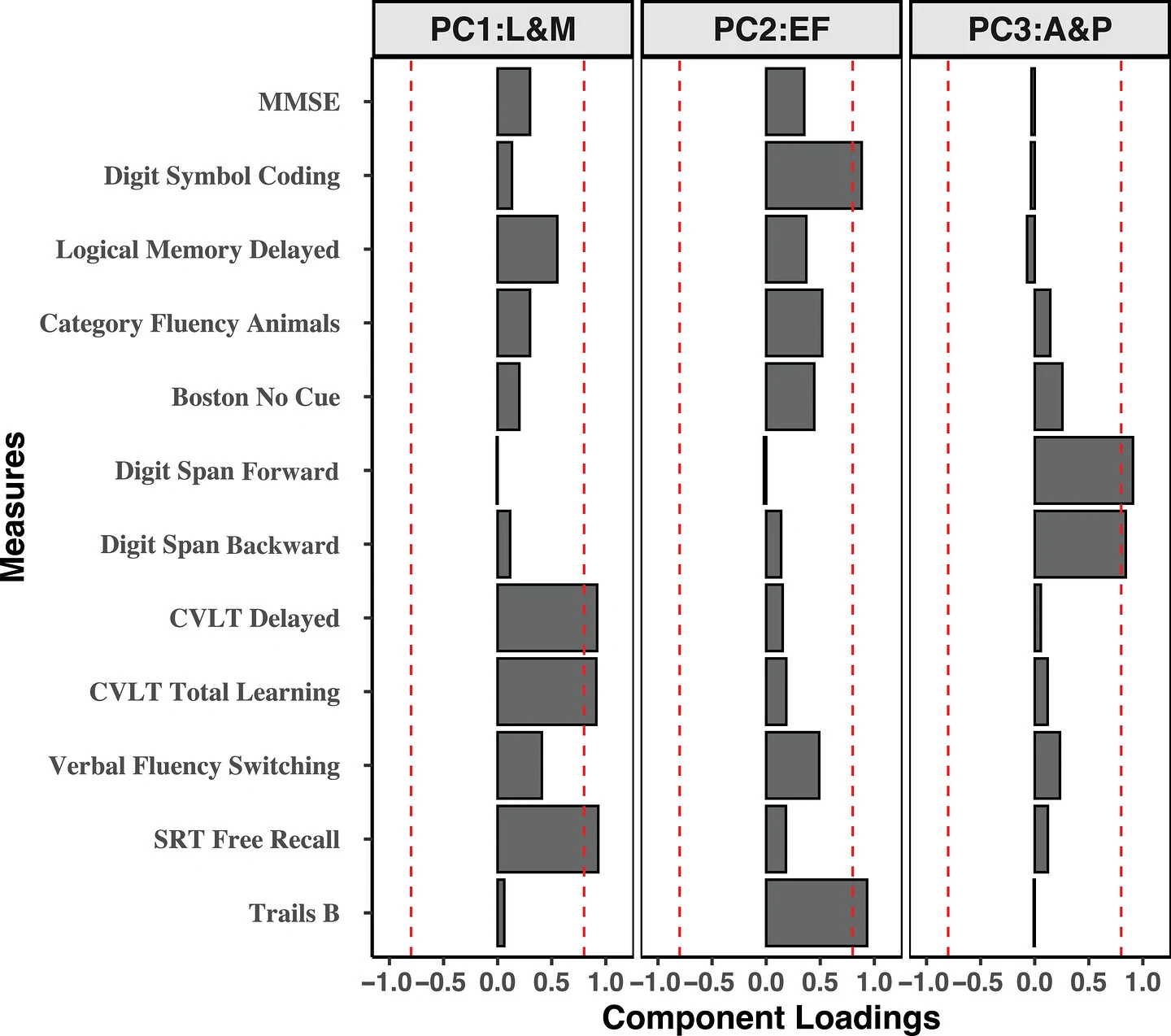
In an observational study, researchers analysed cognitive test results from 1,964 people without cognitive impairment at the start. Of these, 1,110 had results collected over time. They developed combined scores for overall thinking ability and different thinking skills, then compared them with an established combined score used in Alzheimer’s research.
The new scores distinguished patterns of decline related to amyloid beta, a protein fragment linked to Alzheimer’s disease. The overall thinking score tracked change over time comparably to the established measure. It also matched its classification performance. Its area under the receiver operating characteristic curve, a measure of how well scores distinguish outcomes, was 0.70. All the combined scores predicted progression to mild cognitive impairment, meaning thinking problems that are less severe than dementia.
Why it matters
For research on Alzheimer’s disease, an age-related condition, the findings support using these scores as outcome measures before cognitive impairment develops.
Caveats
These observational results show predictive associations rather than causes of decline. The analysis of change over time included 1,110 participants, not the full group of 1,964.
From the paper
- Participants
The baseline visit data consisted of 1964 CU individuals.
- Limitation
First, composites were derived and validated on the same baseline sample without a hold-out sample or cross-validation, which may limit generalizability.
Quoted word for word from the full text on alz-journals.onlinelibrary.wiley.com.