Factors Influencing Adherence to Mammography Screening Guidelines Among Women From Diverse Cultural Backgrounds: A Systematic Review
Abstract
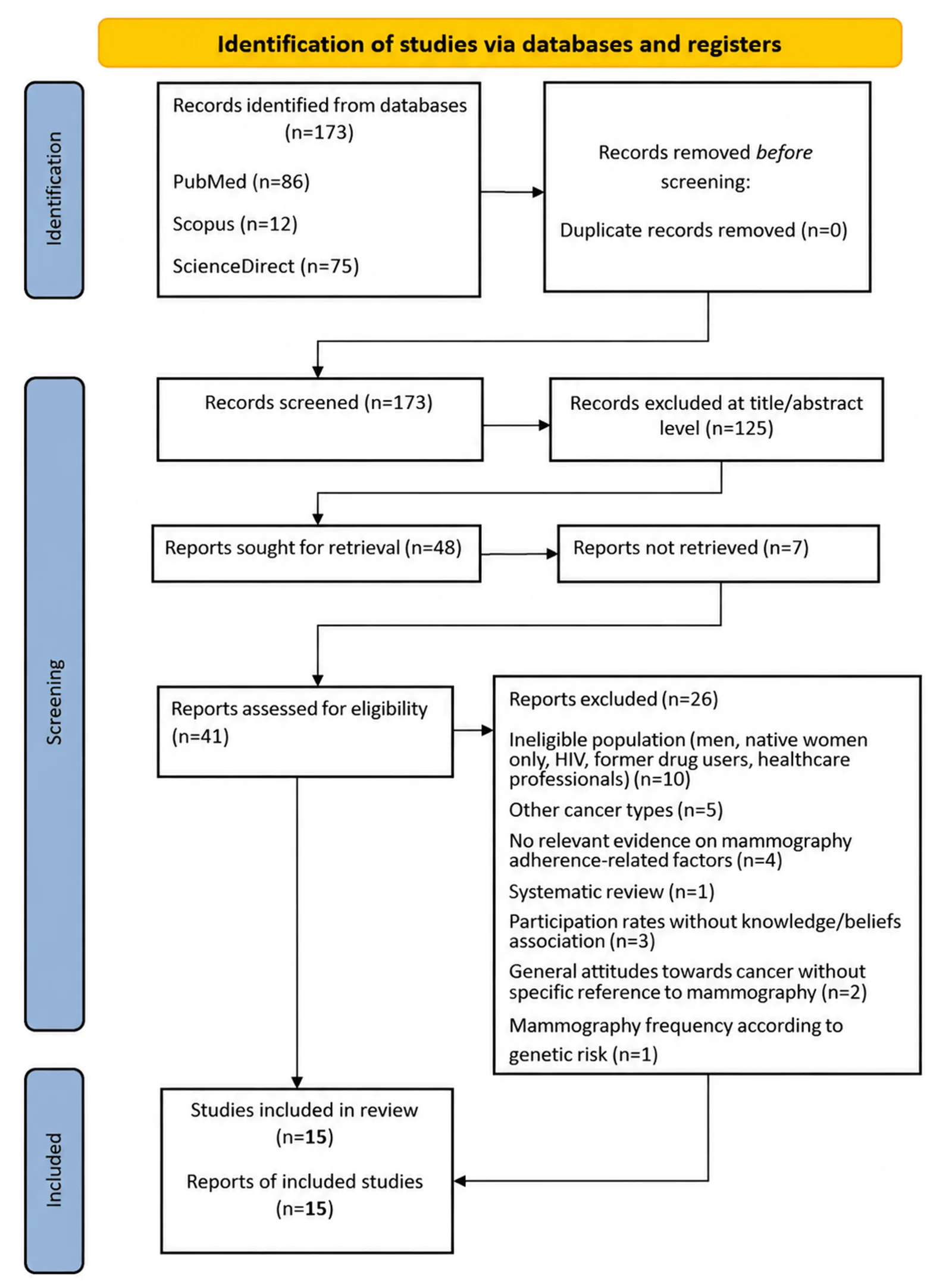
Breast cancer continues to pose a public health challenge as it remains one of the most common malignancies affecting women globally. Although mammography is essential for early detection, adherence to screening guidelines remains unsatisfactory, especially among women from diverse cultural backgrounds. This systematic review aimed to investigate adherence to mammography screening guidelines among women from different cultural backgrounds, evaluate their knowledge, perceptions, and beliefs regarding breast cancer, and additionally identify barriers and facilitators of mammography adherence. A systematic review was conducted in the scientific databases PubMed, Scopus, and ScienceDirect (April-May 2025) for studies published between 2015 and 2025. Fifteen studies (eight quantitative, six qualitative, and one psychometric study) met the predefined inclusion and exclusion criteria. Study selection followed the Preferred Reporting Items for Systematic Reviews and Meta-Analyses (PRISMA) 2020 guidelines, and the methodological quality of the included studies was assessed using Critical Appraisal Skills Programme (CASP) checklists. Higher adherence to mammography screening was associated with higher educational level, health insurance coverage, older age, and advice by a healthcare professional. Major barriers included screening costs, lack of insurance, communication difficulties, cultural and fatalistic beliefs, and feelings of fear and embarrassment. Adherence to mammography screening among women from diverse cultural backgrounds is associated with multiple and complex individual, socioeconomic, and cultural factors. The findings highlight the need for targeted multidimensional and culturally appropriate interventions to reduce inequalities and increase participation rates in breast cancer screening.
From the paper
- Participants
Sample sizes ranged from 11 to 65 participants in the qualitative studies and from 98 to 799 participants in the quantitative observational studies, while the psychometric validation study included 251 participants.
- Limitation
Most of the included studies were cross-sectional and relied on self-reported data.
Quoted word for word from the full text on cureus.com.