Flavouring agent protected memory in an Alzheimer’s mouse model
In mouse experiments, oral glyceryl tribenzoate improved the capacity of a memory-related brain region to change and protected learning.
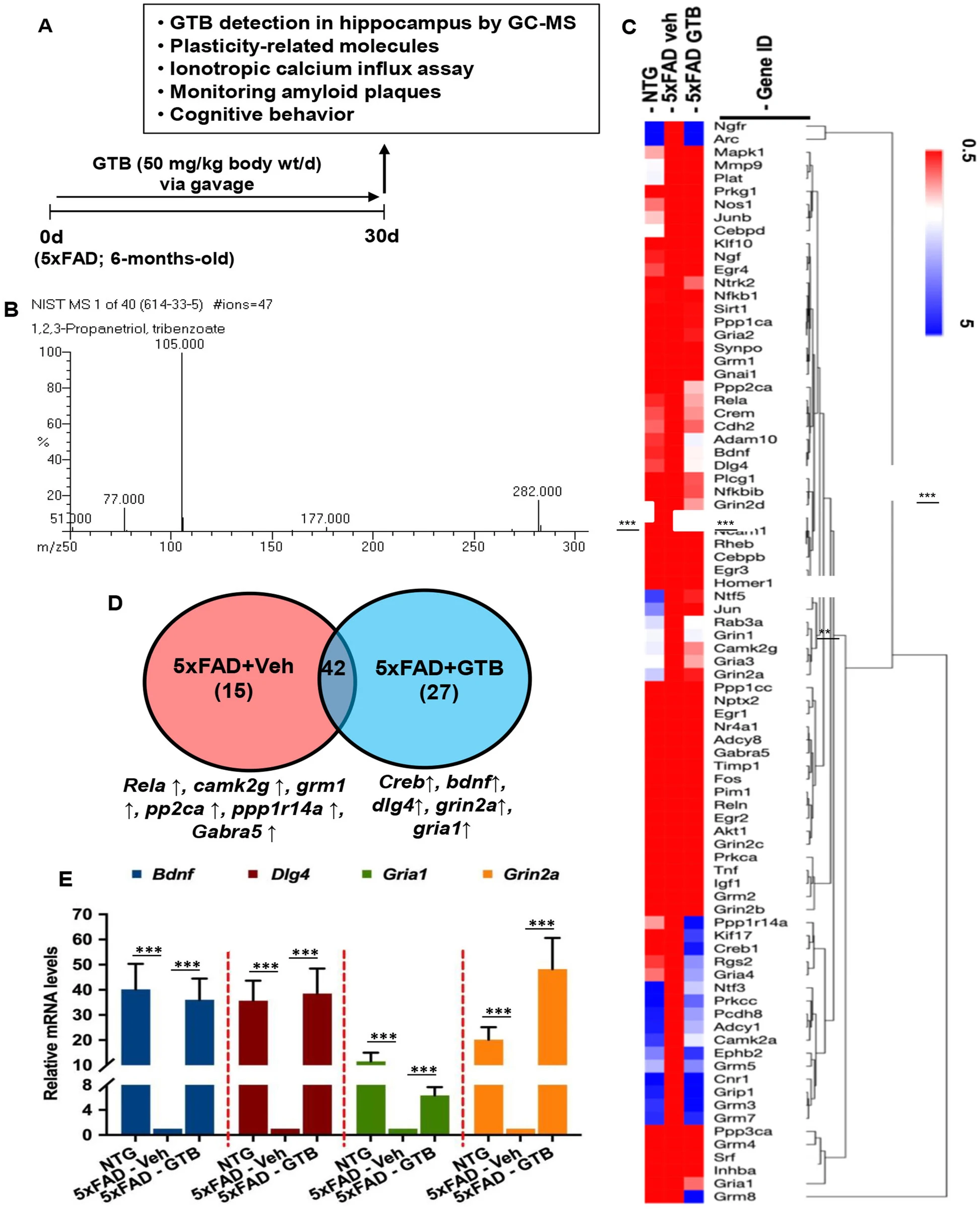
In experiments with 5xFAD mice, a model of Alzheimer’s disease, researchers gave glyceryl tribenzoate by mouth. The flavouring agent improved plasticity—the ability of nerve cells to change—in the hippocampus, a brain region involved in memory. It also protected memory and learning. In aged 5xFAD mice, it reduced brain plaques, deposits of protein, and increased lifespan.
The researchers identified a receptor inside cells that helps control gene activity as a receptor for the compound. The compound improved hippocampal plasticity and thinking abilities in 5xFAD mice, but not in mice of this model lacking the receptor’s gene. This indicated an important role for the receptor in the compound’s protective effects.
Why it matters
Alzheimer’s disease is an age-related brain disorder. The authors suggested that oral glyceryl tribenzoate may have therapeutic value for hippocampal function in people with the disease.
Caveats
These were animal experiments, not a study in people with Alzheimer’s disease. The abstract did not report sample sizes, doses or treatment duration.
The paper
Rush University Medical Center
Neurochemistry International, 10 Oct 2026