Dietary Patterns and Their Association with Postpartum Glucose Metabolism Disorders after Gestational Diabetes Mellitus
Abstract
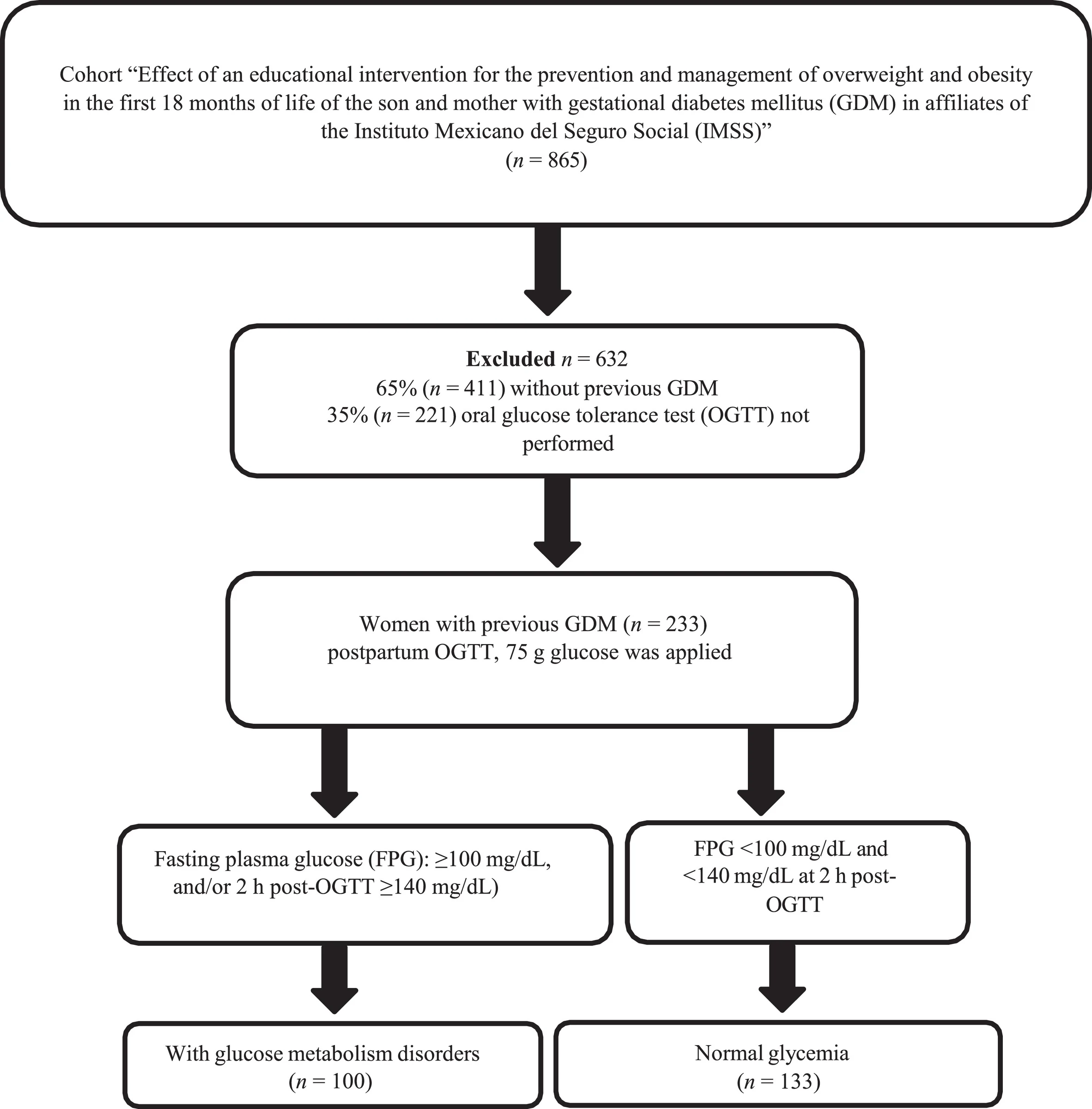
AIM: To identify dietary patterns and evaluate their association with postpartum glucose metabolism disorders after gestational diabetes mellitus (GDM). METHODS: A nested case-control study was conducted in women aged 18-40 with GDM (n = 233) who participated in an educational intervention program. Clinical, biochemical, and anthropometrical parameters were evaluated at the end of pregnancy and three months postpartum. An oral glucose tolerance test (OGTT) with 75 g glucose was performed three months after giving birth. Women were classified as follows: i) Those with glucose metabolism disorders (n = 100), fasting plasma glucose (FPG) ≥100 mg/dL and/or ≥140 mg/dL at 2 h; ii) Those with normal glycemia (n = 133), FPG <100 mg/dL and <140 mg/dL at 2 h. For this study, we defined postpartum glucose metabolism disorders as having impaired fasting glucose and/or impaired glucose tolerance, or type 2 diabetes. Dietary patterns were analyzed using factor analysis and multivariate logistic regression to identify associations with postpartum glucose metabolism disorders, after adjusting for confounders. RESULTS: Three dietary patterns were identified. The highest compared to the lowest adherence to a healthy postpartum dietary pattern was associated with lower odds (OR 0.445; 95% CI 0.209-0.951; p = 0.037) of postpartum glucose metabolism disorders; no association was found for the Western dietary pattern or the Sweets and Dairy-Rich in Fat and Sugar dietary pattern. CONCLUSION: In women with previous GDM, the highest compared to the lowest adherence to the Healthy postpartum dietary pattern was associated with lower odds of postpartum glucose metabolism disorders.
- Healthy dietary pattern
- Sweets and dairy-rich in fat and sugar dietary pattern
- Glycolysis
- Glucose metabolism disorder
- Glucose
- Humans
The paper
Hospital de Especialidades
Archives of Medical Research, 9 Oct 2026