The effectiveness of non-pharmacological interventions using creative art therapy for cognitive function and psychological benefits of mild cognitive impairment: a meta-analysis of randomized controlled trials
Abstract
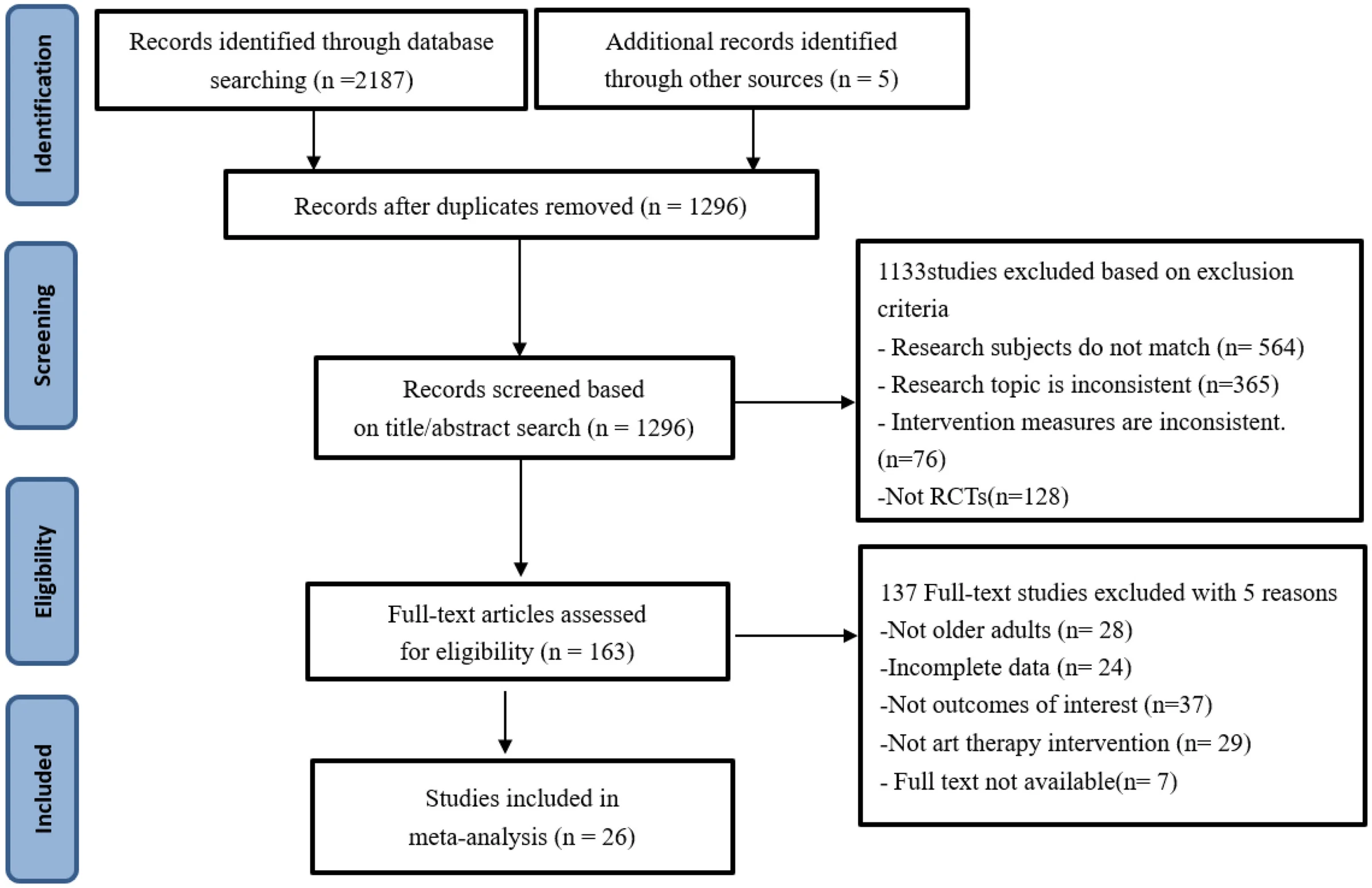
OBJECTIVE: This systematic review and meta-analysis investigated the potential of creative art therapy as a non-pharmacological intervention for older adults with mild cognitive impairment (MCI). DESIGN: Systematic review. METHODS: We searched eight databases for randomized controlled trials on the effects of art therapy in older adults with MCI. The search time limit was from the date of database establishment to August 10, 2025. Two researchers independently performed literature screening, quality evaluation, and data extraction, and a meta-analysis was conducted using RevMan 5.4 software. RESULTS: A meta-analysis of 26 trials (1754 participants) showed improvements for cognitive function (MMSE scores: MD = 1.32, 95%CI 1.02 to 1.61, p < 0.00001; MoCA scores: MD = 3.22, 95%CI 2.46 to 3.98, p < 0.00001), executive function (TMT-A scores: MD = -0.90, 95%CI -1.67 to -0.12, p = 0.02; TMT-B scores: MD = -9.30, 95%CI -17.42 to -1.18, p < 0.00001), memory function (immediate recall scores: MD = 2.36, 95%CI 1.24 to 3.49, p < 0.00001; delay recall scores: MD = 0.80, 95%CI 0.71 to 0.90, p < 0.00001), attention (DST scores: MD = 0.68, 95%CI 0.23 to 1.14, p = 0.003; SCWT scores: MD = 3.99, 95%CI 1.40 to 6.58, p = 0.002), language function (VFT scores: MD = 1.60, 95%CI 0.64 to 2.55, p = 0.001), depression (MD = -0.86, 95%CI -1.26 to -0.47, p < 0.00001), and anxiety (MD = -1.40, 95%CI -2.16 to -0.63, p = 0.0003). Different art therapy forms differed in the functions they better improved. CONCLUSION: Creative art therapy presents a valuable and targeted approach for enhancing specific cognitive and psychological aspects among older adults with MCI.
The paper
Shengjing Hospital of China Medical University
Geriatric Nursing, 10 Oct 2026