Plasma trimethylamine N-oxide and arteriosclerotic cardiovascular disease: a systematic review and meta-analysis of case-control studies
Dose-response, preregistered CRD420261357905
Abstract
INTRODUCTION: Trimethylamine N-oxide (TMAO), a gut microbiota-derived metabolite, has been implicated in atherosclerosis. However, the association between plasma TMAO levels and atherosclerotic cardiovascular disease (ASCVD) risk remains inconsistent across studies. METHODS: We searched PubMed, Embase, Cochrane, and Web of Science for case-control (including nested) studies reporting odds ratios (ORs) with 95% confidence intervals (CIs) for TMAO and ASCVD. Estimates were pooled under fixed- or random-effects assumptions according to the observed heterogeneity, supplemented by subgroup, sensitivity, and publication bias assessments. RESULTS: Nine studies were included in this meta-analysis. Elevated TMAO levels (highest vs. lowest quantile) were significantly associated with ASCVD risk (OR = 1.39; 95% CI: 1.21-1.61; I ² = 28.8%). The continuous analysis showed a significant pooled standardized mean difference (SMD) of 0.43 (95% CI: 0.14-0.71), but with extreme heterogeneity (I ² = 93.4%). The association was stronger in the primary prevention (OR = 1.51; 95% CI: 1.28-1.78) than in the secondary prevention cohorts (OR = 1.10; 95% CI: 0.83-1.46; P for interaction = 0.057). GRADE (Grading of Recommendations Assessment, Development, and Evaluation) certainty was low for the categorical analysis and very low for the continuous analysis. DISCUSSION: This meta-analysis showed that high versus low plasma TMAO levels were significantly associated with increased ASCVD risk (OR = 1.39; 95% CI: 1.21-1.61), particularly in primary prevention populations (OR = 1.51; 95% CI: 1.28-1.78), and supported TMAO as a potential risk indicator for primary prevention. However, continuous analysis yielded highly unstable estimates with extreme heterogeneity (I ² = 93.4%), precluding linear dose-response conclusions, and the certainty of evidence remained low to very low. Current evidence does not yet endorse routine clinical screening but lends credence to gut microbiota-targeted preventive strategies, such as dietary modifications aimed at reducing the intake of TMAO precursors from red and processed meat. Future standardized prospective studies are necessary to establish the clinical utility of TMAO. SYSTEMATIC REVIEW REGISTRATION: PROSPERO CRD420261357905.
From the paper
- Studies
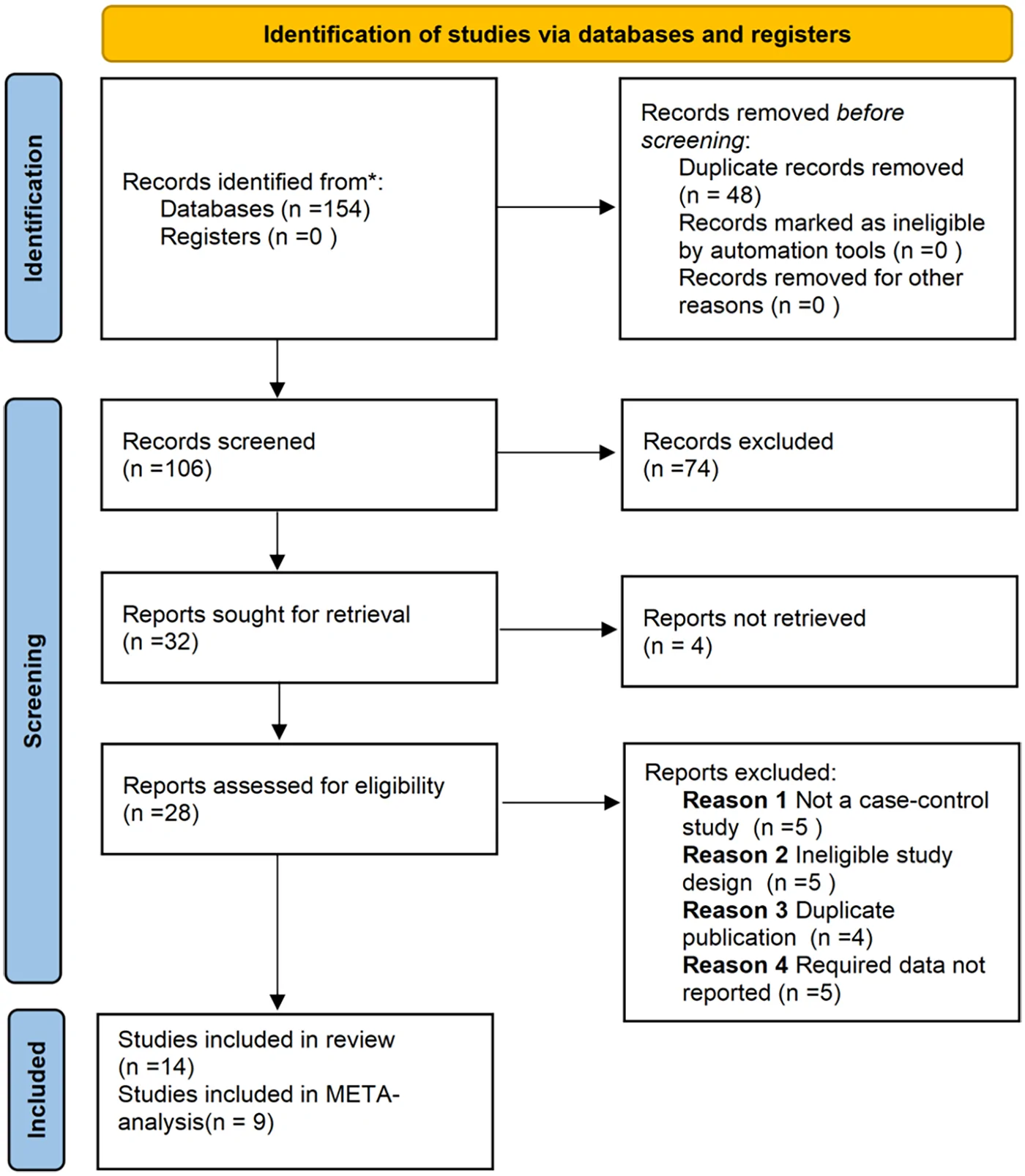
A total of 154 studies were identified through database searches (PubMed = 48, Web of Science = 29, Cochrane = 0, Embase = 77).
- Result
The meta-analysis results showed that high plasma TMAO levels were significantly associated with ASCVD risk, with a pooled OR of 1.39 (95% CI: 1.21–1.61, P < 0.001).
Results, 2.2.3 Association between plasma TMAO levels and atherosclerotic cardiovascular disease
- Limitation
First, all included studies were observational in design, primarily case–control studies, which limited causal inference.
Quoted word for word from the full text on frontiersin.org.
- Microbiome composition
- Trimethylamine N-oxide
- Arteriosclerotic cardiovascular disease
- Atherosclerotic cardiovascular disease
- Humans
The paper
College of Chinese Medicine; Changchun University of Chinese Medicine
Frontiers in Cardiovascular Medicine, 25 Sep 2026