Acceptability, Feasibility, and Preliminary Efficacy of a Digital Cognitive Intervention for Post-Acute Sequelae of SARS-CoV-2 Infection (PASC) in Older Adults
6 weeks
Abstract
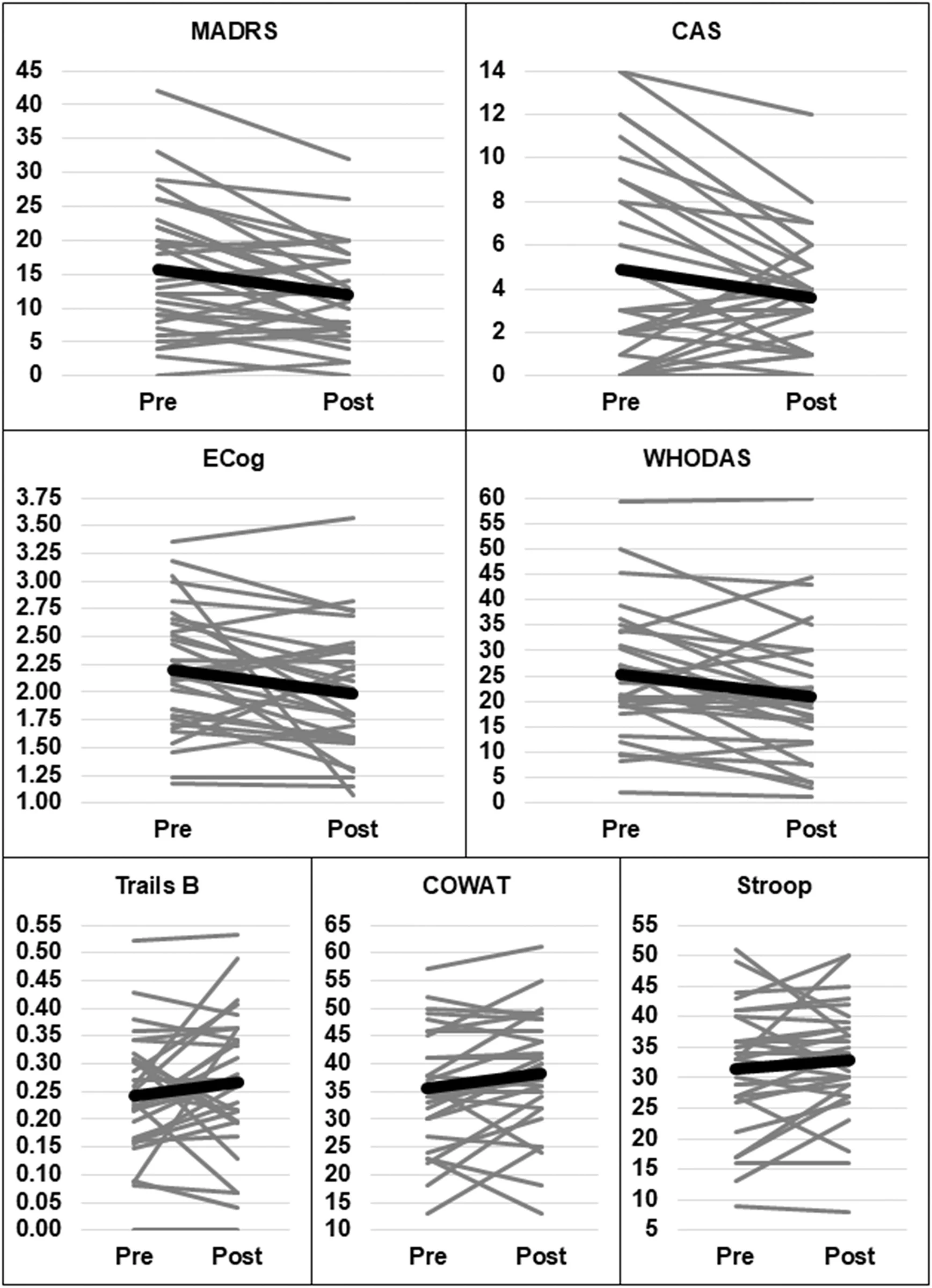
OBJECTIVES: We aimed to examine the acceptability, feasibility, and preliminary efficacy of a digital cognitive intervention (DCI) for older adults with post-acute sequelae of SARS-CoV-2 infection (PASC). METHODS: 39 older adults (60-82 years old) with PASC neurocognitive symptoms (PASC-Neuro) were enrolled in a 6-week trial of neuroscience-based DCI. Treatment acceptability and feasibility were quantified via validated self-report questionnaires, recruitment and retention rates, and incidence of adverse events (AEs). Changes in clinical outcomes, collected before and after treatment, were examined using repeated measures statistical tests. RESULTS: The DCI program was acceptable, credible, and usable to participants. Recruitment and retention rates were high (>85%). AEs were generally mild, transient, and tolerable. Significant improvements were observed in depression, anxiety, everyday functioning, and cognitive performance (set-shifting and verbal fluency). CONCLUSIONS: These findings support the potential of a DCI program for older adults with PASC-Neuro.
- Digital cognitive intervention
- Post-acute sequelae of SARS-CoV-2 infection
- PASC neurocognitive symptoms
- Anxiety
- Depression
- Humans
The paper
University of Connecticut; University of Utah
The American Journal of Geriatric Psychiatry, 18 Sep 2026