Reprogrammed human neurons survive and mature in mice
Transplanted human neurons survived for up to 5 months, with a proportion remaining up to 10 months, in mice lacking normal immune defences.
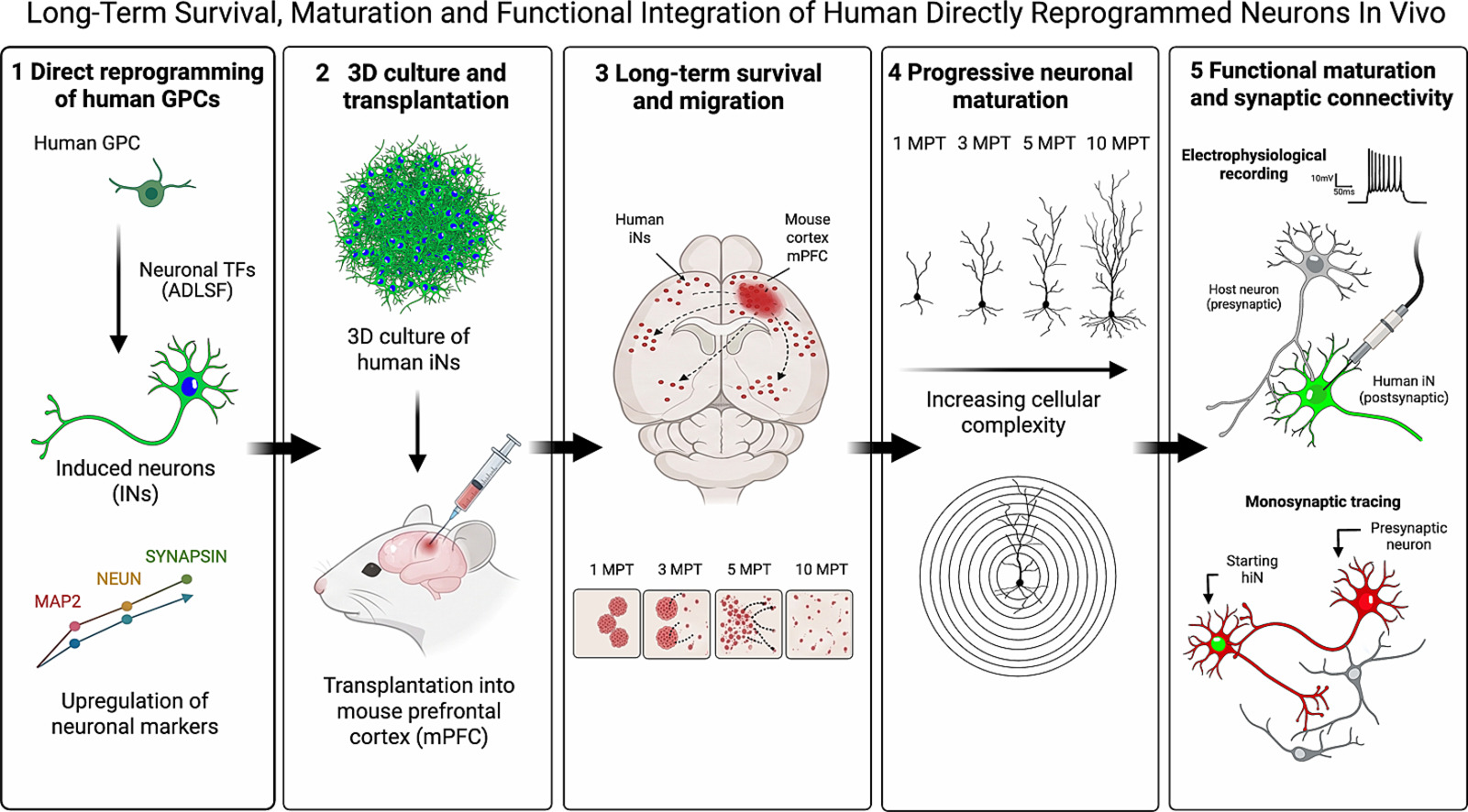
In immunodeficient mice, which lack normal immune defences, researchers tracked human neurons transplanted into the cortex, the brain’s outer layer. In this animal experiment, they converted human glial progenitor cells—cells that can become brain support cells—into neurons by forcing activity of genes that determine nerve-cell identity. They grew the cells in three-dimensional cultures to help the grafts survive.
The transplanted neurons survived for up to 5 months, with a proportion remaining up to 10 months. They migrated into connected brain regions. Over time, the cells became more structurally complex and increased their production of molecules used to identify neurons. Electrical tests showed gradual maturation and connections that received signals from the mouse brain’s circuits. Grafts of cells that had not been reprogrammed retained their identity as glial cells.
Why it matters
The study addresses a question relevant to repairing the aging brain: whether reprogrammed human neurons can persist and mature after transplantation. The authors said the findings supported their potential for future cell repair strategies.
Caveats
The abstract reported cell survival and maturation, not improvements in brain function or aging outcomes. The experiment used intact brains in immunodeficient mice and does not establish a repair benefit in people.