Electrical test predicts senescence in cultured muscle cells
In an experiment on cultured muscle precursor cells, electrical metabolic monitoring tracked cellular senescence and predicted whether the cells could form muscle.
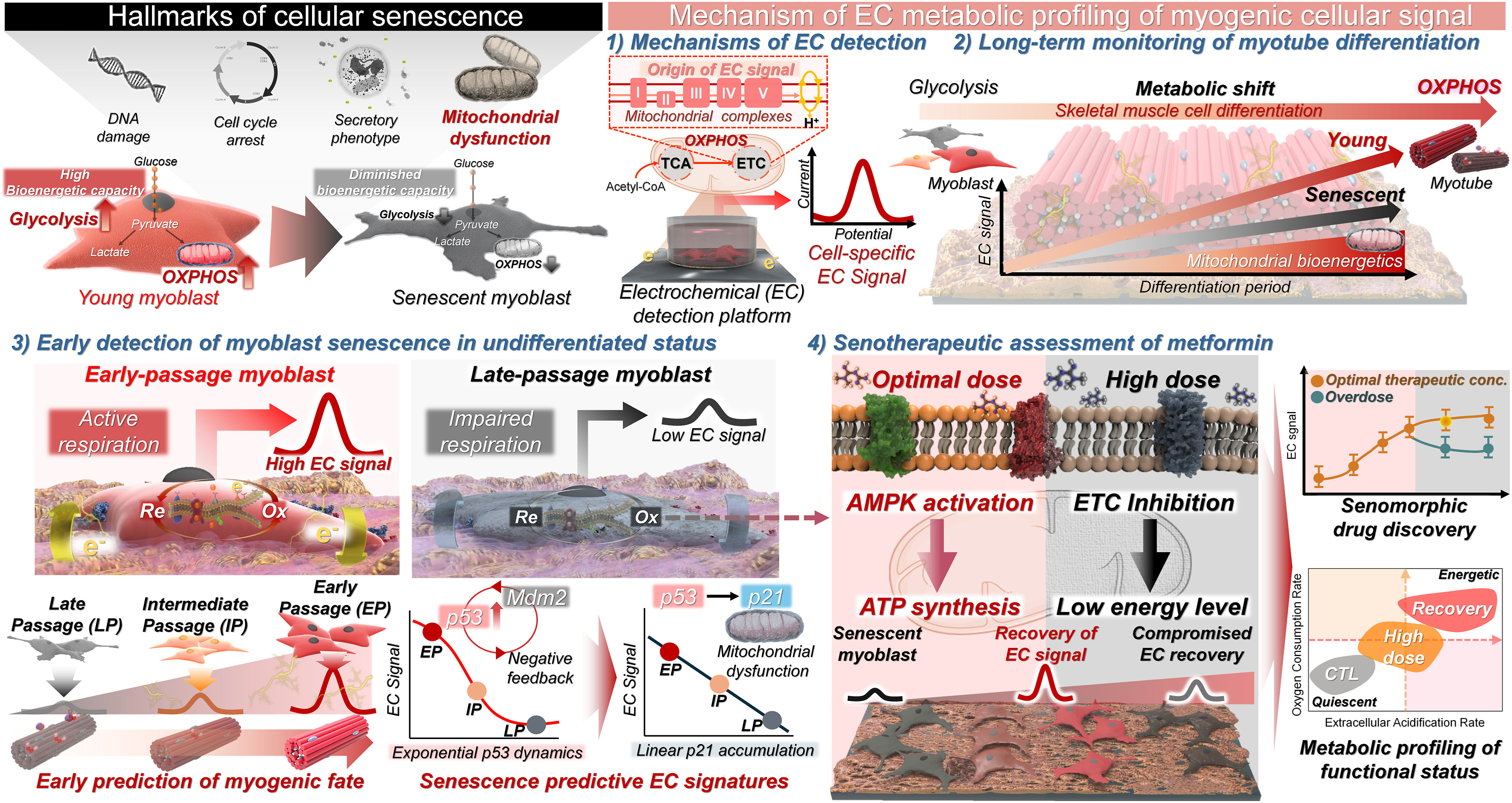
In an experiment on undifferentiated myoblasts, muscle precursor cells grown in the lab, researchers tested an electrochemical platform. The sensor used a gold nanostructure electrode to monitor living cells without destroying them. It detected a marked energy deficit in undifferentiated cells in senescence, a state in which cells stop dividing. When senescent cells were prompted to mature, the sensor tracked in real time their failure to shift from glycolysis, a form of sugar breakdown, to oxidative phosphorylation, an oxygen-dependent energy process. The baseline electrical signal correlated with p53 and p21, two proteins involved in regulating senescence, and predicted whether the cells could form muscle. The researchers also used the device to assess metformin, distinguishing doses that aided metabolic recovery from higher, toxic amounts.
Why it matters
Myoblast senescence is linked to the declining ability of aging skeletal muscle to regenerate. Non-destructive monitoring could help researchers assess cell quality and screen candidate anti-aging interventions.
Caveats
The findings came from experiments in cells grown in the lab. They do not establish whether the platform can assess muscle repair in living organisms.
The paper
Sungkyunkwan University
Biosensors & Bioelectronics, 5 Oct 2026