Lemborexant linked to fewer hip fractures in older adults
Older adults starting lemborexant had a lower rate of hip fracture than those starting Z-drugs, with a hazard ratio of 0.31 over one year.
1 year
In an observational cohort study, researchers analysed regional health databases in Japan covering people aged 65 years and older who began taking insomnia medications. They compared dual orexin receptor antagonists, a class of sleep drugs, against benzodiazepine receptor agonists, commonly called Z-drugs. The primary outcome was hospitalisation for a hip fracture within one year of starting treatment.
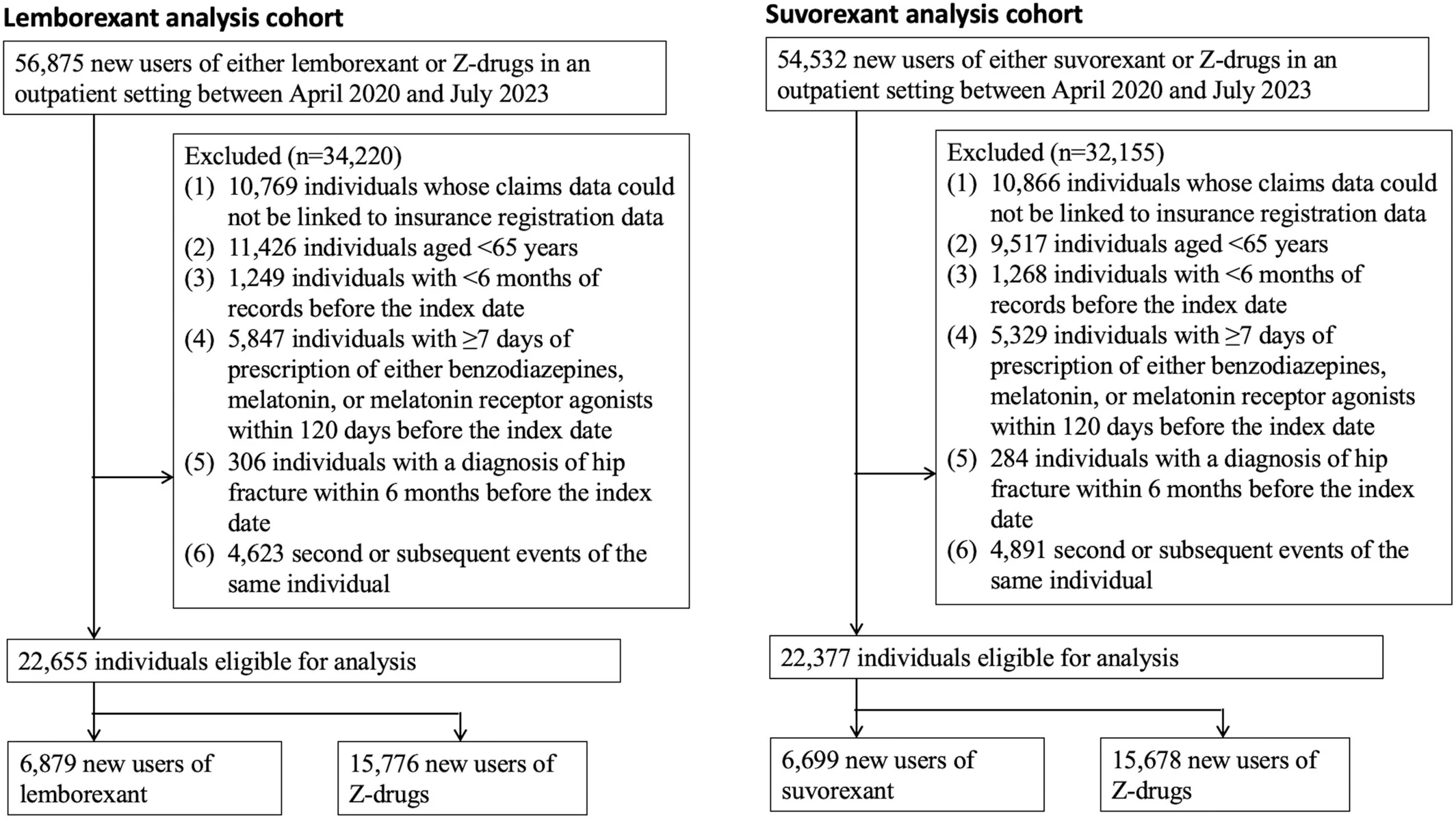
The analysis of lemborexant included 22,655 people: 6,879 taking lemborexant and 15,776 taking Z-drugs. After adjustment, lemborexant was associated with a significantly lower incidence of hip fracture, with a hazard ratio of 0.31. A second cohort tracked 22,377 people, comparing 6,699 starting suvorexant with 15,678 starting Z-drugs. Hip fracture incidence was lower in the suvorexant group, but the association was not statistically significant, with a hazard ratio of 0.57, and the range of likely values included no difference.
Why it matters
Hip fractures are a major health threat in older age. The findings bear on whether specific sleep medications may offer safer alternatives to Z-drugs for older individuals facing this risk.
Caveats
Because this was an observational study using health records, unmeasured differences between patients may have influenced fracture risk despite statistical adjustments. In addition, the lower risk estimate for suvorexant did not achieve statistical significance.
From the paper
- Participants
The lemborexant analysis cohort included 22,655 individuals (6879 and 15,776 in the lemborexant and Z-drug groups, respectively).
- Result
After adjustment, lemborexant use was associated with a significantly lower hip fracture incidence (HR, 0.31, 95% confidence interval [CI], 0.16–0.59, p < 0.001).
- Limitation
Second, the number of outcome events was limited, which may have reduced statistical power to detect modest differences.
Quoted word for word from the full text on agsjournals.onlinelibrary.wiley.com.
The paper
Hip Fracture Risk of Lemborexant and Suvorexant in Comparison With Z-Drugs: A Target Trial Emulation
Jichi Medical University
Journal of the American Geriatrics Society, 8 Oct 2026, Open access