More intense activity linked to lower cardiovascular disease risk
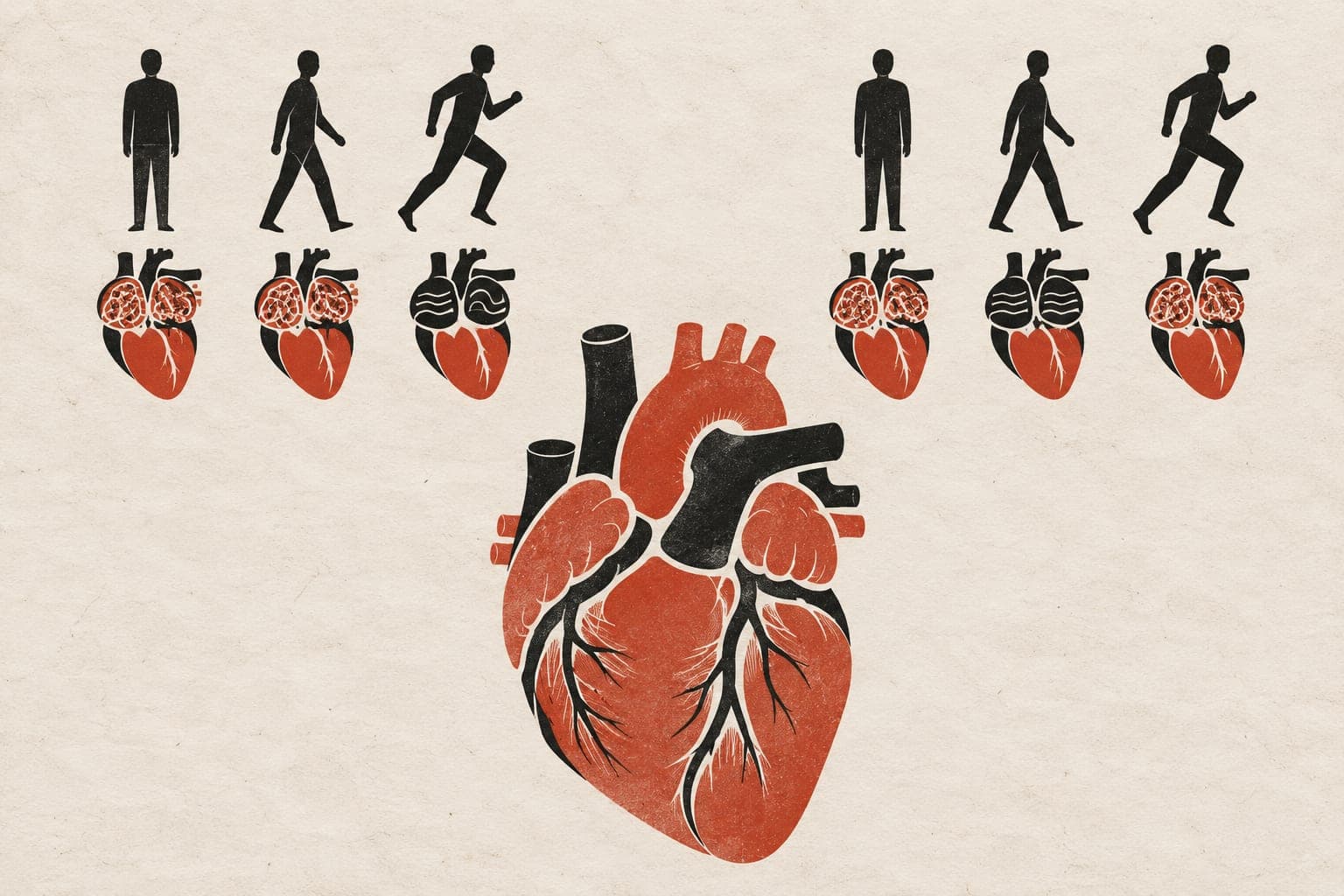
Participants exceeding 69.8 minutes of moderate-to-vigorous activity daily had a hazard ratio—a measure of relative risk—of 0.68 compared with the lowest activity group.
Medicine and Science in Sports and Exercise
An observational study followed 5,186 participants from The Maastricht Study, with a mean age of 59.3 years; 52.4% were women. Researchers measured physical activity and sitting time with thigh-worn movement sensors. Annual questionnaires and government records tracked cardiovascular disease, which affects the heart and blood vessels. There were 654 events over a median follow-up of 6.1 years.
Higher amounts of moderate-to-vigorous activity and vigorous activity were associated with lower disease risk. The link with moderate-to-vigorous activity was stronger in women and people with limited mobility. Total sitting time and light activity were not associated with disease risk.
Why it matters
Heart and blood vessel disease is a concern in later life. The study addressed which activity intensities might be relevant to cardiovascular protection.
Caveats
This observational study cannot show that physical activity caused the lower disease risk. Researchers assessed disease events using questionnaires and government records.
- Physical activity
- Light-intensity physical activity
- Moderate-to-vigorous physical activity
- Cardiovascular disease
- Cerebrovascular disease
- Humans
The paper
Show 6 more authors
Alfons J H M Houben, Simone J P M Eussen, Anke Wesselius, Hans H C M Savelberg, Bastiaan de Galan, Hans Bosma,Maastricht University
Medicine and Science in Sports and Exercise · 6 Oct 2026