Algorithm measured sitting in overweight postmenopausal women
The algorithm’s accuracy measures exceeded 84.8% against a reference device in a randomised trial of 406 postmenopausal women who were overweight.
Journal for the Measurement of Physical Behaviour
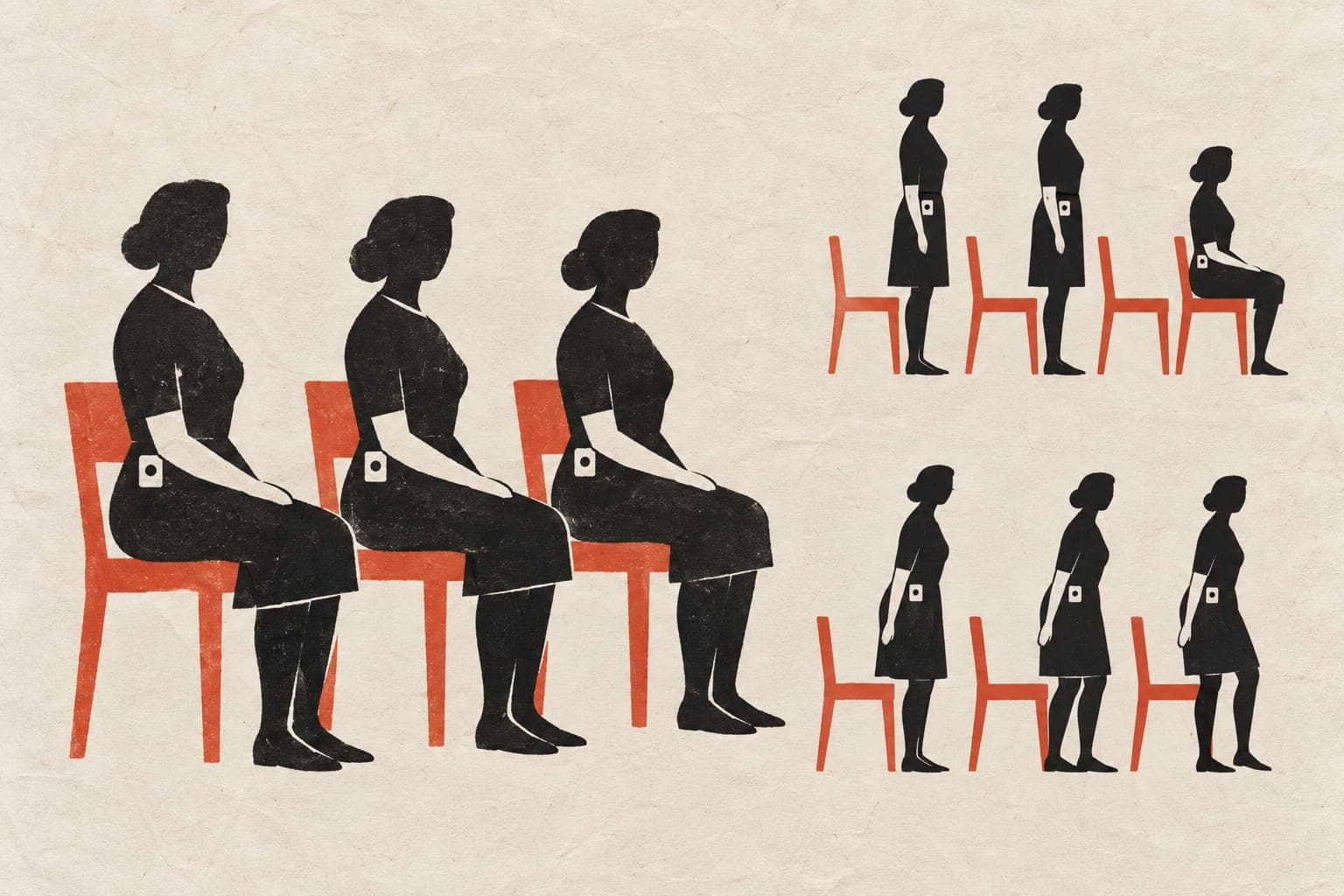
Researchers tested a sitting-detection algorithm in a randomised trial of 406 postmenopausal women aged 55 or older who were overweight. It analysed hip-worn movement-sensor data collected during everyday life. The trial had three groups: healthy living as the control, reducing sitting, and increasing breaks from sitting. Researchers compared measurements at two timepoints with a reference device and a standard method based on movement thresholds.
The algorithm’s accuracy measures exceeded 84.8%. In the reducing-sitting group, it estimated an intervention-versus-control change in daily sedentary time of 38.2 minutes, compared with 65.1 minutes for the reference device and 0.28 minutes for the standard method. In the group increasing breaks, it estimated a change of four breaks per day, compared with 22 for the reference device and fewer than one for the standard method.
Why it matters
Sedentary behaviour is a risk factor for cardiometabolic disease. Reliable measurement from hip-worn sensors could help researchers assess interventions aimed at reducing sitting.
Caveats
This study validated a measurement method, not whether changing sitting improved health. The algorithm was less sensitive to changes than the reference device, and the findings came from postmenopausal women who were overweight.
The paper
Show 15 more authors
Arun Kumar, Arun Kumar, Jordan Carlson, Mikael Anne Greenwood-Hickman, Paul Robert Hibbing, John W. Staudenmayer, Chongzhi Di, Jingjing Zou, Steve Nguyen, Andrea Z. LaCroix, Lindsay W. Dillon, Howon Ryu, Lucy Shao, Weiwei Shi, Fatima Tuz‐Zahra,University of California San Diego
Journal for the Measurement of Physical Behaviour · 12 Aug 2026