Larger lung artery volume tied to deaths in smokers without COPD
Each roughly 25-millilitre increase in artery volume was linked to a death-rate ratio of 1.42 in one cohort and 1.23 in another.
Independent replication, declared ties to: Boehringer Ingelheim, Roche, GSK and 29 more
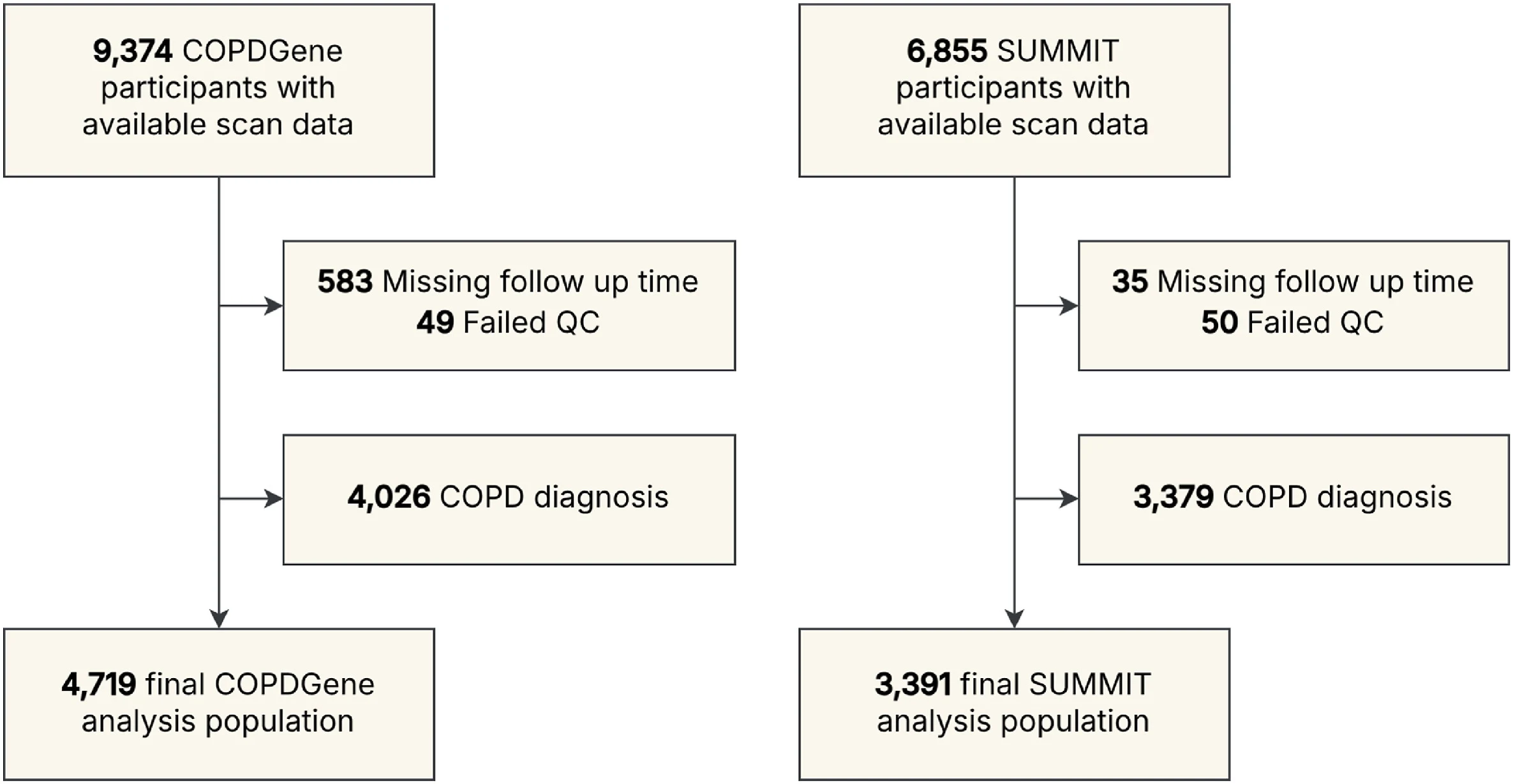
Researchers studied 4,719 current and former smokers without chronic obstructive pulmonary disease, a long-term lung condition that restricts airflow. Their retrospective observational analysis used data collected in a cohort study. They checked the findings in another cohort of 3,391 people without the disease. The groups had median ages of 56 and 64, respectively.
An automated method measured the volume of the pulmonary artery outside lung tissue on chest scans. This artery carries blood from the heart to the lungs. Larger volumes were associated with deaths from any cause after accounting for age, smoking exposure and other health factors. The death-rate ratios describe relative rates during follow-up; values above one indicate higher rates.
Why it matters
Survival among middle-aged and older smokers bears on lifespan. The researchers suggested artery volume could be a candidate marker for selecting groups in studies of lung blood-vessel disease.
Caveats
This retrospective observational analysis cannot show that larger artery volumes caused deaths. The proposed imaging marker still needs validation in studies that follow people forward in time.
- Machine learning
- Body mass index
- Charlson Comorbidity Index
- Emphysema extent
- Extraparenchymal pulmonary artery volume
- Humans
The paper
Pulmonary arterial volume and mortality in smokers without chronic obstructive pulmonary disease
University College London
Respiratory Medicine, 6 Oct 2026, Open access