Activity breathlessness tied to worse survival in tested patients
In patients evaluated with exercise testing, five-year survival was 79% for the highest breathlessness score compared with 94% for the lowest.
Respiration; International Review of Thoracic Diseases
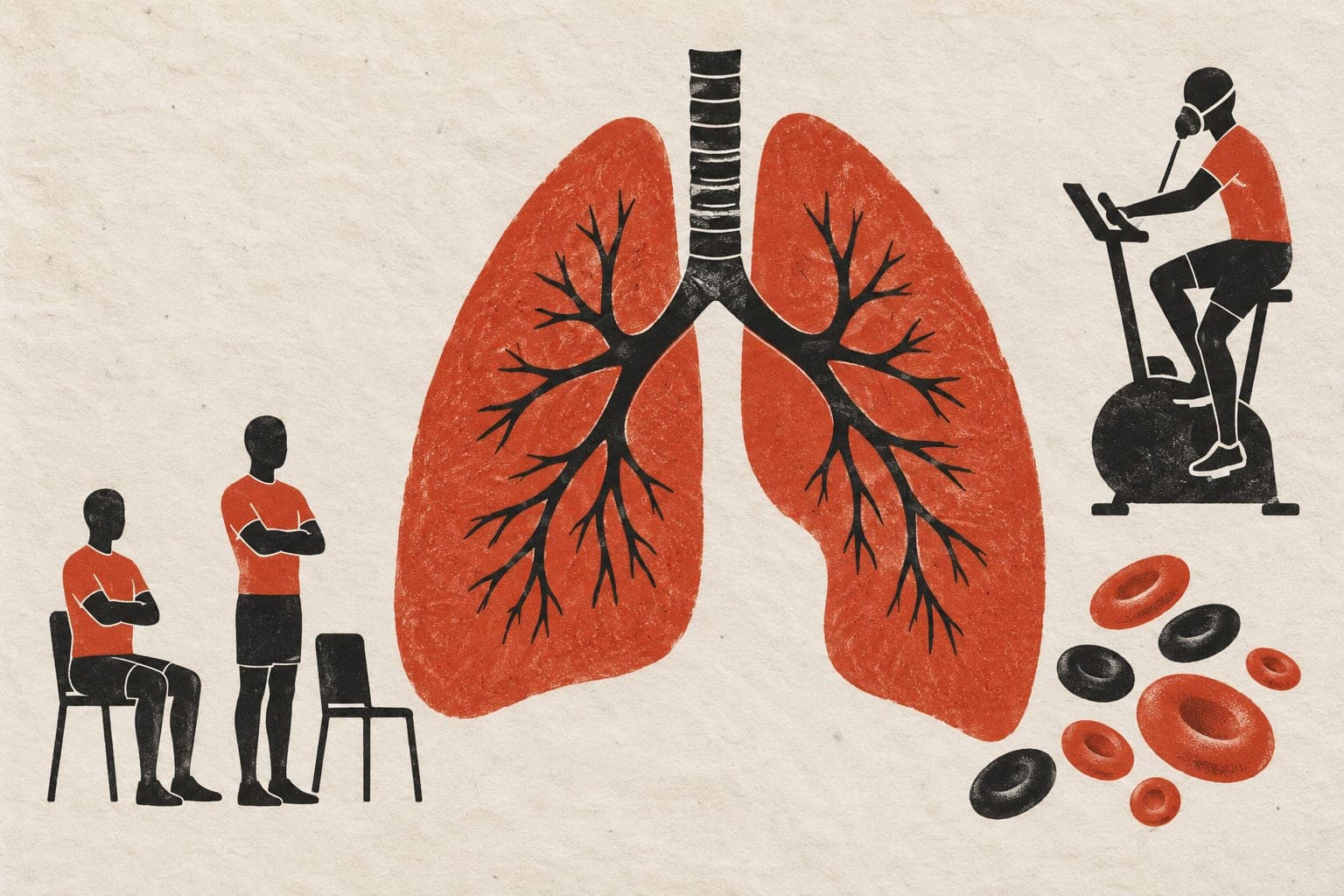
In a retrospective cohort study, researchers evaluated 1,061 patients with an average age of 58 years (56% female) undergoing cardiopulmonary exercise testing for activity-related breathlessness. Nearly half of the patients, 48%, had two or more heart or lung diseases. The team grouped breathlessness severity into a three-level score based on clinical scales. Five-year survival was 94% for score 1, 89% for score 2, and 79% for score 3. Patients with score 3 combined with falling oxygen levels during exercise, or with at least two heart or lung diagnoses, each had a five-year survival of 73%. Older age and male sex were independently associated with worse survival, while exercise-induced drops in oxygen, smoking status, and the number of heart or lung diagnoses were not.
Why it matters
Activity-related breathlessness is frequent in older people living with multiple long-term illnesses. These findings suggest that patient-reported breathlessness during exertion may serve as a clinically relevant prognostic marker in people with heart or lung conditions.
Caveats
The study was retrospective and analysed patients undergoing cardiopulmonary exercise testing for activity-related breathlessness. The authors noted that the findings require further validation in prospective cohorts.
The paper
Survival in patients with activity-related dyspnea. A retrospective cohort study
Show 6 more authors
Kay von Grünigen, Stéphanie Saxer, Julian Müller, Simon R Schneider, Malcolm Kohler, Silvia Ulrich,Respiration; International Review of Thoracic Diseases · 8 Oct 2026