Partial Y chromosome loss alters transcription in cancer cells
Using genomic and transcriptomic profiling in male cancer cell lines, researchers mapped regional deletions and linked a new Y erosion score to transcriptional changes.
Communications Biology
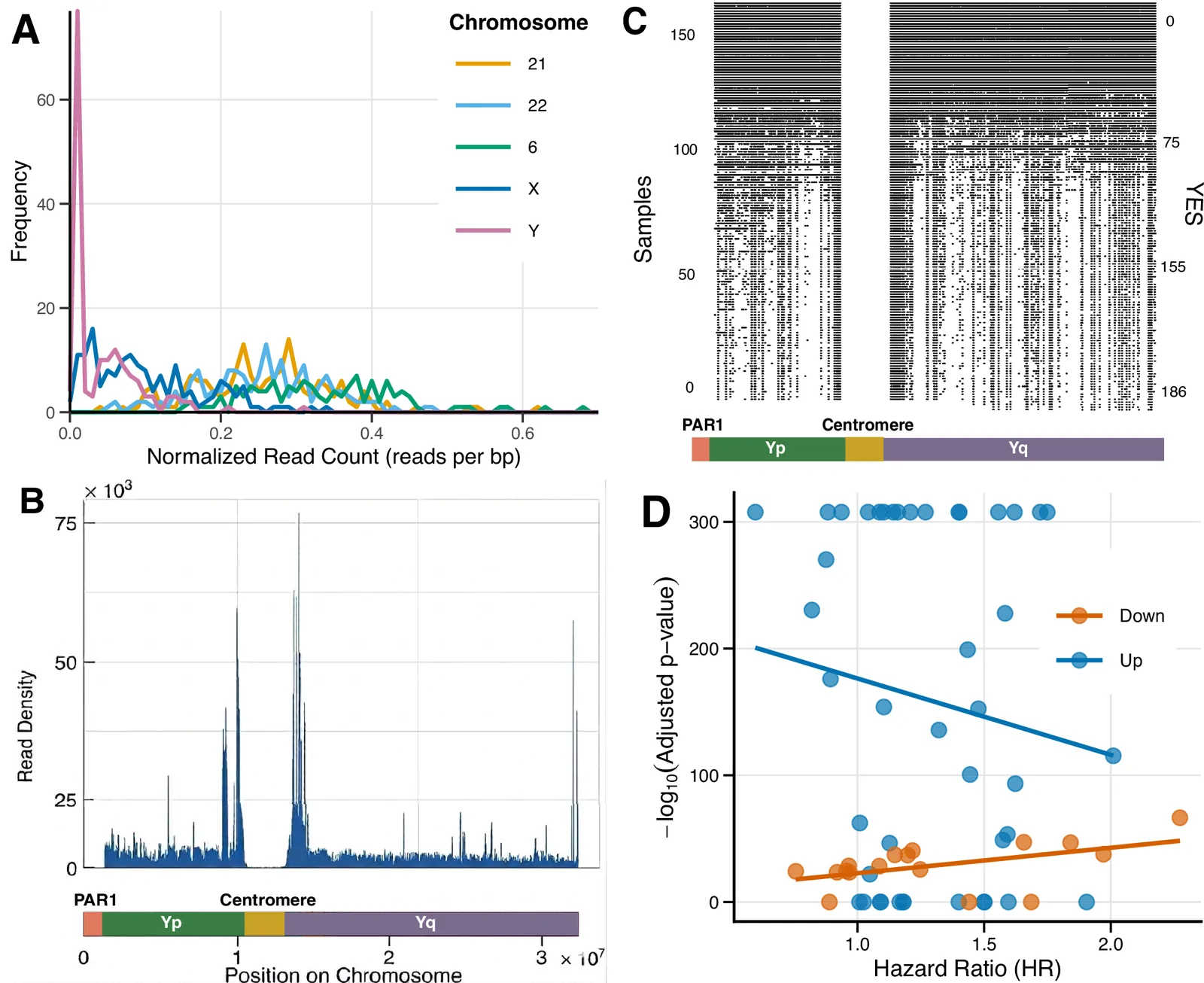
In male cancer cell lines, researchers investigated somatic loss of the Y chromosome, the most frequent acquired genomic alteration in aging males. Rather than treating this loss as a binary event, the team used high-coverage whole-genome sequencing, large-scale transcriptomics, and expression quantitative trait loci mapping to assess partial deletions that selectively remove gene-rich euchromatic regions.
The authors identified a region-specific landscape with recurrent euchromatic deletions affecting protein-coding genes and non-coding elements. Losses were quantified using a new Y EroSion score, which was associated with transcriptional differences and clinical outcome patterns suggestive of functional relevance. Additionally, retained Y-linked loci remained transcriptionally active and were enriched for proliferation, immune signaling, and stress adaptation functions.
Why it matters
Because loss of the Y chromosome is a widespread feature of male aging, identifying structured regional deletions provides a clearer picture of how sex-chromosome alterations may relate to cancer risk. The findings suggest that chromosome loss during aging involves specific functional regions rather than just uniform whole-chromosome absence.
Caveats
The findings are derived entirely from cultured cell lines rather than patient tissues, and the reported clinical outcome patterns remain correlational. The authors emphasize that these results require validation in primary tumor cohorts.
The paper
Recurrent deletions and regulatory disruption of the Y chromosome in cancer
Cedars-Sinai Medical Center · University of Arizona
Communications Biology · 28 Sep 2026 · CC BY-NC-ND