Macrophage-derived VEGFA maintains eye outflow in mice
Deleting Vegfa in CX3CR1-positive macrophages raised intraocular pressure and reduced aqueous humor outflow facility in nine-month-old mice.
bioRxiv
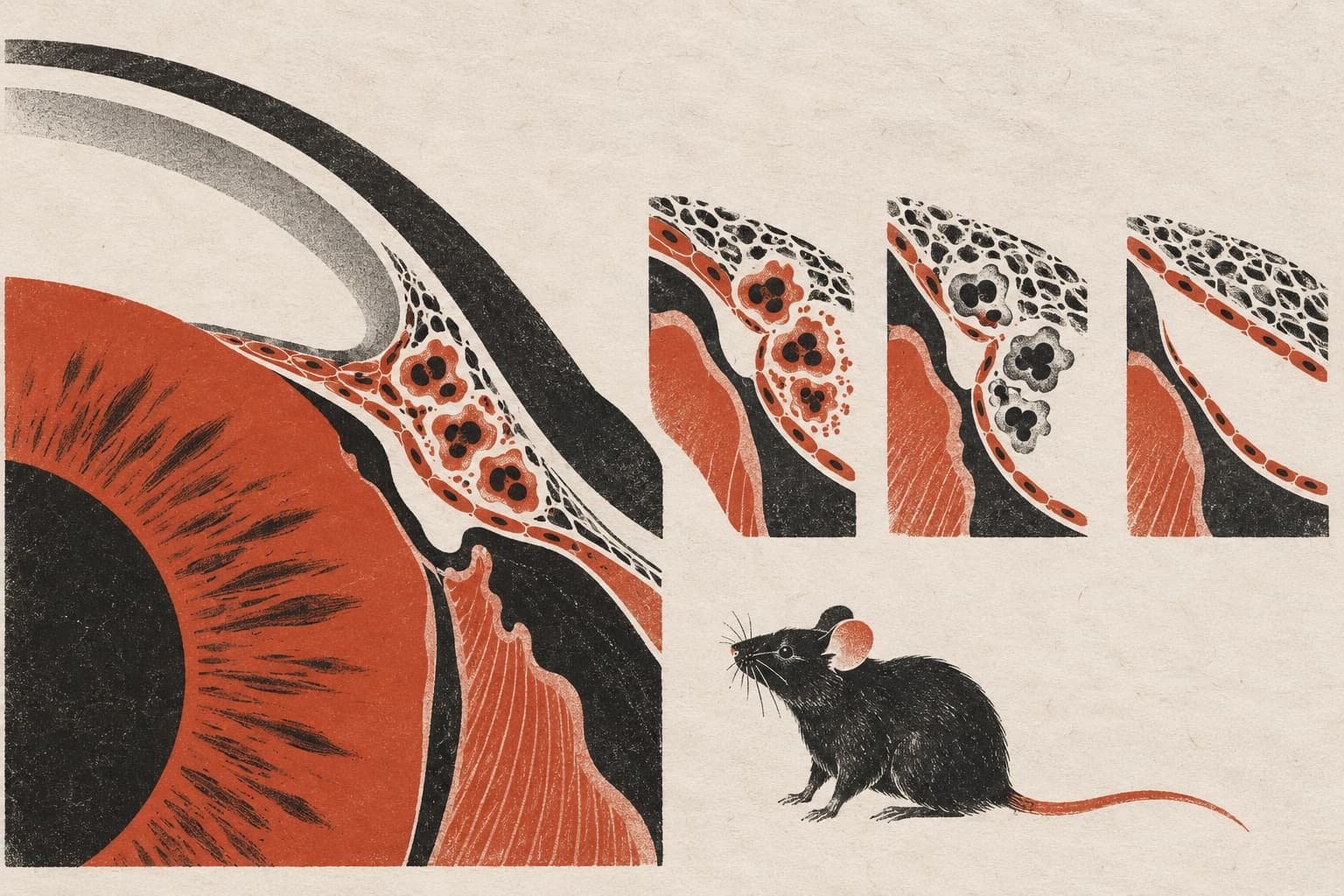
In mice and human tissue imaging, aging was associated with reduced Schlemm's canal size and increased macrophage accumulation around the canal. Single-cell RNA sequencing of mouse ocular angle tissues showed immunomodulatory transcriptional reprogramming of Schlemm's canal endothelial cells in older mice. Ligand-receptor analysis predicted enhanced macrophage-to-endothelial VEGFA signaling in aged and Tie2-haploinsufficient mice, an independent model of vascular stress.
Deleting Vegfa in CX3CR1-positive macrophages increased intraocular pressure and reduced aqueous humor outflow facility in nine-month-old mice. Tie2 haploinsufficiency recapitulated age-associated niche changes around the canal, while gene therapy boosting TIE2 activity protected wild-type mice against these age-related shifts.
Why it matters
The findings suggest that immune cells in the eye can act as a compensatory buffer to sustain fluid drainage and pressure regulation as vascular structures alter during aging.
Caveats
This study is a preprint that has not yet been peer-reviewed. While structural imaging included human tissues, all functional genetic deletions and gene-therapy interventions were performed in mice.
The paper
VEGFA-Positive Macrophages Regulate Aqueous Humor Outflow in Aged Mice and Humans
Show 11 more authors
Guohui Ren, Tuncer Onay, Ester Reina‐Torres, Hoi‐Lam Li, Constance E. Runyan, Robert S. Feder, Hyunjoo J. Lee, Darryl R. Overby, Haiyan Gong, G. R. Scott Budinger, Benjamin R. Thomson,Northwestern University
bioRxiv · 11 Sep 2026 · Preprint, not peer-reviewed