Depression and physical decline track together in older adults
Tracking 8,961 adults aged 45 and older over seven years revealed four joint trajectories of depressive symptoms, chronic conditions, pain, and functional disability.
Medicine
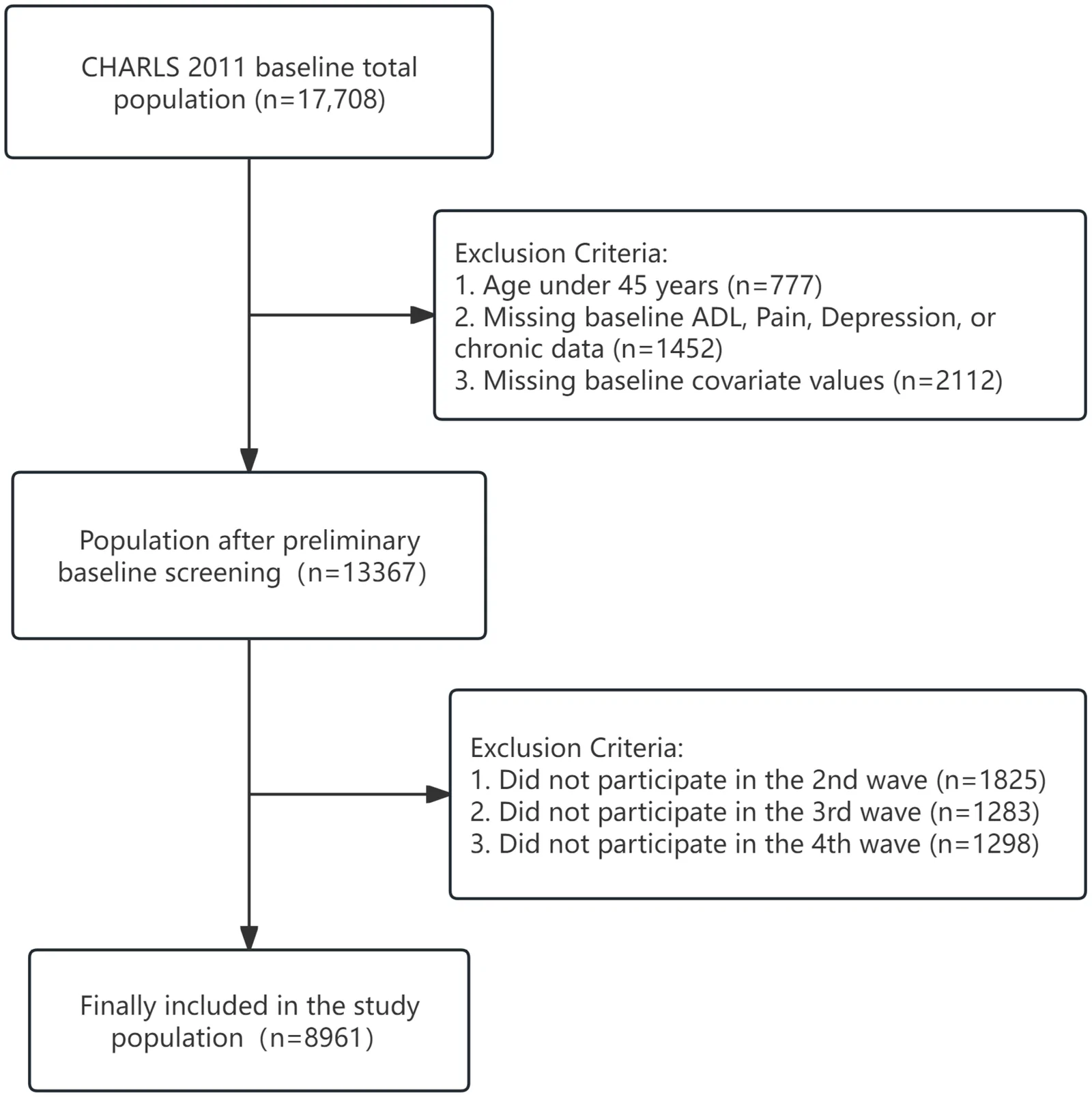
In middle-aged and older Chinese adults, depressive symptoms and multiple physical health problems evolve along four distinct trajectories over time. Researchers examined data from 8,961 participants aged 45 and older across four waves of the China Health and Retirement Longitudinal Study from 2011 to 2018.
Using group-based multi-trajectory modeling, the team tracked depressive symptoms, chronic disease counts, chronic pain, and functional disability. They identified four joint profiles: a stable low-risk group (40.84%), a low-risk improving group (11.24%), a high-risk deteriorating group (23.96%), and a high-risk fluctuating group (23.96%). Participants in high-risk groups experienced synchronous deterioration across mental and physical dimensions. Older age, female gender, and rural residence were identified as risk factors for unfavorable trajectories, while higher education, nonagricultural household registration, and social participation served as protective factors.
Why it matters
The findings show that mental and physical health trajectories can deteriorate in tandem during aging, indicating that clinical management may benefit from addressing multi-system physical decline and depression together.
Caveats
The analysis relied on observational survey data, which precludes causal conclusions and depends on self-reported measures. In addition, the findings from this Chinese cohort may not generalize to populations with different social determinants or healthcare systems.
The paper
China Three Gorges University
Medicine · 1 Sep 2026 · CC BY-NC