Estradiol levels do not predict heart events in older women
In 5,535 women aged 70 and older, endogenous estradiol concentrations showed no association with major cardiovascular events or all-cause mortality over 4.5 years of follow-up.
4.6 years
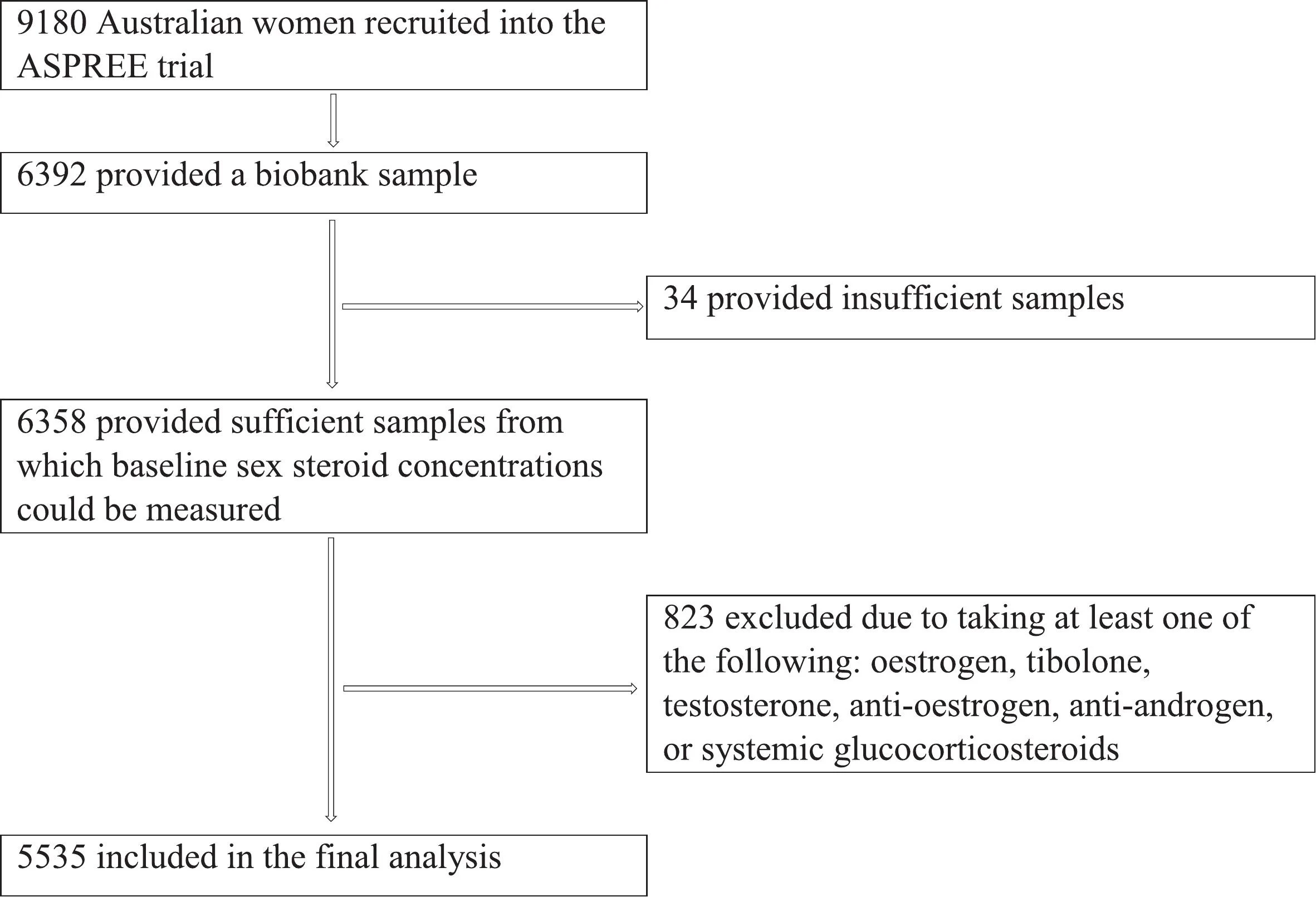
In a prospective cohort of 5,535 healthy women aged 70 and older, endogenous estradiol concentrations showed no independent association with cardiovascular risk or all-cause mortality. Researchers measured circulating estradiol using liquid chromatography-tandem mass spectrometry as part of the Sex Hormones in Older Women Study, a sub-study of the ASPREE trial. Participants had no prior major adverse cardiovascular events and were not taking hormone therapies or glucocorticoids.
Most participants (66.1%) had estradiol levels below the assay detection limit of 11 pmol/L. Over median follow-up periods of roughly 4.5 years, 144 women experienced a major cardiovascular event and 200 died. Compared to intermediate concentrations, neither undetectable levels nor the highest concentrations were associated with cardiovascular events or overall mortality after adjusting for cardiovascular risk factors.
Why it matters
The postmenopausal decline in estrogen has long been thought to drive age-related cardiovascular risk. These results suggest that circulating estradiol variations in late life do not track with cardiovascular disease or survival in healthy older women.
Caveats
The observational design cannot establish causality. Furthermore, nearly two-thirds of the cohort had estradiol levels below the detection threshold of the assay, limiting resolution in the lowest range.
- Sex hormone signalling (oestrogen, androgen)
- Cardiovascular disease
- Major adverse cardiovascular events
- Oestradiol
- Humans
The paper
Monash Health
Maturitas, Sep 28, 2026, Open access