Smokers’ changing age mix linked to widening death-risk gap
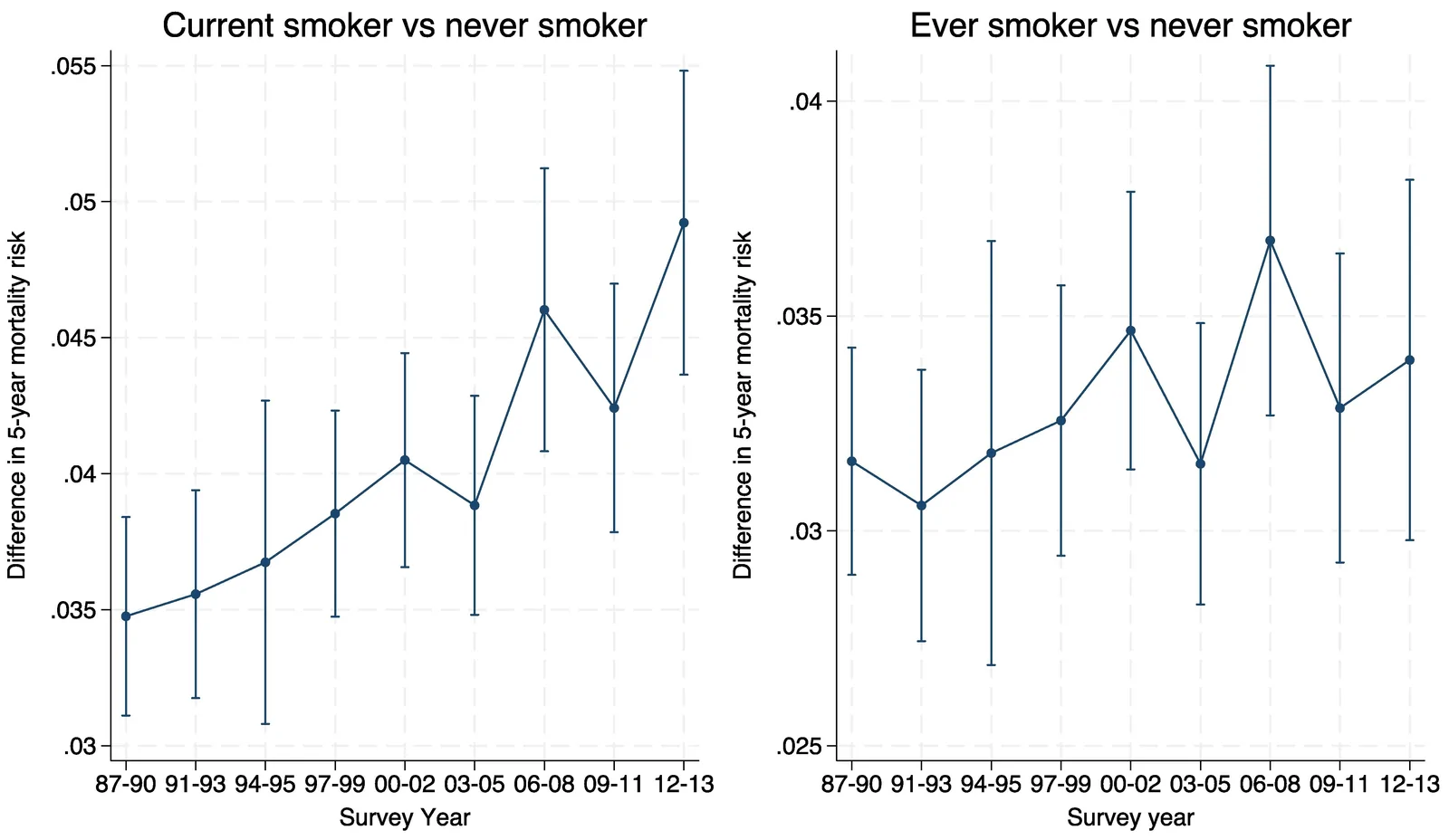
The extra risk of death associated with smoking rose nearly 50% from 1987–1990 to 2012–2013 in models controlling for age.
Our read
Populations- Studied:
- Cohort study of 892,908 adults aged 25–84, 5 years, against never smokers
- What changed:
- Changing age of smokers explained 60% of the increase in the mortality penalty for current against never smokers
- The catch:
- Longer smoking duration from earlier initiation in later cohorts was not accounted for
- Stake:
- An author holds shares in Dorsata.
- In the record:
- The 1,665th paper on smoking with results in people; 4,331 on record in all. Its result on mortality agrees with 91 of 101 other findings on record; 6 point the other way and 4 found no change.
- Why it’s aging research:
- A leading disease of aging, its risks or menopause.
Editor of record: Boris Djordjevic · AgingResearch.News
An observational study analyzed records from 892,908 US adults aged 25–84. Researchers linked national health surveys from 1987–2013 to death records through 2018. They compared current smokers with never-smokers on their risk of dying within five years.
Within age groups, the smoking-associated difference in death risk changed little over time and was larger at older ages. Analyses linked most of the overall widening of this gap to changes in smokers’ age distribution. This pattern held even as more recent groups of smokers had lower education, worse self-rated health and greater psychological distress relative to never-smokers.
Why it matters
The study addresses how to distinguish changing health risks from changes in the makeup of aging populations. The authors suggest that this question also matters when interpreting trends in risks associated with obesity.
Caveats
This observational analysis cannot establish cause and effect. Its findings concern US adults aged 25–84, not younger adults or people aged 85 and older.
From the paper
- Participants
The sample is comprised of adults aged 25–84 at the time of survey with complete information on smoking behavior, yielding a sample of 892,908 individuals.
Quoted word for word from the full text on PubMed Central.
The paper
Why the mortality penalty of smoking is rising over time
Harvard University; National Bureau of Economic Research
PNAS Nexus, Sep 22, 2026, Open access


Comments
Be the first to comment.