Smoking linked to most excess deaths in less-educated white adults
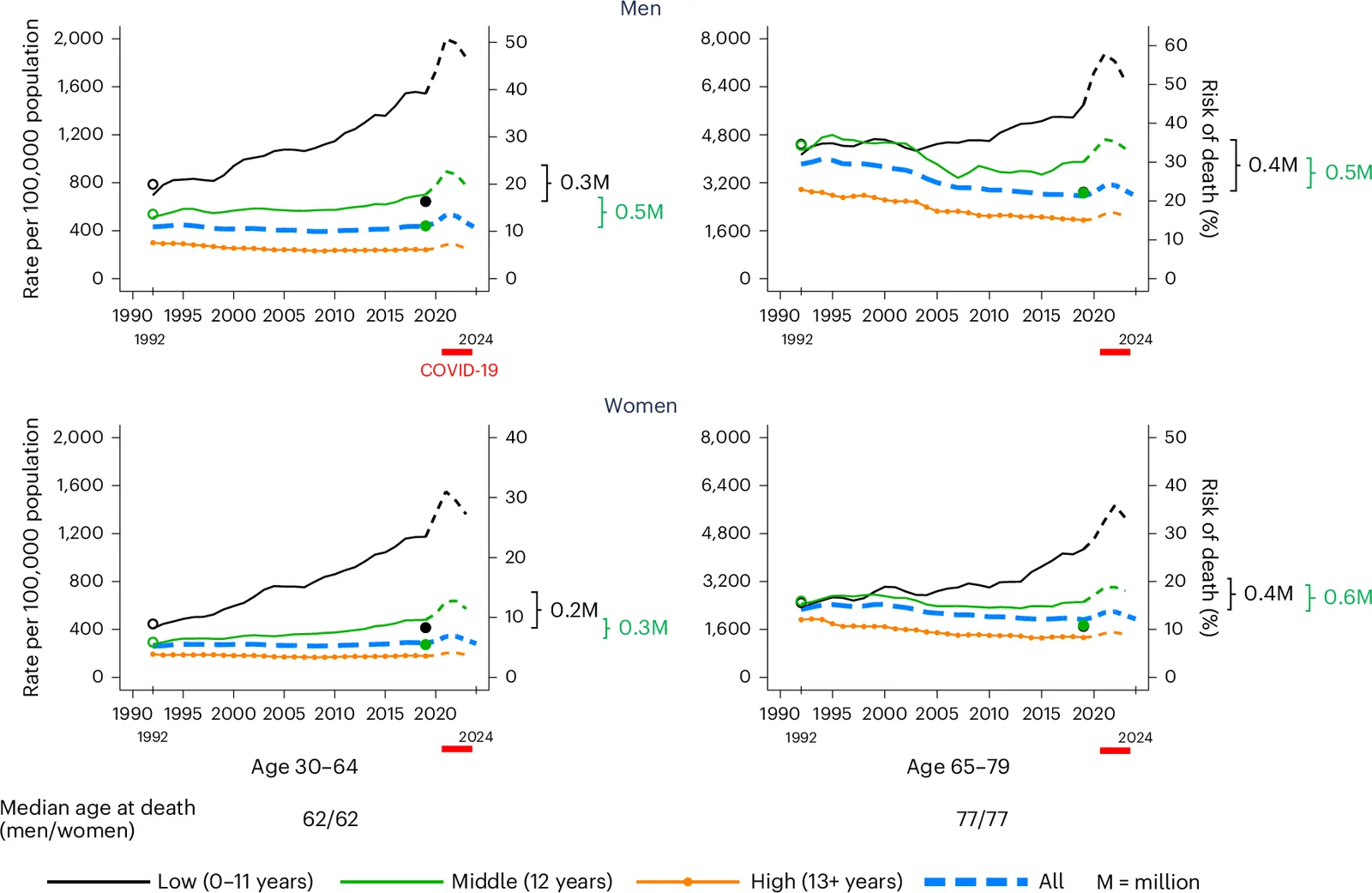
Smoking was linked to an estimated 63% of 3.2 million excess deaths among less-educated white adults, compared with expected deaths based on more-educated adults’ mortality declines.
Our read
Populations- Studied:
- Study of US non-Hispanic white adults, 1992 to 2019, against the highest-education group
- What changed:
- Smoking accounted for 63% of excess deaths among lower-education white adults, compared with mortality declines in the highest-education group
- The catch:
- Misclassified causes of death could inflate or lower estimated smoking-attributable death rates
- In the record:
- The 598th paper on education with results in people; 1,362 on record in all.
- Why it’s aging research:
- A leading disease of aging, its risks or menopause.
Editor of record: Boris Djordjevic · AgingResearch.News
US non-Hispanic white men and women aged 30–79 were studied in an observational analysis of national death and population records from 1992 to 2019. Researchers grouped adults by completed schooling: 11 years or fewer, 12 years, or at least 13 years. They estimated smoking-related deaths indirectly using lung cancer death rates.
They estimated 3.2 million excess deaths in the two lower-education groups. These were deaths above the number expected if those groups’ death rates had declined as quickly as rates in the highest-education group. Smoking accounted for an estimated 63% of these deaths. Smoking-related death rates rose in the lowest-education group but fell in the other two. The gap in the risk of dying between ages 30 and 79 doubled between the lowest- and highest-education groups among men and tripled among women.
Why it matters
Stagnating survival through middle and older age raises questions about unequal gains in longevity. Separating smoking-related diseases from other causes helps identify which health burdens contributed most to that divide.
Caveats
Smoking-related deaths were estimated indirectly, and excess deaths depended on a hypothetical comparison with mortality declines in the highest-education group. The analysis covered non-Hispanic white adults aged 30–79, not other racial or ethnic groups.
The paper
Smoking, education level and excess premature deaths in the USA
University of Oxford
Nature Health, Jul 10, 2026, Open access
Comments
Be the first to comment.