One drug class linked to fewer events in obesity with inflammation
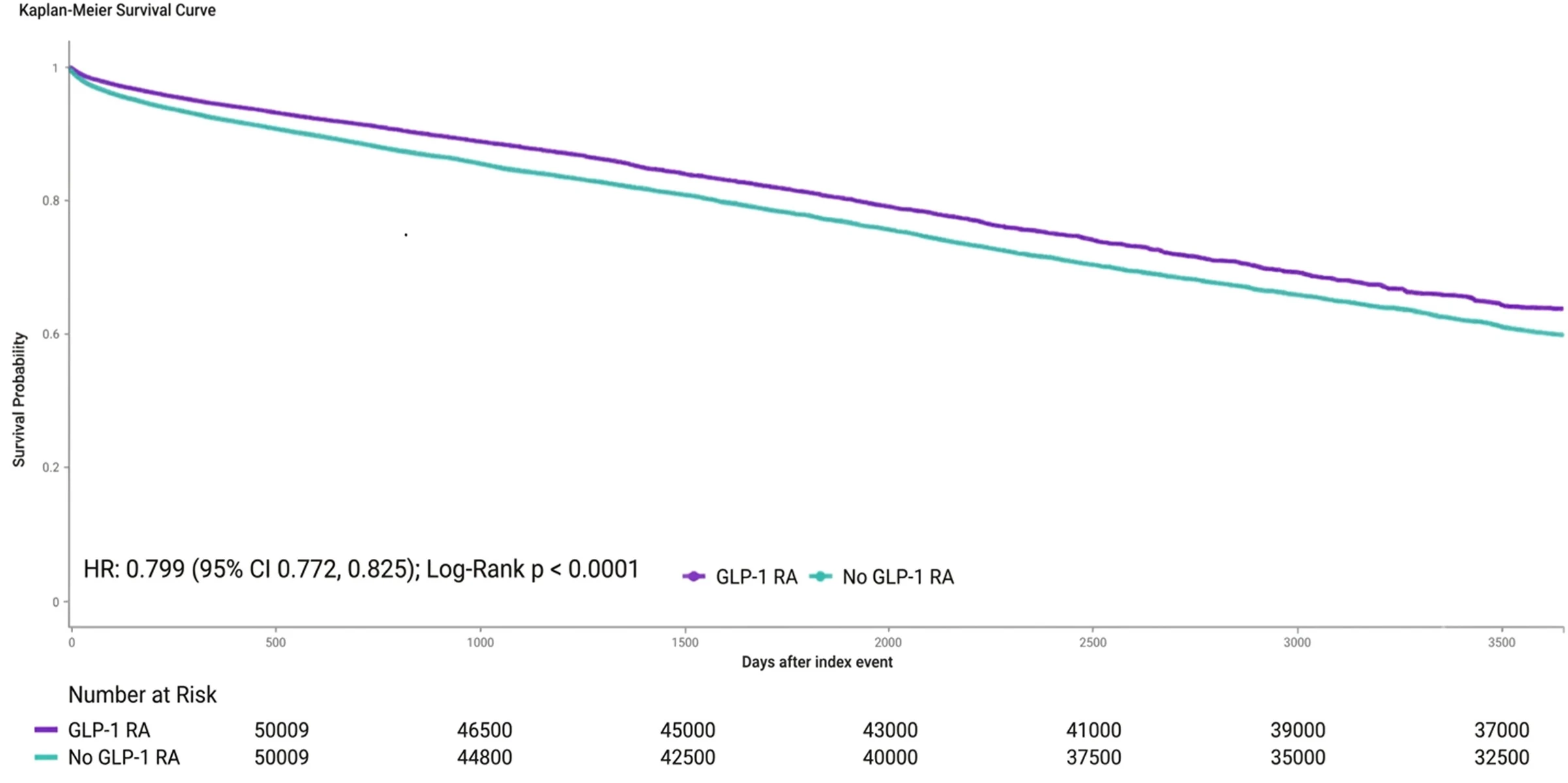
Glucagon-like peptide-1 receptor agonists were linked to a lower combined hazard of death, heart attack or stroke than comparator drugs, with a hazard ratio of 0.799.
50,009 participants
Limit: Weight and inflammation changes during follow-up were not measured
Edited by Boris Djordjevic · AgingResearch.News
An observational study compared two matched groups of 50,009 adults each with obesity and C-reactive protein levels of 3–10 mg/L. C-reactive protein is a blood marker of inflammation. One group received drugs called glucagon-like peptide-1 receptor agonists. The other received metformin, orlistat or phentermine without exposure to that drug class. Follow-up lasted up to 3,650 days.
Exposure was associated with a lower combined hazard of death from any cause, heart attack or ischemic stroke, caused by blocked blood flow. The hazard ratio—a comparison of event rates over time—was 0.799. The association primarily reflected lower mortality, which had a hazard ratio of 0.608. Ischemic strokes were modestly lower, while heart attacks did not differ significantly between groups.
Why it matters
Obesity often accompanies low-grade inflammation and increased cardiovascular risk. The authors called for prospective studies tracking weight and C-reactive protein to examine what may account for the association.
Caveats
This matched observational study cannot establish that the drugs caused the differences. The findings concern adults with obesity and C-reactive protein levels of 3–10 mg/L, not people outside that population.
The paper
Cleveland Clinic
The American Journal of Cardiology, Sep 21, 2026, Open access

