GLP-1 diabetes drugs linked to lower risk of dementia
Dementia occurred in 4.8% of GLP-1 receptor agonist users compared with 7.8% of other diabetes drug users over a median of seven years.
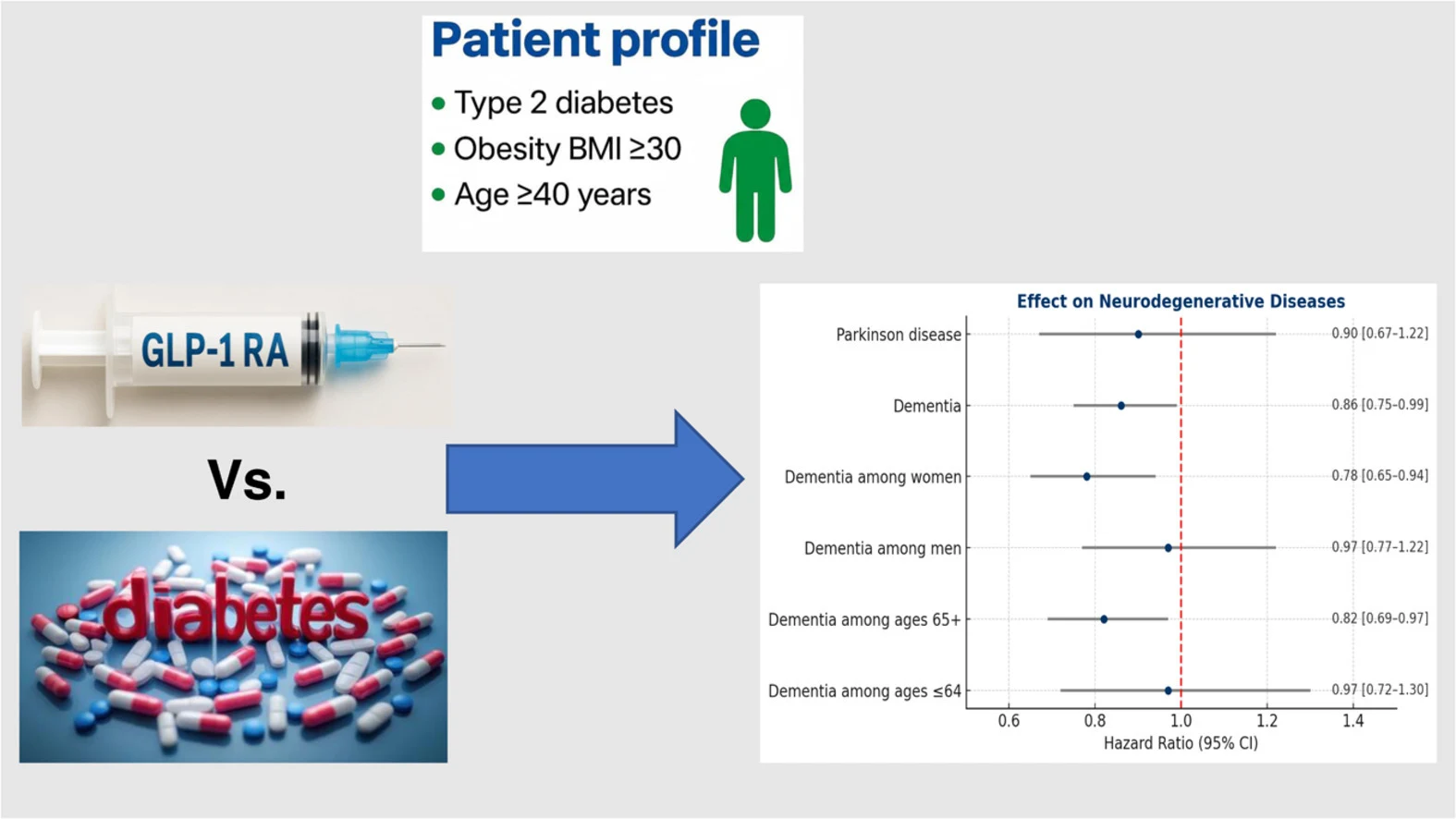
Limit: Electronic health records can miss dementia cases that never receive a diagnosis
Edited by Boris Djordjevic · AgingResearch.News
In a historical prospective cohort study, researchers analyzed electronic health records from 46,962 matched adults with type 2 diabetes and obesity, who had an average age of 62.8 years. Women made up 52.6% of the cohort. The researchers compared patients starting glucagon-like peptide-1 (GLP-1) receptor agonists with those starting other oral glucose-lowering medications between 2008 and 2021.
Over a median follow-up of seven years, dementia occurred in 1,125 GLP-1 users (4.8%) and 1,822 other medication users (7.8%), an adjusted hazard ratio of 0.86. Parkinson's disease occurred in 231 GLP-1 users (1.0%) and 338 other users (1.4%), with an adjusted hazard ratio of 0.90, but the range of likely values included no difference. Secondary analyses linked GLP-1 use to lower risks of dementia and Parkinson's disease compared with sulfonylureas. Protective associations for dementia were stronger in women and in participants aged 65 and older.
Why it matters
Dementia and Parkinson's disease are major age-related neurodegenerative conditions that frequently occur alongside metabolic disorders in older adults. These findings support the potential of certain metabolic medications to help preserve brain health as people age.
Caveats
Because this was an observational study based on electronic health records, it cannot prove that the medications caused the lower risk. The findings also may not apply to people without diabetes, individuals who are not obese, or those taking insulin.
The paper
Hebrew University of Jerusalem; Ariel University
European Journal of Internal Medicine, Aug 21, 2026, Open access

