Heart rate and blood pressure linked to cancer deaths
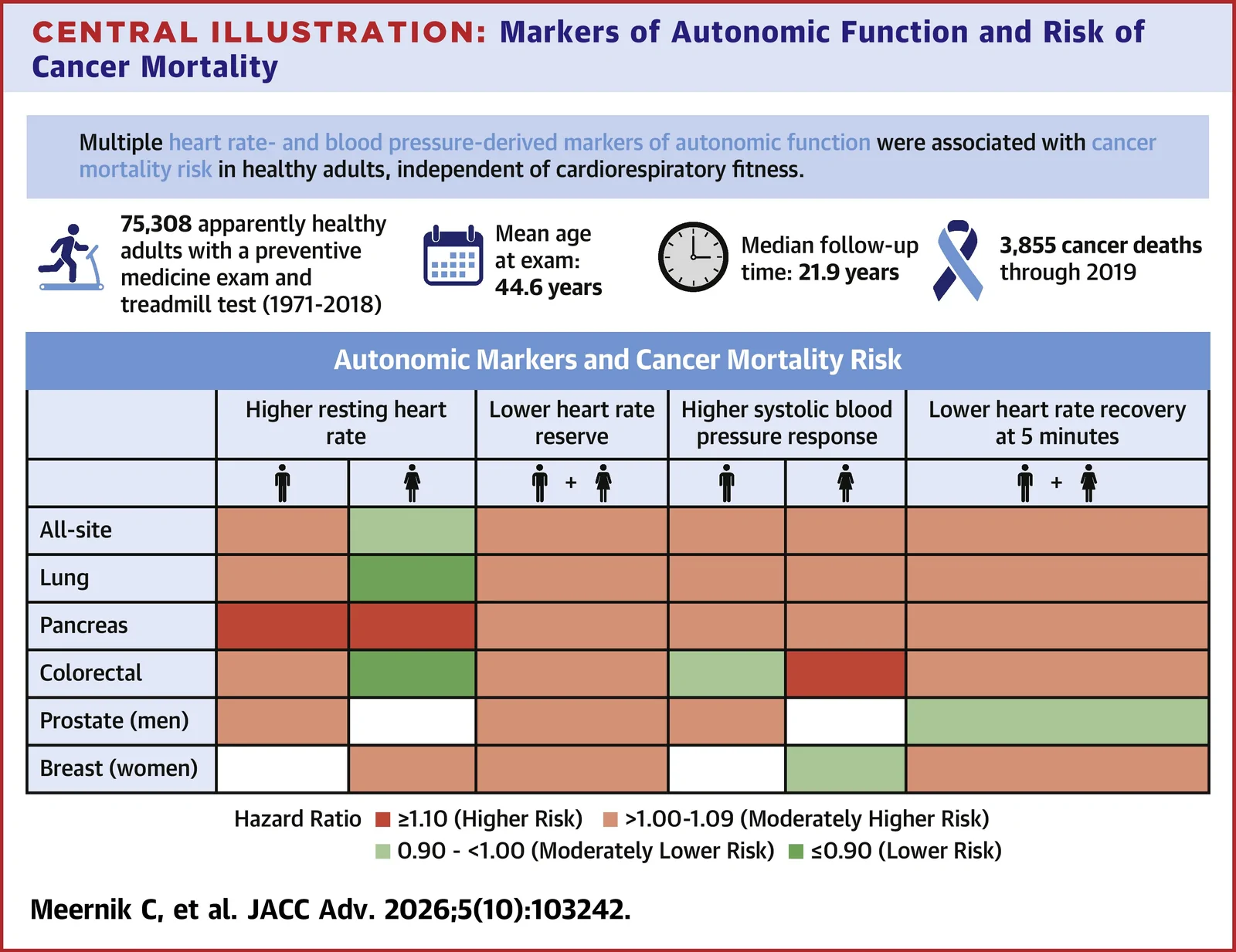
A 10-beat-per-minute smaller heart rate drop five minutes after exercise was associated with a cancer-death hazard ratio—a measure of relative risk—of 1.06.
Our read
Biomarkers- Studied:
- Cohort study of 75,308 apparently healthy adults, median 21.9 years
- What changed:
- Cancer death risk was higher with slower heart rate recovery at 5 minutes (hazard ratio 1.06 per 10 beats/min lower)
- The catch:
- Use of heart-rate-altering medications was incompletely recorded
Editor of record: Boris Djordjevic · AgingResearch.News
In an observational cohort study, 75,308 apparently healthy adults averaged 44.6 years of age; 26.8% were women. Participants underwent a preventive examination and treadmill test. Over a median follow-up of 21.9 years, 3,855 died of cancer.
A smaller share of the predicted heart rate increase achieved during exercise and slower heart rate recovery afterward were associated with higher cancer mortality. These measurements may reflect the autonomic nervous system, which controls involuntary functions such as heart rate. The associations persisted after accounting for heart and lung fitness and other health and lifestyle factors. Higher resting heart rate was linked to cancer mortality in men, but not women. Links between blood pressure increases during exercise and cancer mortality were stronger in women. Associations with deaths from specific cancers were particularly pronounced for lung cancer.
Why it matters
Cancer is an age-related disease. The study addressed whether measures of the nervous system’s automatic control of the body carry information about cancer mortality beyond heart and lung fitness.
Caveats
The observational design cannot establish cause and effect. Participants were predominantly White with access to preventive care; people with prior cancer, heart attack or stroke were excluded.
From the paper
- Participants
The analytical sample included 75,308 participants (26.8% women) who had a clinic visit between 1971 and 2018 at a mean age of 44.6 (SD: 9.9) years.
- Follow-up
During a median follow-up of 21.9 years (interquartile range: 13.8-33.5 years), 3,855 cancer deaths were identified (3,211 among men; 644 among women).
- Result
After adjustment for CRF, the association remained, though slightly attenuated (HR: 1.04; 95% CI: 1.01-1.08).
- Limitation
First, given the observational study design, physiological measures reflective of autonomic function should be interpreted as markers of cancer mortality risk rather than causal factors.
Quoted word for word from the full text on PubMed Central.
The paper
Markers of Autonomic Function and Cancer Mortality Risk in Healthy Adults
Texas Tech University Health Sciences Center; University of North Carolina at Chapel Hill
JACC Advances, Sep 18, 2026, Open access


Comments
Be the first to comment.