Low predicted muscle mass showed no strong link to cancer risk
Men with low predicted muscle mass had a hazard ratio of 1.04 for overall cancer versus other men—a small difference in relative risk.

Our read
Populations- Studied:
- Cohort study of 4,441,403 adults undergoing national health screening
- What changed:
- Overall cancer risk was slightly higher in men with low predicted muscle mass versus other men (hazard ratio 1.04)
- The catch:
- Muscle estimates closely tracked other body-composition measures, complicating separation of their links with cancer
Editor of record: Boris Djordjevic · AgingResearch.News
Among 4,441,403 adults who underwent national health screening in 2012, a nationwide population-based cohort study examined links between predicted muscle mass and later cancer diagnoses. The low-muscle group comprised the quarter of each sex with the lowest scores on an index of predicted arm and leg muscle mass.
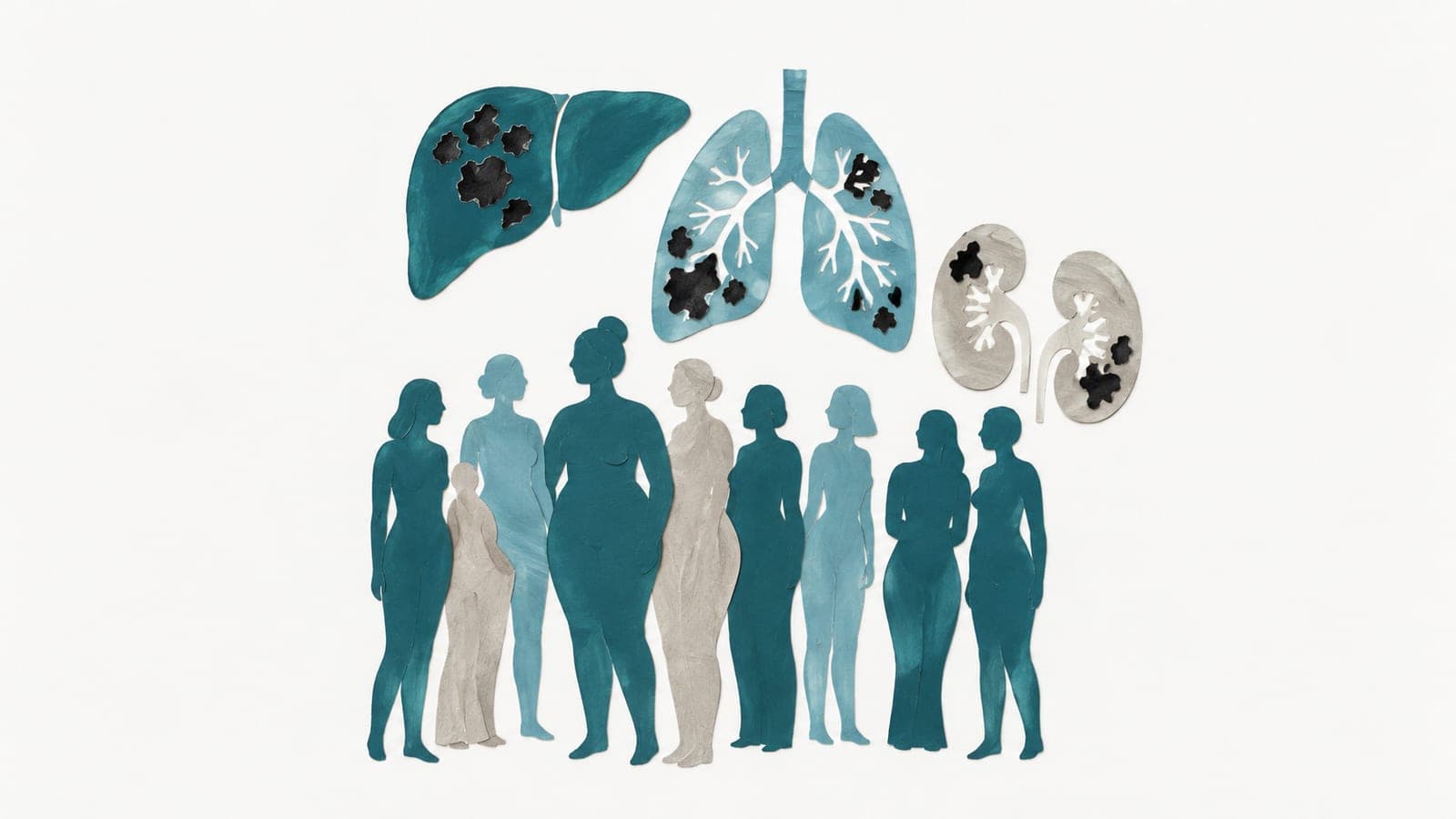
After adjustment for factors including body mass index, a measure of weight relative to height, men in this group had slightly higher overall cancer risk. Women under 50 had slightly lower overall risk; women 50 and older had no overall association. Links varied by cancer type. For example, men had higher liver and lung cancer risks but lower prostate, kidney and thyroid cancer risks. The authors concluded that low muscle mass alone was not strongly associated with higher cancer risk.
Why it matters
For efforts to understand cancer risk as people age, the authors emphasized considering predicted muscle mass alongside overall body composition.
Caveats
Muscle mass was estimated, and these estimates closely tracked other body-composition measures, especially in women. This complicated analyses intended to separate their links with cancer.
The paper
Samsung Medical Center 1 Seoul
Cancer Prevention Research, Nov 16, 2026



Comments
Be the first to comment.