Age-related differences in facial emotion recognition across adulthood: accuracy and confidence in the 30s, 50s, and 70s
Declared no competing interests
Abstract
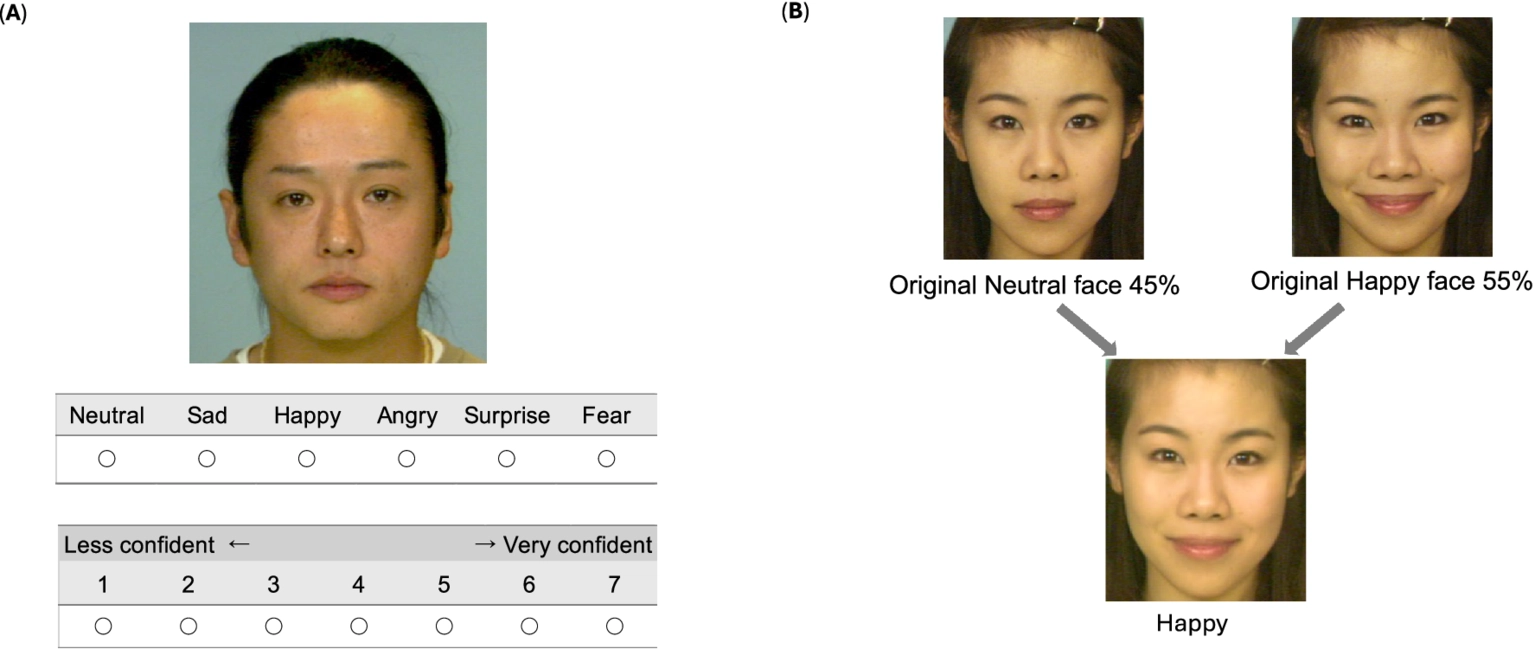
INTRODUCTION: Age-related changes in facial emotion recognition have been widely documented; however, relatively few studies have examined these changes across adulthood, including middle age. Little is also known about how confidence in these judgments changes across adulthood and how these processes relate to empathy. The present study examined age and gender differences in recognition accuracy, confidence, and empathy, as well as the relationships among these factors. METHODS: A total of 695 adults in their 30s, 50s, and 70s were included in the final analyses. Participants completed a facial emotion recognition task with six emotional expressions and provided confidence ratings for each response. They also completed a self-report measure of cognitive and affective empathy. RESULTS: Age group differences in recognition accuracy were emotion-specific and, in some cases, modulated by gender. Confidence analyses showed that age group was associated with an increased likelihood of high-confidence errors, whereas no significant age-group effect was observed for high-confidence correct responses; a direct test of the age group × correctness interaction did not reach significance. Empathy analyses indicated small but consistent gender differences, with women scoring higher than men, and no clear age-related effects. Associations between empathy and recognition performance were modest, with cognitive empathy showing a small positive relationship in men aged in their 70s, whereas affective empathy showed no clear association. DISCUSSION: These findings indicate that age group differences in facial emotion recognition involve not only perceptual accuracy but also metacognitive evaluation, and do not support a simple decline in performance in later adulthood. The results further suggest that cognitive and affective empathy differ in their relationship to emotion recognition, indicating partially distinct components of socioemotional functioning across adulthood.
From the paper
- Participants
A total of 948 adults participated in the study.
- Result
Compared to the 30s group (reference), the 70s group was significantly more likely to produce high-confidence errors (OR = 1.89, 95% CI [1.21, 2.96], p = 0.006), indicating that adults in their 70s were approximately 1.9 times more likely to commit high-confidence errors than those in their 30s.
- Limitation
Although age group differences were observed among the 30s, 50s, and 70s groups, cross-sectional comparisons cannot distinguish developmental changes from cohort effects.
Quoted word for word from the full text on PubMed Central.
The paper
Mejiro University
Frontiers in Psychology, 3 Sep 2026