Drug helps human immune cells fight bacteria in the lab
In laboratory experiments, K21 improved bacterial uptake by human immune cells while reducing the bacteria’s ability to cause infection within them.
Our read
Interventions- Studied:
- Experiments in human monocyte-derived macrophages, against untreated M2 controls
- What changed:
- Few bacterial colonies formed from M2 macrophages pretreated with K21 compared with untreated M2 controls
- The catch:
- K21 was provided by FiteBac LLC
- Why it’s aging research:
- It measures how long life or healthy life lasts.
Editor of record: Boris Djordjevic · AgingResearch.News
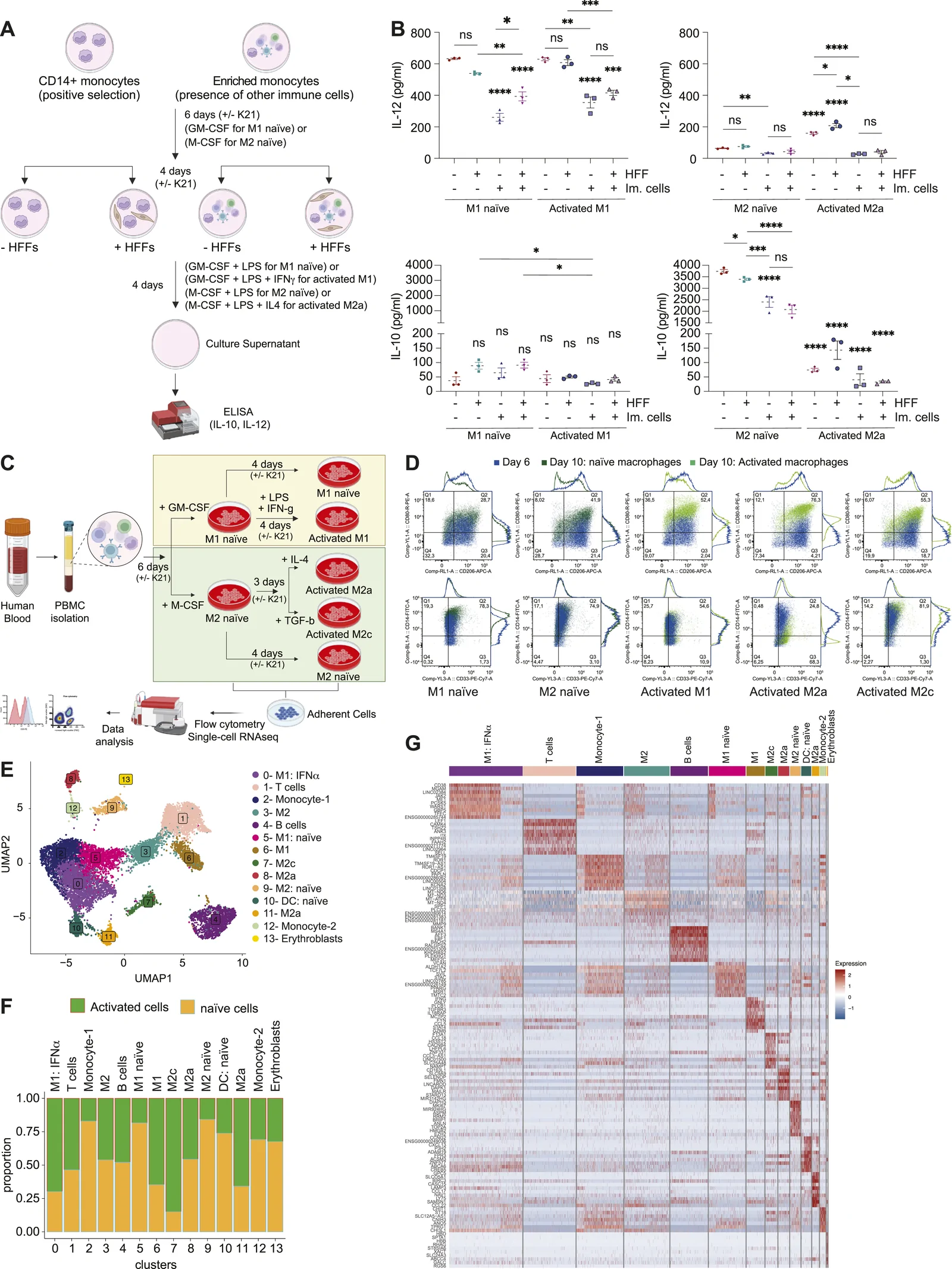
In laboratory experiments, researchers tested the compound K21 in human monocyte-derived macrophages, immune cells grown from healthy donors’ blood. They added 0.28 micromolar K21 as the cells developed into macrophages. After nine days, they exposed the cells to Enterococcus faecalis bacteria in medium without K21.
K21 reduced bacterial infectivity—the ability to cause infection—inside macrophages. It also improved the cells’ ability to engulf bacteria. K21 activated inflammation-related pathways without changing the release of cytokines, immune signaling proteins. Analysis of gene activity found shifts in the mix of macrophage subtypes. In separate experiments with C. elegans worms, K21 induced mitophagy—the recycling of mitochondria, cells’ energy-producing structures—and extended lifespan.
Why it matters
The study examined mitochondrial recycling as a possible connection between changes in cell metabolism and longevity. The authors suggested that K21’s effects may reflect a mechanism shared across species.
Caveats
These were laboratory cell experiments and worm experiments, not tests of infection treatment or longevity in people. The single-cell gene activity analysis pooled cells from three donors.
From the paper
- Animals
From 40 to 60 animals were analyzed and pooled from three biological replicates.
Quoted word for word from the full text on PubMed Central.
The paper
University of Würzburg
Life Science Alliance, Sep 17, 2026, Open access
Comments
Be the first to comment.