Genetic clues suggest different glaucoma types in China and UK
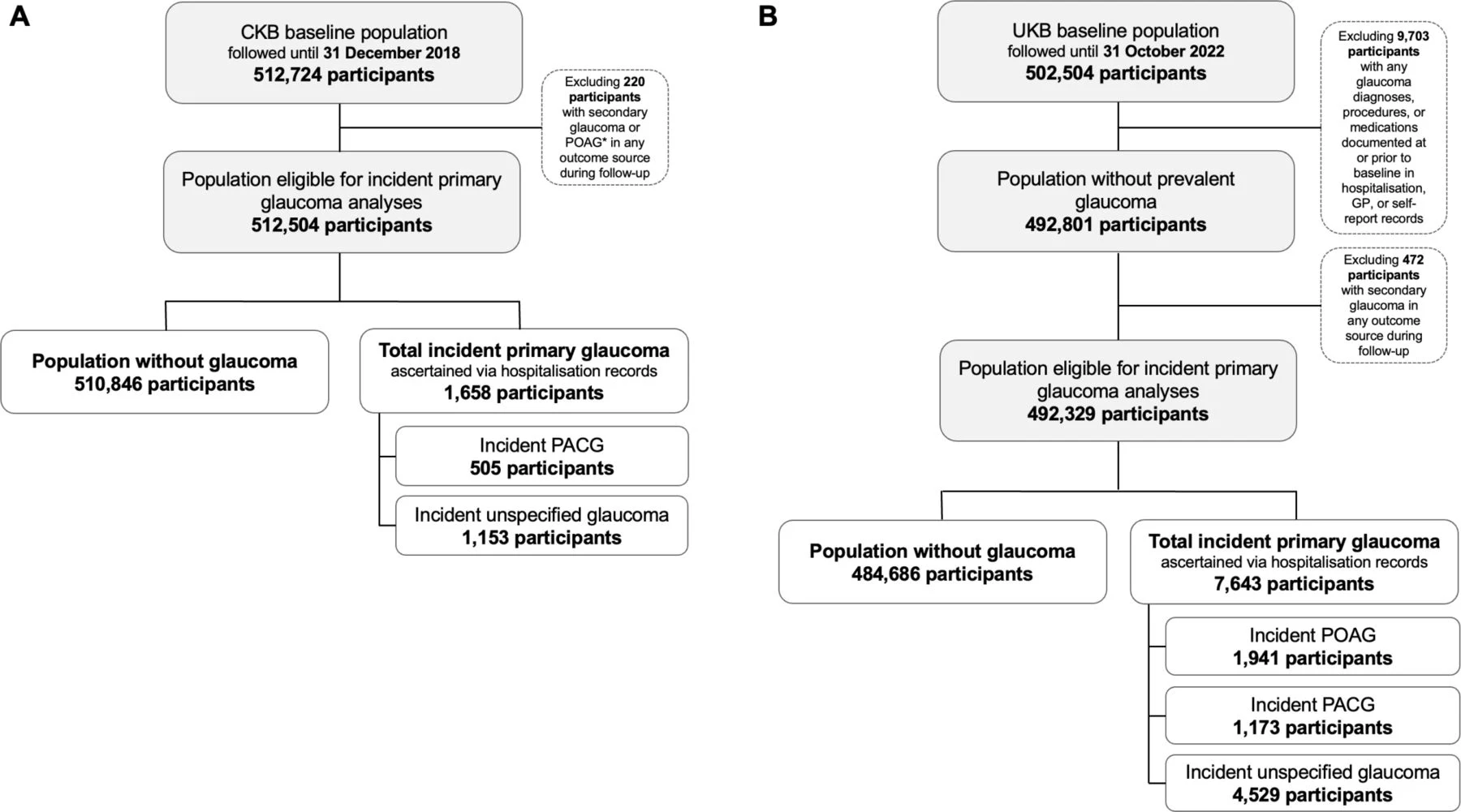
Two observational cohorts followed 512,504 adults in China and 492,329 in the UK for 12 years, finding different genetic patterns behind unspecified glaucoma.
Our read
Populations- Studied:
- Cohort study of adults in China and the UK, 12 years
- What changed:
- In China, unspecified glaucoma was more common with higher angle-closure genetic risk (odds ratio 1.39); UK cases had mixed genetic patterns
- The catch:
- China's inpatient records undercapture open-angle glaucoma compared with broader UK recording
- In the record:
- The 152nd paper on polygenic risk score with results in people; 461 on record in all.
Editor of record: Boris Djordjevic · AgingResearch.News
Adults in China (512,504) and the UK (492,329) were followed for 12 years in two prospective observational cohorts. Researchers used linked inpatient records to identify new glaucoma diagnoses. They compared recorded disease types with genetic risk scores, which combine information from many genetic variants.
The cohorts recorded 1,658 primary glaucoma cases in China and 7,643 in the UK. More than 68% lacked a specified subtype. In China, these unspecified cases had genetic patterns closely resembling angle-closure glaucoma, in which the eye’s drainage angle closes. In the UK, genetic patterns suggested a more varied mix of disease types. Recorded incidence increased with age. The authors concluded that combining population patterns and genetic evidence improved interpretation of diagnoses when detailed clinical information was unavailable.
Why it matters
Glaucoma damages the nerve carrying visual signals from the eye to the brain. Distinguishing its forms may help researchers interpret age-related disease patterns hidden within broad diagnostic labels.
Caveats
Inpatient records could miss glaucoma managed outside hospitals, and the analysis excluded secondary forms caused by other conditions. Genetic similarities suggested the mix of subtypes rather than verifying individual diagnoses.
From the paper
- Participants
The CKB baseline population comprised 512 724 participants.
- Result
In CKB, PACG showed the strongest association with the PRS derived from the East Asian PACG meta-analysis (PACG-EAS, OR per SD increase: 1.32 (95% CI 1.08 to 1.61)), which also explained the greatest proportion of liability among all PRSs evaluated within CKB (Lee 0.67).
- Limitation
Incidence estimates derived from inpatient records reflect diagnoses documented during hospital encounters and therefore underestimate the true absolute burden of glaucoma.
Quoted word for word from the full text on bjo.bmj.com.
- Glaucoma
- Unspecified glaucoma
- Primary angle-closure glaucoma
- Primary open-angle glaucoma
- Polygenic risk score
- Humans
The paper
American Academy of Ophthalmology; University of Oxford
The British Journal of Ophthalmology, Sep 17, 2026, Open access

Comments
Be the first to comment.