Combined blood fat and sugar measures linked to glaucoma
The basic blood fat–glucose measure had a hazard ratio—a comparison of glaucoma rates—of 1.05 in a cohort of 396,213 UK participants.
Independent replication
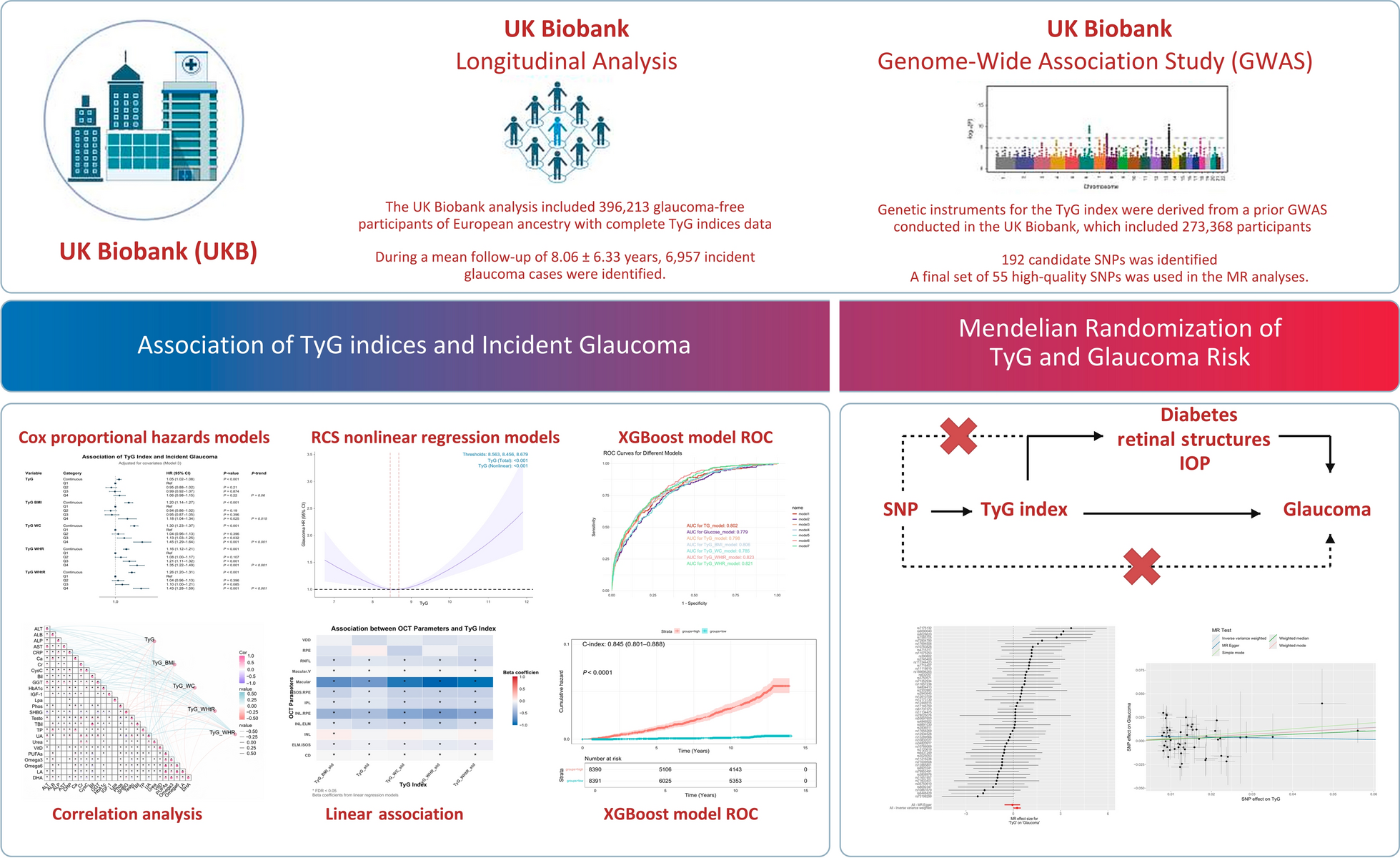
Researchers followed 396,213 UK participants of European ancestry without glaucoma, a disease that damages the nerve at the back of the eye, in a prospective cohort study. They assessed an index combining triglycerides, a type of blood fat, with glucose, or blood sugar. Other versions incorporated body size or waist measurements.
Over an average of 8.06 years, 6,957 participants developed glaucoma. Higher indices were associated with higher risk after adjustment for other factors. Hazard ratios, which compare rates of developing disease, were 1.05 for the basic index and 1.30 for the version incorporating waist size. The basic index’s relationship was U-shaped: risk was higher at low and high values than in between. A Mendelian randomisation analysis, which uses genetic differences to examine associations, provided only suggestive evidence linking the index to glaucoma.
Why it matters
Glaucoma is an age-related eye disease. The authors suggested these measures may offer low-cost additional indicators for assessing risk, subject to validation in other populations.
Caveats
The observational cohort could not establish cause and effect, and the abstract did not specify the index increments behind the hazard ratios. The genetic analysis’s sensitivity estimates were not statistically significant.
- Machine learning
- Glaucoma
- Incident glaucoma
- Corneal-compensated intraocular pressure
- Retinal layer thickness
- Humans
The paper
The Chinese University of Hong Kong
Eye and Vision, 10 Oct 2026


