Chronic infection triggers senescence in mouse immune cells
Lab experiments followed mouse immune cells for up to five days and found that secreted signals spread senescence to uninfected neighbors.
Our read
Interventions- Studied:
- Experiments in murine macrophages, 5 days, against uninfected controls
- What changed:
- Infected macrophages showed increased senescence, with ~75% staining positive against uninfected controls
- The catch:
- The spatial dataset included only a single infected animal and a single uninfected control
- In the record:
- One of 292 papers on navitoclax on record: 20 with results in people, 84 in animals. Its result on senescent cells agrees with all 3 other findings on record.
Editor of record: Boris Djordjevic · AgingResearch.News
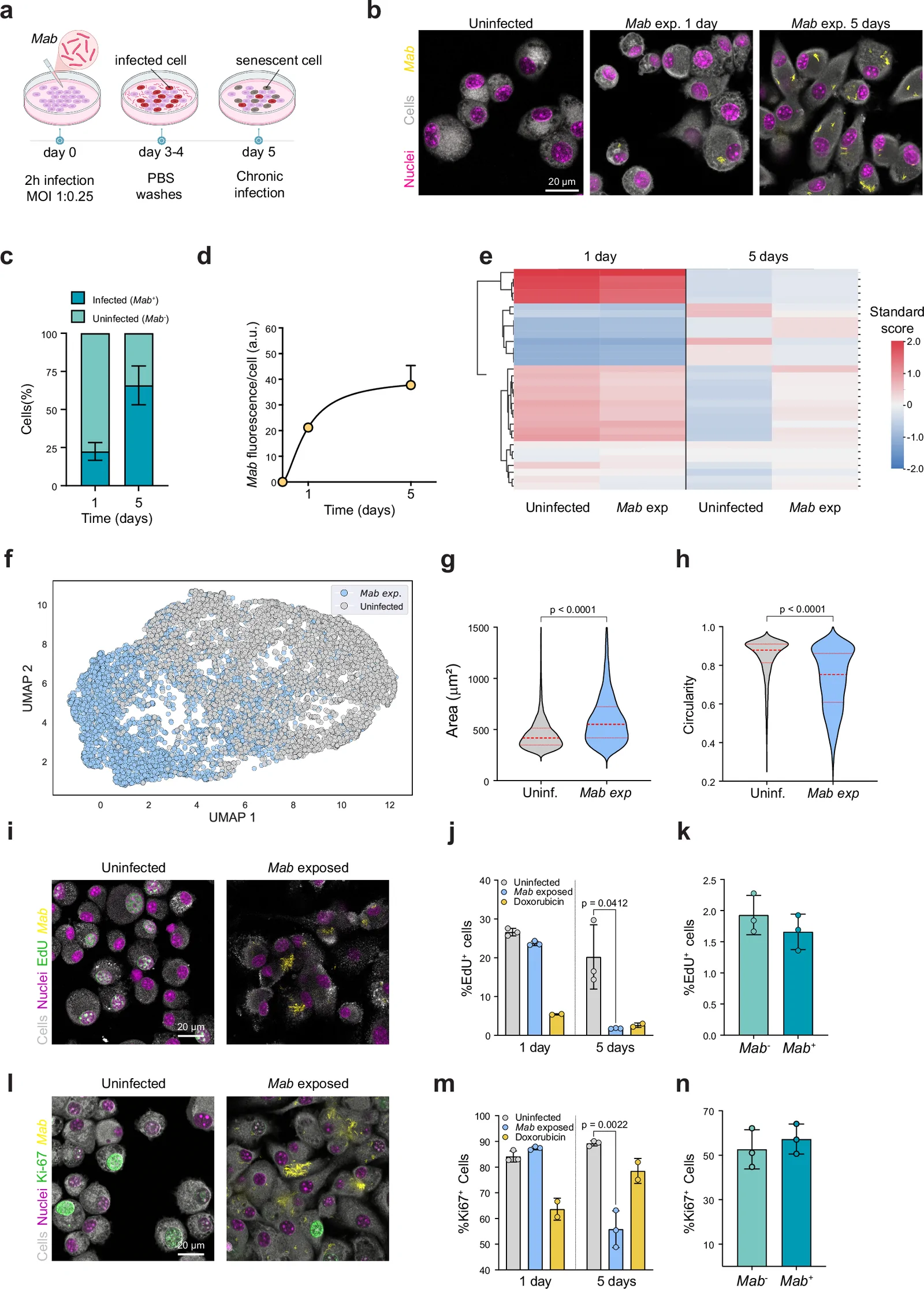
Mouse alveolar-like macrophages—lab-grown immune cells resembling those in the lung—entered senescence after infection with the bacterium Mycobacterium abscessus. Senescence is a state in which cells stop dividing. In this laboratory experiment, researchers exposed cells to bacteria for two hours, then followed them for up to five days.
DNA damage emerged as the main driver of senescence. Infected cells released signals that spread senescence to neighboring, uninfected cells. The authors concluded that this process created an inflammatory environment that helped bacteria persist and evade immune clearance. In the cell model, researchers also tested navitoclax, a drug that selectively kills senescent cells, after an antibiotic. It eliminated senescent cells and reduced the amount of bacteria.
Why it matters
The authors propose targeting senescent host cells as a way to complement antibiotics against chronic infection, rather than targeting the bacteria alone.
Caveats
The drug results came from lab-grown mouse cells, not from treatment of infected animals or people.
The paper
Cell senescence emerges as a hallmark and therapeutic target of chronic intracellular infection
University of Milan
Nature Communications, Aug 18, 2026, Open access
Comments
Be the first to comment.