The Burden of Disease Attributable to Diet Low in Vegetables From 1990 to 2021: A Global Analysis
Cohort study, declared no competing interests
Abstract
The global epidemiological landscape of diseases attributable to diet low in vegetables remains insufficiently characterized. This study aims to provide a comprehensive assessment of the disease burden associated with this risk on a global scale. Using data from the Global Burden of Diseases, Injuries, and Risk Factors Study 2021, the summary exposure value (SEV) of diet low in vegetables and the associated burden from 1990 to 2021 were analyzed. Trends of deaths and disability-adjusted life years (DALYs) attributed to diet low in vegetables were measured using the age-standardized rate (ASR) and the estimated annual percentage change (EAPC). The relationship between health outcomes and the Socio-demographic Index (SDI) was explored to identify structural inequalities. Globally, the SEV attributable to diet low in vegetables was 27.34 (95% UI: 17.17-32.91) in 2021. Between 1990 and 2021, the SEV showed a continuous decline, with an EAPC of -0.72 (95% CI: -0.84 to -0.60). Central Sub-Saharan Africa had the highest SEVs of diet low in vegetables, while East Asia had the lowest. The rates of deaths and DALYs attributed to diet low in vegetables have consistently decreased between 1990 and 2021. The EAPC for age-standardized mortality rate (ASMR) was -2.01 (95% CI: -2.12 to -1.88), and the EAPC for age-standardized DALY rate (ASDR) was -2.06 (95% CI: -2.21 to -1.91). For both deaths and DALYs, males consistently had higher numbers and rates than females. Furthermore, regions with lower SDIs faced a greater burden compared to higher SDI counterparts. Globally, cardiovascular diseases constituted the primary component of the burden associated with this dietary risk, followed by diabetes and kidney diseases. Although the global burden attributable to a diet low in vegetables has decreased, intake levels continue to vary across regions. These findings provide a descriptive foundation for identifying high-risk populations.
From the paper
- Participants
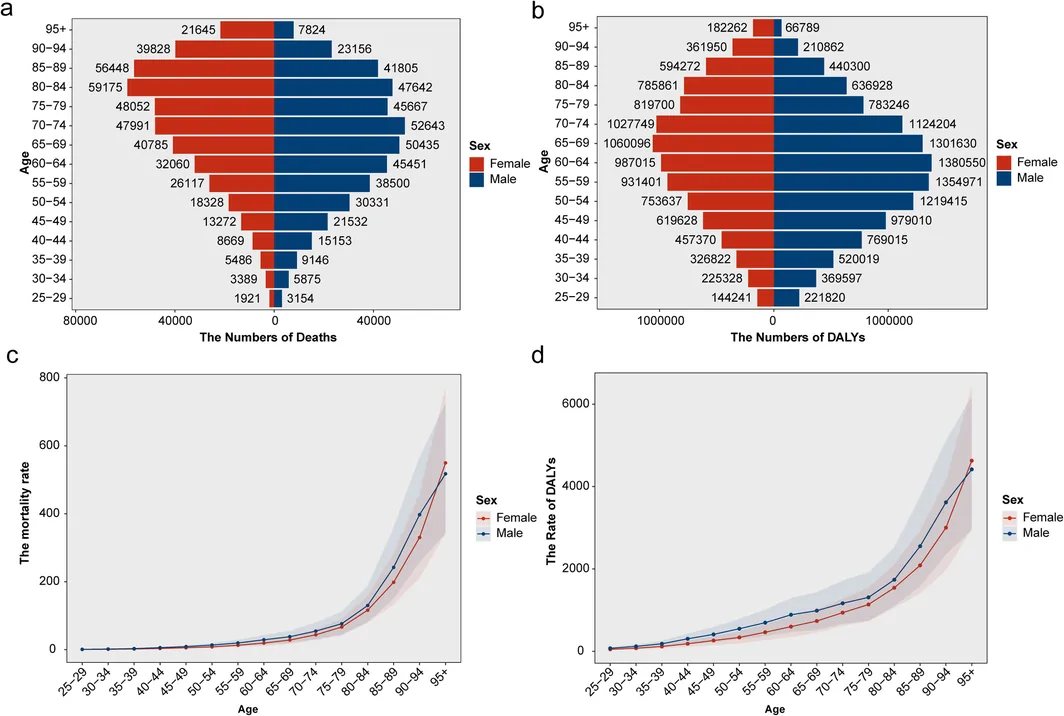
In 2021, the global deaths attributed to diet low in vegetables remained substantial, with a total of 861,480 cases (95% UI 541,278–1,189,503) and an age‐standardized mortality rate (ASMR) of 10.35 per 100,000 persons (95% UI 6.56–14.30).
Results, Disease Burden Attributed to Diet Low in Vegetables in 2021
- Result
From 1990 to 2021, the death number of diseases attributed to diet low in vegetables increased from 686,077 (95% UI 395,488–963,703) to 861,480 (95% UI 541,278–1,189,503), marking 25.57% increase.
Results, The Trend of Disease Burden Attributed to Diet Low in Vegetables From 1990 to 2021
Quoted word for word from the full text on PubMed Central.
The paper
Shanghai Jiao Tong University
Food Science & Nutrition, 15 Sep 2026