Photoplethysmography acceleration indices as digital biomarkers of cardiometabolic health
Abstract
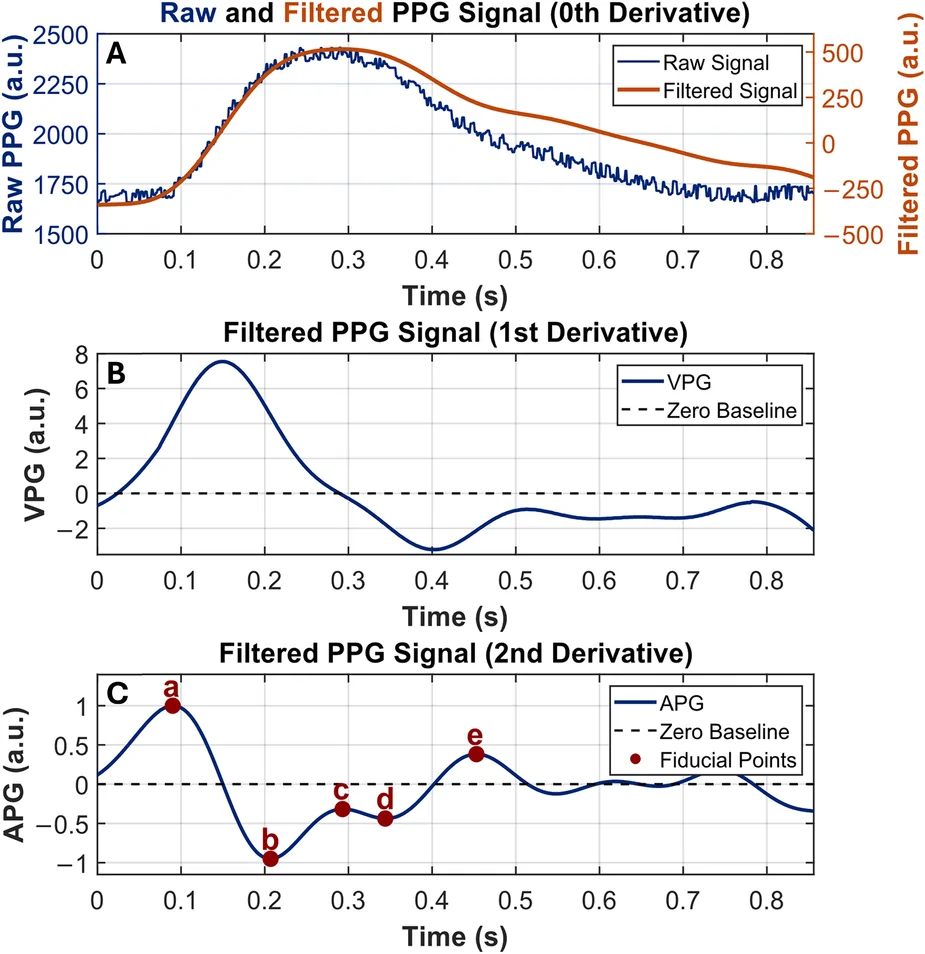
Non-invasive monitoring of cardiovascular health is critical for early detection of dysfunction. Photoplethysmography (PPG) is already widely used in wearable devices to track cardiovascular signals, such as heart rate and pulse wave characteristics. The second derivative of the PPG signal, known as the accelerated plethysmogram (APG), provides indices reflecting arterial stiffness and vascular aging. Despite their potential as digital biomarkers, systematic comparisons across clinical populations are limited. In this cross-sectional study, four APG-derived indices (b/a, c/a, d/a, AGI) were analyzed in 133 participants: healthy individuals (n = 45), people with hypertension (n = 68), and people with diabetes (n = 20). All indices correlated significantly with chronological age within each group. Compared with healthy individuals, both pathological groups showed marked differences across indices, with large effect sizes. Direct comparison between participants classified as hypertensive and those classified as diabetic, with or without hypertension, revealed that the b/a ratio was the most discriminative parameter between these clinical groups (Cohen's |d| = 1.19). These findings indicate that APG indices differ significantly across health states and may represent non-invasive digital biomarkers of vascular health, supporting their integration into wearable devices for continuous cardiovascular monitoring.
The paper
ETH Zurich
Frontiers in Digital Health, Aug 26, 2026, Open access