Low muscle mass linked to lung disease risk in older adults
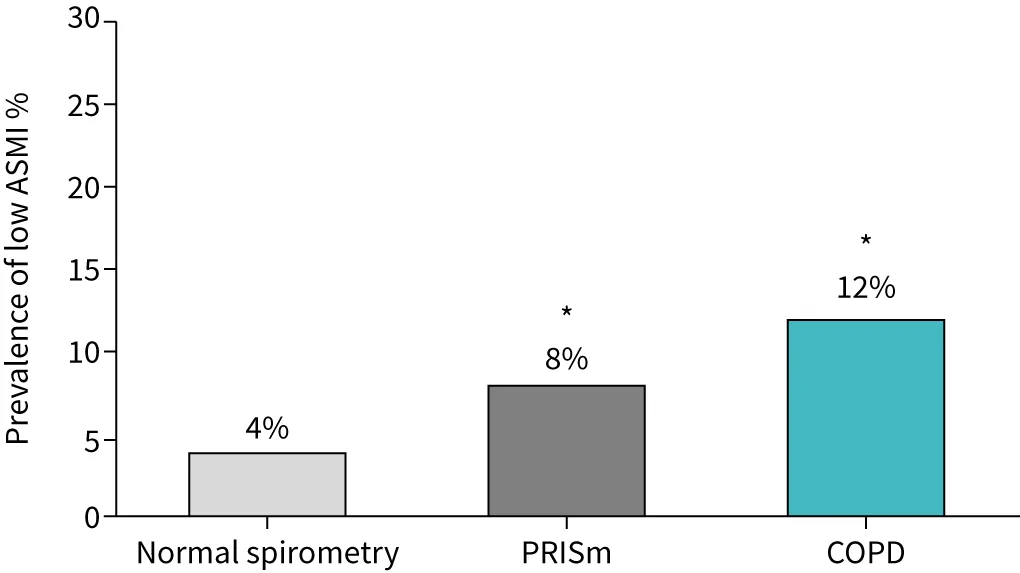
Low muscle mass with impaired lung function was linked to sevenfold higher odds of chronic obstructive pulmonary disease versus normal lung function and muscle mass.
Our read
Populations- Studied:
- Cohort study of adults with PRISm or normal spirometry, 4.6±0.4 years
- What changed:
- COPD odds were higher with impaired lung function and low muscle mass (OR 6.67) than with normal function and mass
- The catch:
- Deaths may explain missing follow-up, potentially underestimating COPD progression
- In the record:
- The 25th paper on preserved ratio impaired spirometry with results in people; 42 on record in all.
- Why it’s aging research:
- It measures an outcome that worsens with age.
Editor of record: Boris Djordjevic · AgingResearch.News
An observational cohort study analyzed 5,487 Rotterdam Study participants with an average age of 69; 56% were women. Researchers measured arm and leg muscle mass and classified breathing tests, including a pattern of impaired lung function called preserved ratio impaired spirometry. Among the 387 people with that pattern, 8% had low muscle mass, compared with 4% of those with normal breathing tests.
Only 89 of the 387 repeated breathing tests after an average 4.6 years; 49% met the study’s definition of chronic obstructive pulmonary disease, a condition that limits airflow. Those with impaired lung function and low muscle mass had sevenfold higher odds than people with normal lung function and muscle mass, after accounting for age, sex and smoking.
Why it matters
The study addresses whether muscle measurements could help identify older adults at risk of chronic lung disease. The authors suggest low muscle mass in people with this impaired lung-function pattern may be a treatable trait requiring clinical attention.
Caveats
This observational study cannot establish causation, and 298 of the 387 participants with impaired lung function lacked follow-up breathing tests. Only 11 returnees had low muscle mass; an alternative lung-function definition classified 10% of all 89 returnees as developing disease, rather than 49%.
From the paper
- Participants
The whole sample included 5487 individuals of which 56% were female.
- Result
The binary logistic regression showed that ASMI (OR 0.81, 95% CI: 0.70–0.95; p=0.009), baseline PRISm (OR 3.20, 95% CI: 2.04–5.03; p<0.001), age (OR 1.05, 95% CI: 1.02–1.08; p<0.001) …
- Events by group
Of these 89 participants, 49% of persons with PRISm developed COPD, 35% remained in the PRISm group and 16% transitioned to normal spirometry.
- Limitation
There was only a small sample for which spirometric change over time was available, due to missing data and small subgroup sizes.
Quoted word for word from the full text on PubMed Central.
- Smoking
- Chronic obstructive pulmonary disease
- Preserved ratio impaired spirometry
- Appendicular skeletal muscle index
- Humans
The paper
Low appendicular muscle mass and the risk of COPD development in people with PRISm
Maastricht University Medical Centre
ERJ Open Research, Sep 7, 2026, Open access

Comments
Be the first to comment.