Airflow patterns from childhood linked to midlife lung disease
Compared with an average pattern, persistently low airflow was associated with 112 times the adjusted odds of chronic obstructive pulmonary disease by age 53.
Limit: COPD was rare in the average-airflow group, potentially inflating the odds ratios
Stake: An author works for Biogen.
Edited by Boris Djordjevic · AgingResearch.News
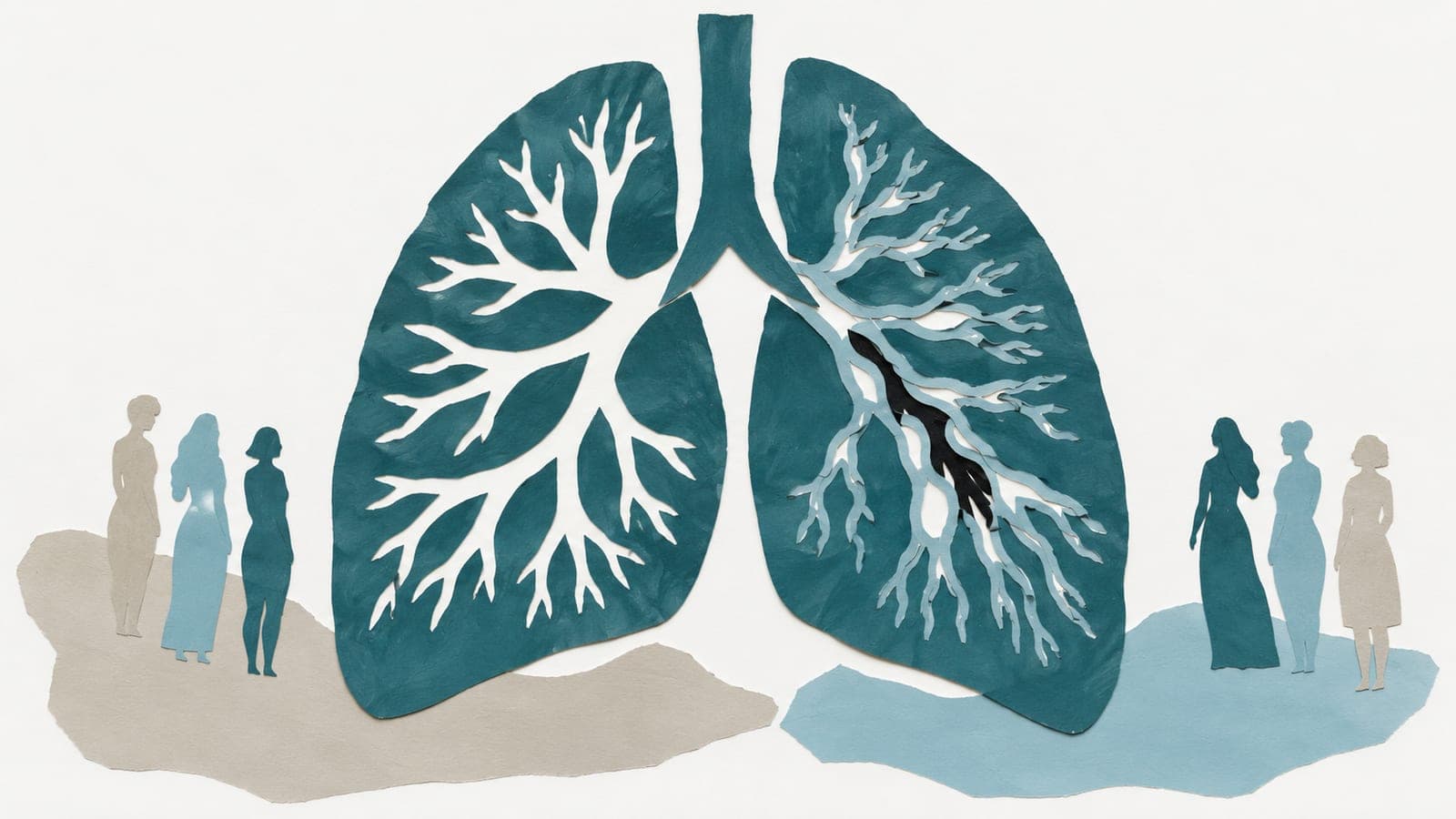
In a prospective observational study, researchers followed 2,314 people recruited from Tasmanian schools at age 7 to a mean age of 53. They measured airflow during the middle part of a forced breath out, a proxy for how well medium and small airways worked. They identified six patterns of change.
Three patterns were associated with chronic obstructive pulmonary disease (COPD), a condition that restricts airflow: persistently low airflow, initially normal airflow followed by limited growth and rapid decline, and initially below-average airflow with limited growth. Compared with the average pattern, their adjusted odds ratios were 112, 41 and 3.1, respectively. For the last pattern, the range of likely values included no difference. Childhood asthma or wheeze and parental smoking before conception were also associated with impaired patterns.
Why it matters
The authors suggest that function in medium and small airways from early life could be more relevant to chronic obstructive pulmonary disease than previously recognized.
Caveats
These observational results describe life-course associations in a Tasmanian cohort, not causal effects or predictions. COPD was rare in the average-airflow group, which could have inflated the odds ratios.
The paper
The University of Melbourne
The Lancet Respiratory Medicine, Jul 21, 2026, Open access