Hematopoietic stem cell fitness mechanisms
Abstract
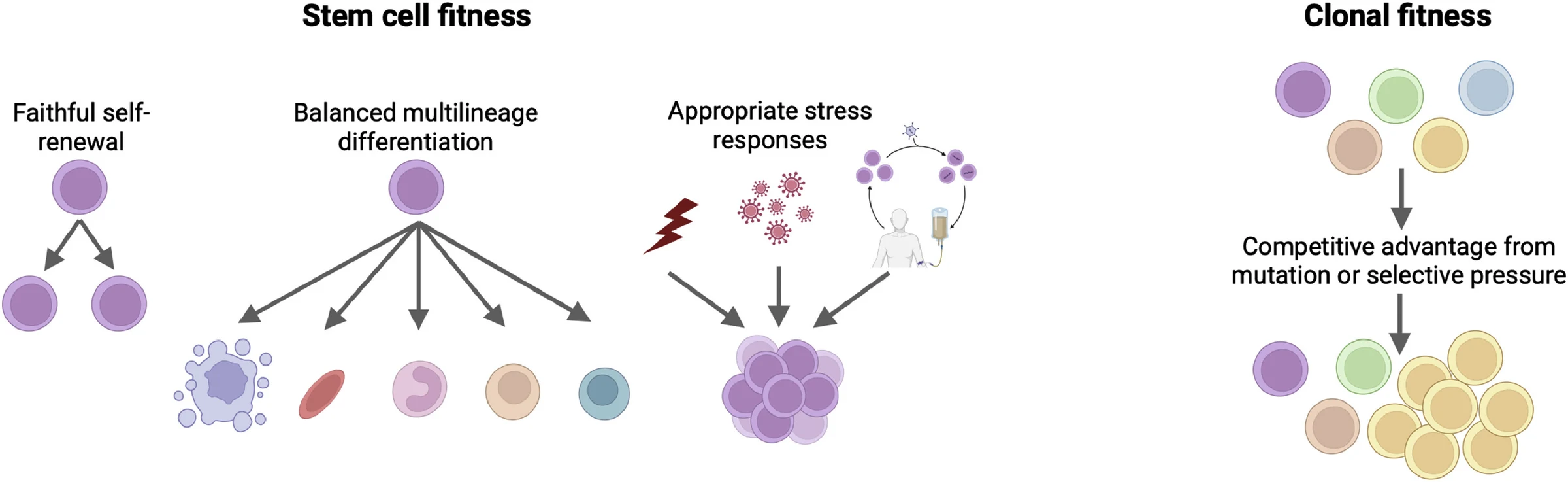
Hematopoietic stem cells (HSCs) are important for human health and clinical therapy. A heterogeneous pool of HSCs sustain blood production through life by balancing self-renewal and multilineage differentiation. Aging is associated with a decline in the function of the HSC pool and hematopoietic perturbations. Additionally, aging correlates with clonal hematopoiesis, driven by the accumulation of genetic mutations in this long-lived cell population that can lead to altered cell function and ultimately to leukemic transformation. Alongside their natural role in sustaining hematopoiesis, healthy HSCs are also used clinically for their regenerative capacity in stem cell transplantation, in which they reconstitute the entire adult blood system and can cure a range of blood disorders. Within these contexts, the term fitness is regularly used but often poorly defined. In this perspective, we summarize two distinct types of HSC fitness, clonal fitness and stem cell fitness. We then introduce mechanisms known to shape each and discuss the therapeutic implications for modulating HSC fitness mechanisms.
The paper
Wellcome/MRC Cambridge Stem Cell Institute
Experimental Hematology, 7 Sep 2026