Patient Preference and Adherence in Mammography Screening: A Narrative Review
Abstract
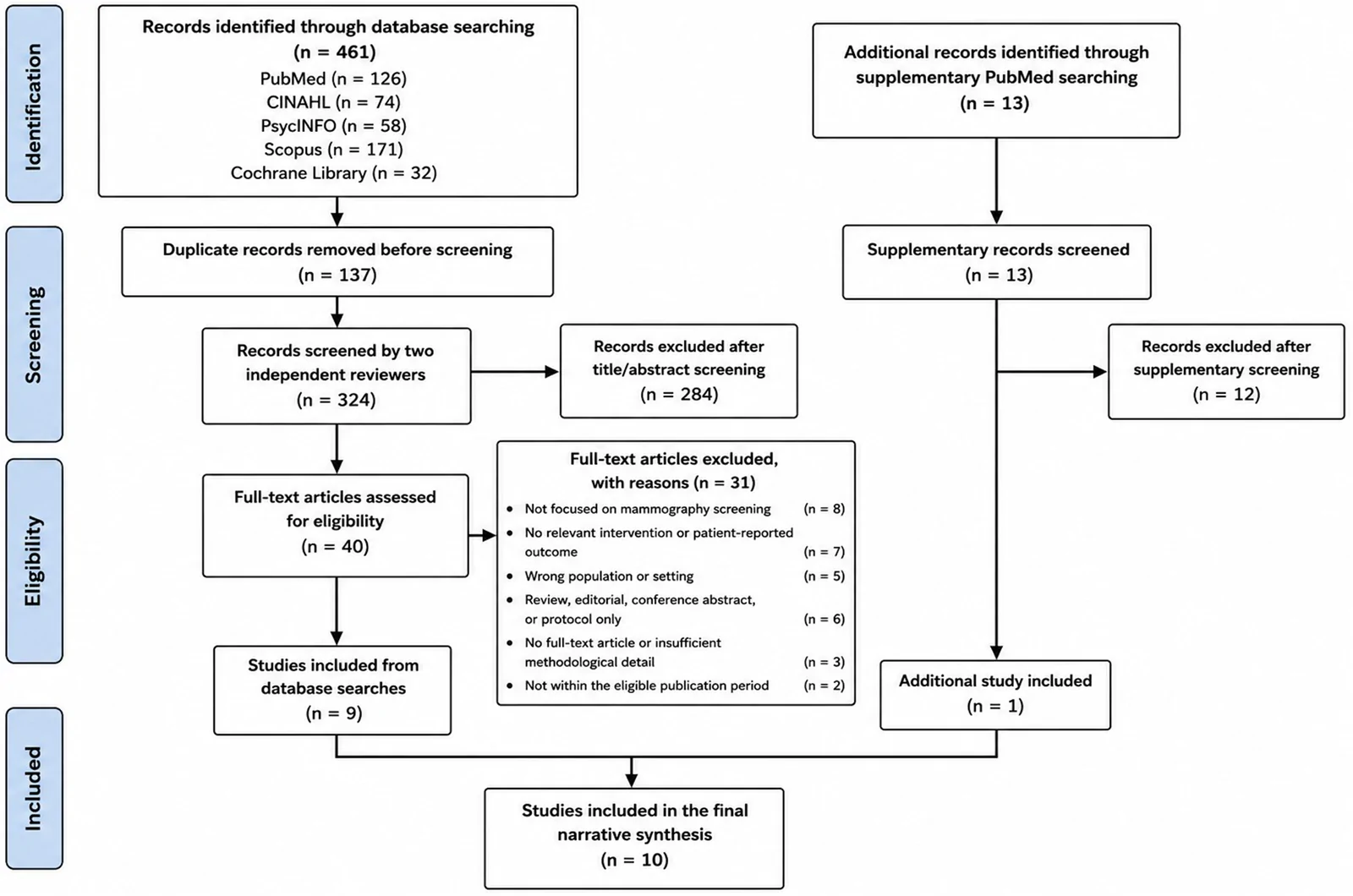
OBJECTIVE: To examine how mammography-related pain, anxiety, compression experience, perceived control, and patient-centered interventions influence patient preference and screening adherence. METHODS: A structured literature search of PubMed, CINAHL, PsycINFO, Scopus, and the Cochrane Library was conducted for peer-reviewed English- and Chinese-language studies published between January 2000 and October 2025. Eligible studies examined mammography-related pain, anxiety, compression experience, perceived control, patient-assisted compression, psychosocial interventions, patient preference, patient experience, or screening adherence. KEY FINDINGS: Mammography-related pain is multifactorial and is influenced by compression force and pressure, breast morphology, positioning, prior negative experiences, and anxiety-mediated pain sensitization. Pressure-standardized compression may reduce severe pain, particularly among women with smaller breast volumes, while patient-assisted compression may increase patients' perceived ability to influence the compression process and improve tolerance without compromising diagnostic image quality. Psychosocial interventions, including structured education, patient-centered communication, and music-based interventions, may reduce anxiety and improve satisfaction by interrupting the anxiety-pain feedback loop. Qualitative evidence further suggests that patient-centered communication tailored to diverse ethnic backgrounds may help reduce anxiety and pain during mammography. CONCLUSION: Technical and psychosocial dimensions of the mammography experience may influence patient preference and screening tolerance; however, evidence directly linking these factors to future screening re-attendance remains limited. A multimodal, patient-centered strategy combining optimized compression, patient participation in the compression process, clear communication, and low-resource psychosocial support may improve screening tolerance, but whether these improvements translate into actual repeat screening participation requires further investigation. IMPLICATIONS FOR PRACTICE: Screening programs should consider integrating pain assessment, patient education, patient-centered communication tailored to diverse ethnic backgrounds, and patient-assisted or pressure-guided compression where feasible to enhance patient-centered mammography care.
The paper
Sir Run Run Shaw Hospital
Patient Preference and Adherence, 2 Sep 2026