Stable well-being was common after disability in later life
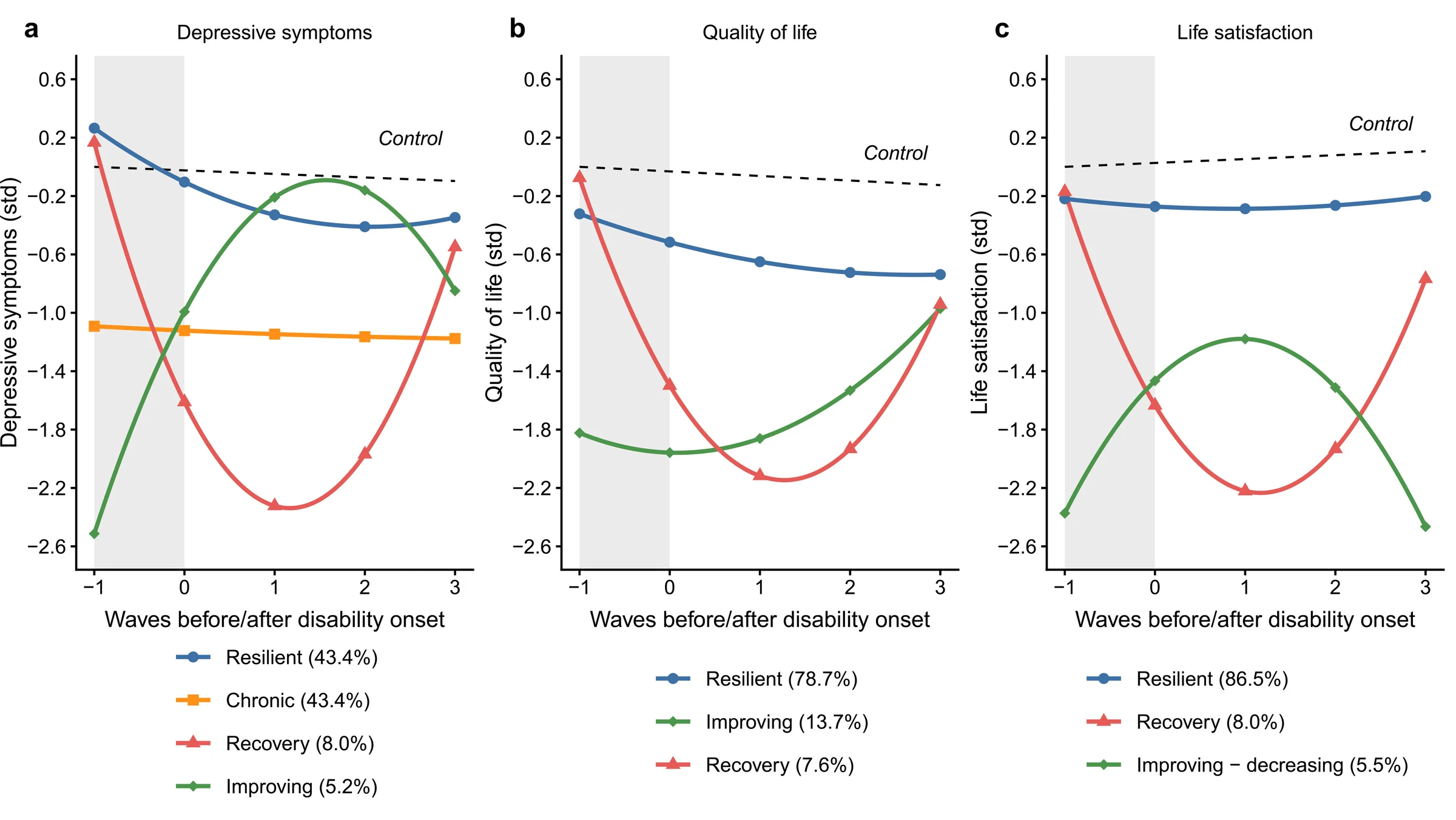
Among people developing persistent daily-activity limitations, models classified 86.5% as maintaining stable life satisfaction and 78.7% as maintaining stable quality of life.
Our read
Populations- Studied:
- Cohort study of older adults with persistent daily-activity limitations
- What changed:
- Life satisfaction stayed stable after disability onset in 86.5% of older adults with persistent daily-activity limitations
- The catch:
- Modeling and measurement choices can inflate the apparent prevalence of stable well-being
- In the record:
- The 28th paper on functional disability with results in people; 294 on record in all.
- Why it’s aging research:
- It measures an outcome that worsens with age.
Editor of record: Boris Djordjevic · AgingResearch.News
Researchers examined older adults who developed persistent limitations in daily activities in an observational analysis of the Survey of Health, Ageing and Retirement in Europe. They used statistical models to identify different patterns of well-being after disability onset. They also compared participants with a matched comparison group.
The models identified three patterns each for life satisfaction and quality of life. Resilience, defined as maintaining stable well-being, was the most common pattern for both measures. For depressive symptoms, four patterns emerged, with resilient and chronic-symptom patterns each accounting for 43.4%. Pre-existing functional limitations and socioeconomic disadvantage were associated with chronic and improving patterns, both marked by low well-being before disability began.
Why it matters
The authors concluded that understanding adaptation to disability in later life requires multiple measures of well-being and careful modeling.
Caveats
The patterns came from statistical modeling of observational data and do not establish cause and effect. The abstract does not report the sample size or how long participants’ well-being was followed.
The paper
Université Libre de Bruxelles
Social Science & Medicine, Aug 29, 2026



Comments
Be the first to comment.