Genetic score for inflammation linked to many health conditions
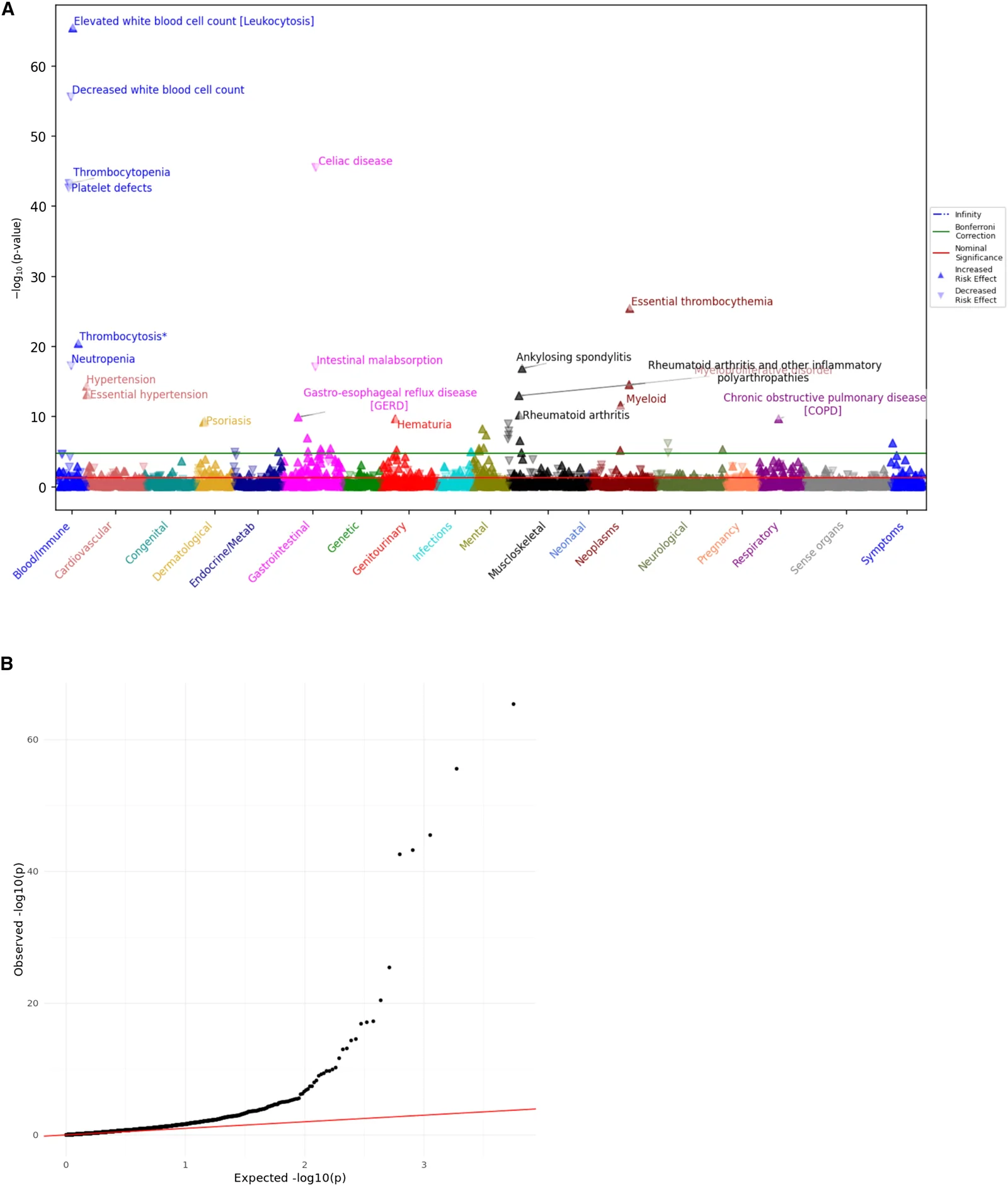
Among 265,068 All of Us participants, a genetic score for inflammation was associated with 47 of 2,821 health conditions and blood-test findings examined.
Our read
Biomarkers- Studied:
- Genetic association study of 265,068 participants in the AoU Research Program, median: 7.5 years (Independent replication)
- What changed:
- The polygenic inflammation score was associated with 47 phenotypes across 13 disease categories
- The catch:
- Differences in medical practice and healthcare access affect how diagnostic codes are applied
Editor of record: Boris Djordjevic · AgingResearch.News
An observational study analyzed 265,068 adults in the US All of Us Research Program. Their mean age at their last recorded visit was 54.8 years, and 62% were female. Researchers developed a genetic score using 421,368 UK Biobank participants from multiple ancestry groups. The score combined inherited DNA differences linked to a measure based on four blood markers of inflammation.
In 4,833 All of Us participants with those blood measurements, the genetic score was associated with measured inflammation. Across the larger group, it was associated with 47 health conditions and blood-test findings. The strongest links involved blood cells. Higher scores were also associated with higher odds of high blood pressure and rheumatoid arthritis, but lower odds of celiac disease. The authors suggested the score may eventually help assess risk for inflammation-driven conditions.
Why it matters
Chronic inflammation is relevant to assessing risk for conditions that become common with age, including high blood pressure. The authors propose that inherited susceptibility may eventually help group people by risk across diverse populations.
Caveats
This observational analysis cannot show that inflammation caused the associated conditions, and these adult data do not establish applicability to children. A separate biobank analysis involving 88,212 people replicated 17 of the 40 associations available for testing.
From the paper
- Participants
The PheWAS cohort consisted of 265,068 participants in the AoU Research Program with complete genetic and EHR data.
- Result
… positive associations were found for EWBC count (OR = 1.07, 95% CI = 1.06–1.09), ankylosing spondylitis (OR = 1.28, 95% CI = 1.18–1.38), hypertension (OR = 1.02, 95% CI = 1.01–1.03), rheumatoid arthritis (OR = 1.04, 95% CI = 1.01–1.07), and myeloproliferative disorder (OR = 1.04, 95% CI = 1.01–1.08) …
Quoted word for word from the full text on PubMed Central.
The paper
University of Leicester; Medical College of Wisconsin
HGG Advances, Sep 4, 2026, Open access

Comments
Be the first to comment.