Drug slowed movement decline and extended life in mice
An experiment in mice modeling amyotrophic lateral sclerosis found better strength and coordination with a drug given from 60 days of age until a humane endpoint.
Our read
Interventions- Studied:
- Experiments in mice
- In the record:
- One of 4 papers on T0901317 on record: 1 with results in people, 1 in animals.
- Why it’s aging research:
- Lifespan, survival or healthspan.
Editor of record: Boris Djordjevic · AgingResearch.News
Male and female SOD1G93A mice, genetically modified to model amyotrophic lateral sclerosis, received T0901317 in an animal experiment. The disease damages nerves that control muscles. The drug activates liver X receptors, proteins that regulate cholesterol balance and immune responses. Researchers added it to food at an estimated daily dose of 35 milligrams per kilogram of body weight from 60 days of age, before symptoms, until a humane endpoint.
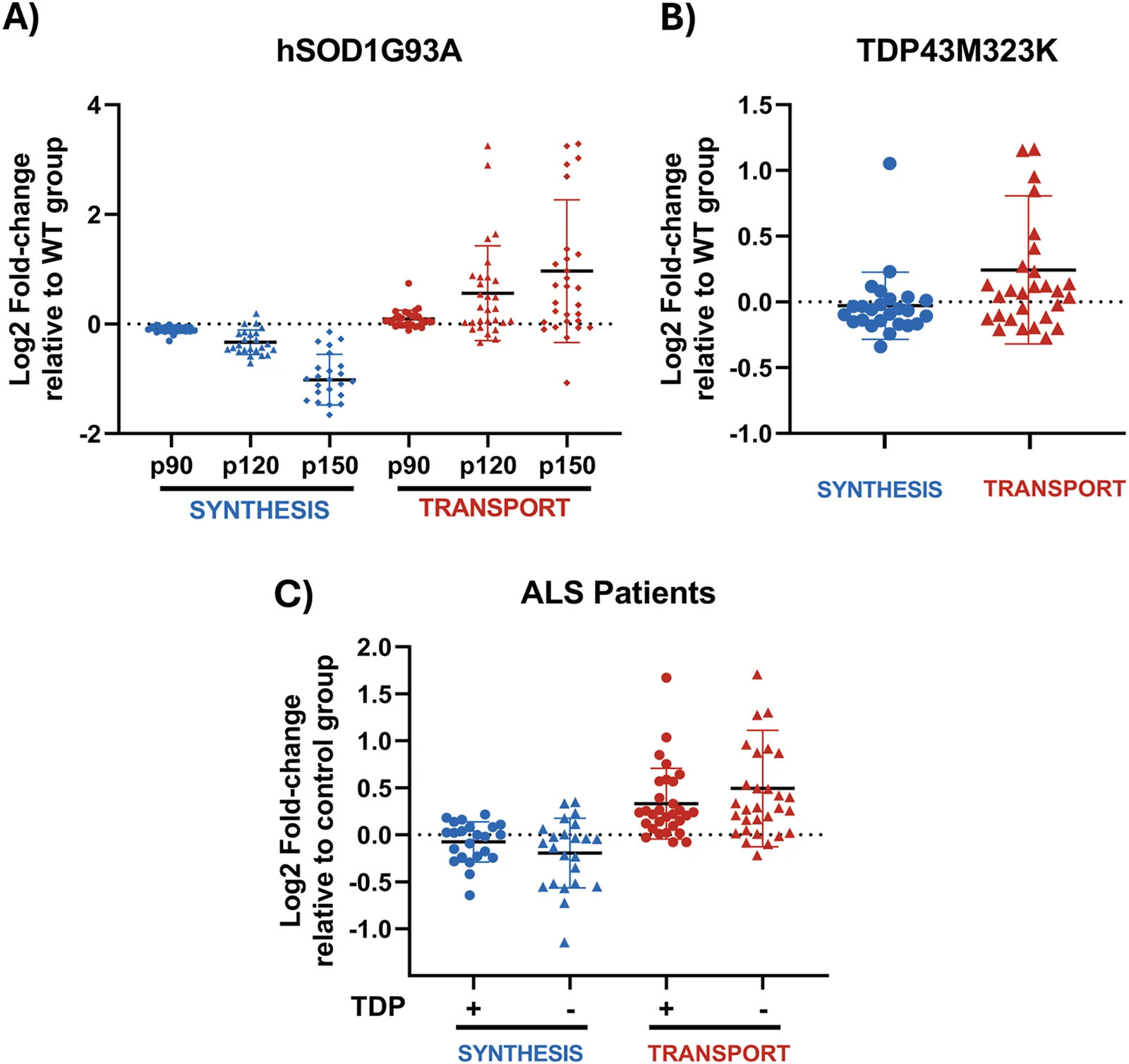
Compared with standard-food controls, treated mice had delayed weight loss and disease progression, better strength and coordination, and preserved functional connections between nerves and muscles. Median lifespan increased in both sexes, slightly more in females. In a separate molecular experiment, the drug increased spinal-cord gene activity involved in moving cholesterol out of cells and reduced inflammatory signaling.
Why it matters
The authors propose cholesterol handling and inflammatory networks as promising targets for amyotrophic lateral sclerosis, an age-related disease affecting muscle-controlling nerves.
Caveats
Dosing began before symptoms in one genetic mouse model; the experiment did not test benefits in people with established disease. Survival was measured to a humane endpoint, when mice could no longer right themselves, rather than natural death.
From the paper
- Participants
Human dataset: Our analysis included 445 individuals and a total of 868 neurological spinal cord samples from the NYGC ALS dataset.
Quoted word for word from the full text on PubMed Central.
The paper
Universidad Complutense de Madrid; Hospital Clínico San Carlos
Neurotherapeutics, Sep 4, 2026, Open access

Comments
Be the first to comment.