Fat supplement may ease age-related decline in mice
An eight-week feeding experiment in young mice prone to age-related decline found better cognitive test performance and reduced brain markers of cell aging.
Limit: The abstract does not report the supplement dose
Stake: An author works for Meiji Holdings.
Edited by Boris Djordjevic · AgingResearch.News
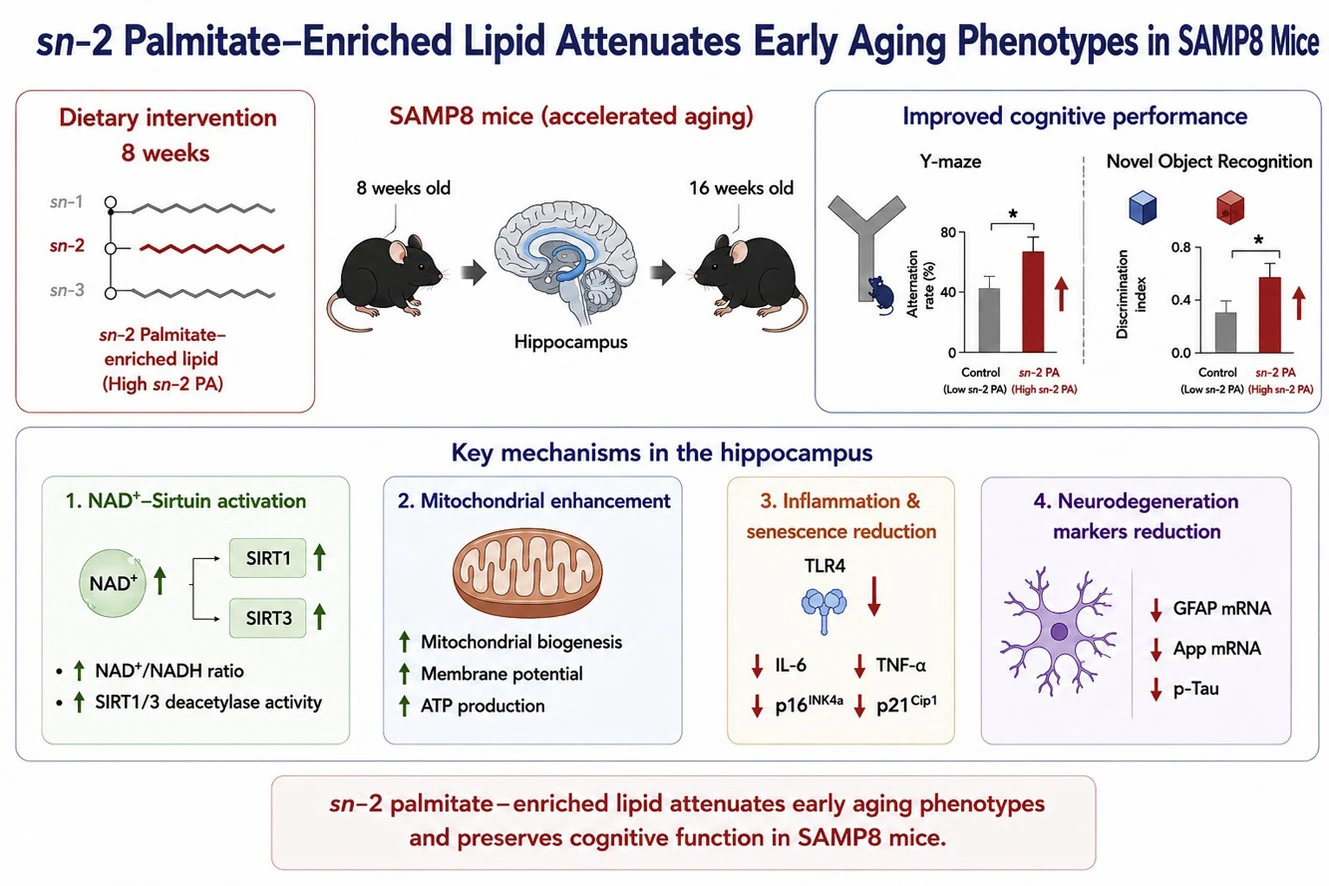
An animal experiment tested a fat-enriched diet in eight-week-old senescence-accelerated mouse prone 8 mice, a model of age-related functional decline. The mice ate the supplemented diet for eight weeks. It contained sn-2 palmitate, a term describing the position of palmitic acid within fat molecules.
Supplemented mice performed better on cognitive tests, which assess thinking abilities. In the hippocampus, a brain region involved in memory, they showed reductions in markers of senescence, a state in which cells stop dividing. They also showed reduced expression of inflammation-related proteins there. The authors suggested that the fats may attenuate aging-associated cognitive and physiological decline by altering NAD metabolism and mitochondrial function. NAD is a molecule involved in cellular energy processes; mitochondria are the cell’s energy-producing structures.
Why it matters
Cognitive decline and disrupted metabolism are features of aging. This work explored whether dietary fats studied in early development might also influence these later-life processes.
Caveats
The findings came from young mice prone to age-related decline and do not establish benefits in older people. The abstract does not report the number of mice or the supplement dose.
The paper
Tokushima University; Baika Women's University
The Journal of Nutritional Biochemistry, Sep 3, 2026


