Bone marrow cells enter the brain in older people
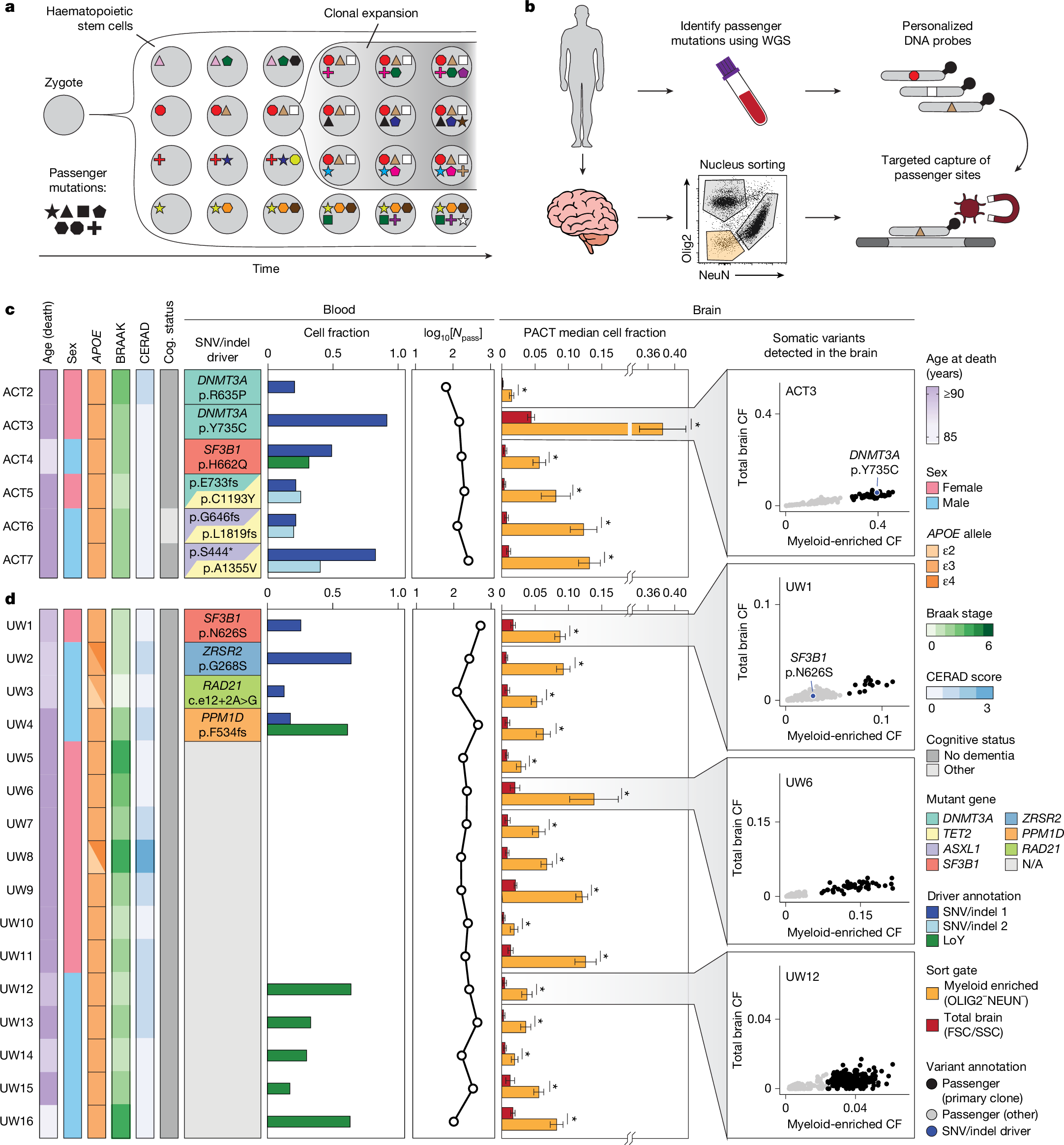
DNA-based cell tracing found evidence of bone marrow cell entry into the brain in all 20 older individuals examined.
Our read
Mechanisms- Studied:
- Cross-sectional study of 20 older individuals
- What changed:
- Bone marrow cell entry was detected in all 20 older individuals examined
- The catch:
- Only 20 older individuals contributed to the brain-cell analysis
- Stake:
- An author works for Amgen and holds shares in it. An author founded Accent Therapeutics. Authors also declare ties to 2 more companies.
- In the record:
- The 235th paper on clonal hematopoiesis of indeterminate potential with results in people; 699 on record in all. Its result on Alzheimer's disease agrees with 3 of 5 other findings on record; 1 points the other way and 1 found no change.
Editor of record: Boris Djordjevic · AgingResearch.News
An observational study of 20 older individuals found evidence that cells from bone marrow had entered the brain in every person examined. Researchers tracked their origins using DNA changes acquired during life, which label groups of cells with a common ancestor.
Analyses of individual cells found that the incoming cells resembled microglia, the brain’s resident immune cells. These incoming cells could make up a large share of the microglial population. Separately, an analysis of human cohort data linked most types of clonal hematopoiesis—the expansion of blood cells descended from a single cell—to lower Alzheimer’s disease risk. The authors concluded that bone marrow cells contribute to the human microglial population and that this influx becomes common with aging.
Why it matters
Understanding where brain immune cells come from may help researchers understand how the brain’s immune system changes with age.
Caveats
The observational findings do not establish that incoming cells protect against Alzheimer’s disease. The brain-cell analysis covered 20 older individuals, leaving its relevance to younger people uncertain.


Comments
Be the first to comment.