Normal Tissue Complication Probability Estimation for Metabolic Syndrome in Survivors of the Dutch National Wilms Tumor Cohort: A DCCSS-LATER Study
Abstract
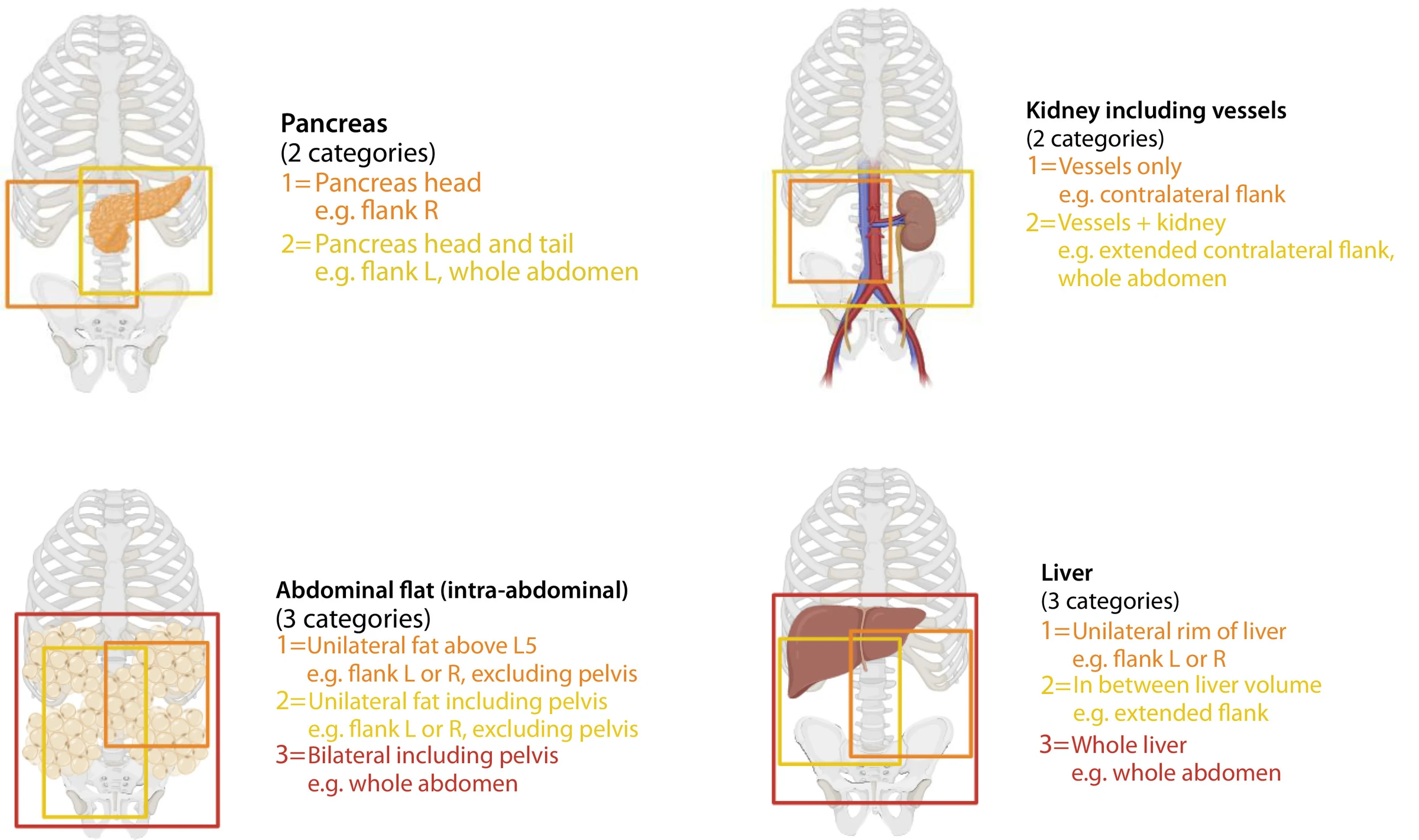
PURPOSE: Wilms tumor (WT) survivors face increased mortality due to cardiovascular-related diseases. Cardiovascular risk factors include adiposity, insulin resistance, dyslipidemia, and hypertension, clustered as metabolic syndrome (MetS). We assessed the prevalence and determinants of MetS in the first Dutch national WT survivor cohort. METHODS AND MATERIALS: This cross-sectional, 1:3 age and sex-matched case-control study, using the Lifelines cohort, analyzed WT survivors treated between 1963 and 2001, recruited within the DCCSS-LATER-2 study (2016-2020). MetS prevalence was assessed using the modified NCEP-ATP-III 2005 classification. Multivariable logistic regression models, adjusted for age and sex, assessed associations between the presence of MetS (components) and abdominal radiation therapy. Dosimetry was performed to estimate the mean dose to the abdominal fat, liver, pancreas (head ± tail), and contralateral kidney ± vessels and to estimate a normal tissue complication probability. RESULTS: Among the 265 of 491 participating WT survivors (median age 33.9 years; median follow-up, 29.8 years), MetS prevalence was 18.8% and 7.3% in matched controls (odds ratio: 95% CI) (2.94, 1.92-4.49). WT survivors showed increased levels of triglycerides (2.39, 1.65-3.49) and fasting glucose (1.67, 1.03-2.70), and decreased high-density lipoprotein cholesterol (2.79, 2.00-3.91). Univariable analyses identified abdominal radiation therapy to be the main determinant associated with increased risk for MetS (2.42, 1.24-4.75). Multivariable analysis identified a significantly increased risk of high fasting glucose levels (3.14, 1.14-9.56) after abdominal radiation therapy. Normal tissue complication probability estimation identified radiation exposure of the pancreas and intra-abdominal fat as potential contributors to this association. A median dose between 10 and 20 Gy to the organs-at-risk resulted in a 5% risk of developing one or more components of MetS, increasing to 25% at 20-30 Gy. CONCLUSIONS: WT survivors, particularly those treated with abdominal radiation therapy >20 Gy, have an increased risk of developing components of the MetS.
- Abdominal radiation therapy
- Lipid and ceramide metabolism
- Metabolic syndrome
- Nephroblastoma
- Fasting glucose
- Humans
The paper
Princess Máxima Center; University Medical Center Utrecht
International Journal of Radiation Oncology, Biology, Physics, 1 Sep 2026