Cigarette smoking and cessation indicators by glycemic status among adults in the United States, 2011-2023
Declared no competing interests
Abstract
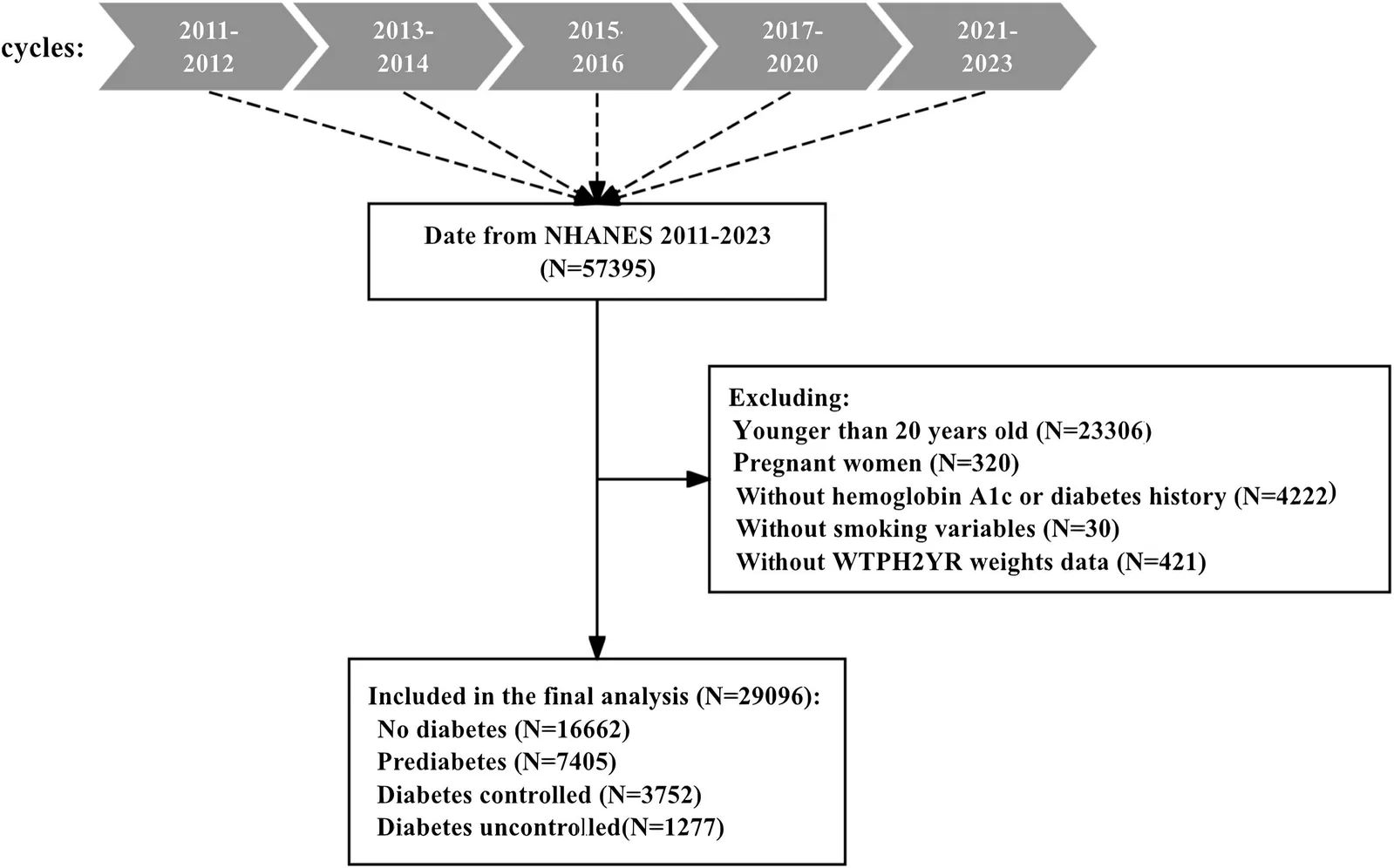
OBJECTIVE: To compare smoking prevalence, smoking intensity, quit attempts, and quit ratio across four glycemic groups among US adults. METHODS: We analyzed National Health and Nutrition Examination Survey data collected in the United States from 2011 through 2023 among adults aged 20 years or older. Glycemic status was classified as no diabetes, prediabetes, controlled diabetes, or uncontrolled diabetes. Survey-weighted analyses estimated smoking outcomes and adjusted associations using models adjusted for demographic, socioeconomic, behavioral, and clinical factors. RESULTS: Among 29,096 adults, current smoking prevalence was 17.45%, 19.63%, 14.30%, and 19.83% across the four groups, respectively (P < 0.01). Smoking intensity differed across groups (P<0.01). Quit attempt prevalence did not differ significantly (P = 0.06), whereas quit ratio differed (56.36%, 57.20%, 71.28%, and 59.69%; P < 0.01). In fully adjusted models, prediabetes (adjusted odds ratio [aOR]: 1.31; 95% confidence interval [CI]: 1.10, 1.57) and uncontrolled diabetes (aOR: 1.37; 95% CI: 1.02, 1.83) were associated with higher odds of current smoking. Prediabetes was associated with a lower quit ratio among ever smokers (aOR: 0.80; 95% CI: 0.66, 0.98). CONCLUSIONS: Smoking burden remained substantial among adults with prediabetes and uncontrolled diabetes, supporting targeted cessation interventions across the glycemic spectrum and informing future public health planning.
The paper
First Affiliated Hospital of Liaoning Medical University
Preventive Medicine Reports, 19 Aug 2026