Associations of energy and protein adequacy during the nil per os period with discharge Food Intake Level Scale and Functional Independence Measure motor scores in very old patients with aspiration pneumonia: a retrospective observational cohort study
Declared no competing interests
Abstract
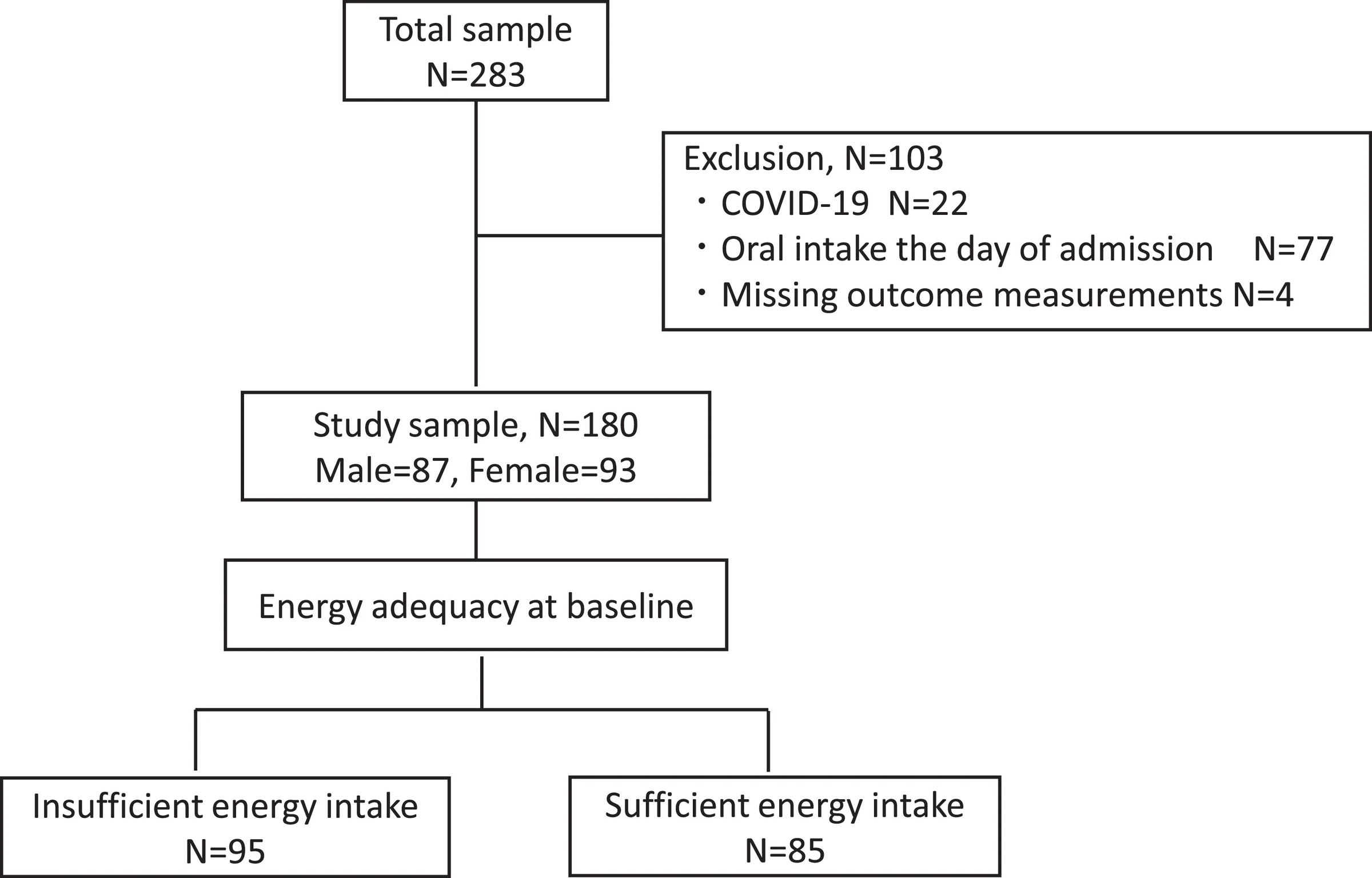
OBJECTIVE: Inadequate nutrition during nil per os (NPO) management has been reported in patients with aspiration pneumonia, but its impact on clinical outcomes remains unclear. This study examined whether energy and protein adequacy during NPO were associated with swallowing function and activities of daily living (ADL) at discharge. RESEARCH METHODS AND PROCEDURES: This retrospective observational cohort study included patients with aspiration pneumonia admitted to a 134-bed acute care hospital between January 2023 and December 2025. Patients who started oral intake or enteral nutrition on hospital day 1 or had missing outcome data were excluded. Energy and protein intake during NPO, including parenteral and enteral nutrition, were assessed. Adequacy was defined as energy intake ≥20 kcal/kg/d and protein intake ≥1.0 g/kg/d. Outcomes were discharge Food Intake Level Scale (FILS) and Functional Independence Measure-motor (FIM-motor) scores. Multivariable regression analyses were performed. RESULTS: Overall, 180 patients were included (mean age, 87.2 ± 8.6 y; 51.6% women). Median energy and protein adequacy during NPO were 74% and 75%, respectively. Energy adequacy was independently associated with FILS at discharge (B = 0.519; 95% CI, 0.046-0.991; P = 0.032). Protein adequacy was independently associated with FIM-motor at discharge (B = 0.029; 95% CI, 0.007-0.051; P = 0.009). CONCLUSIONS: In very old patients hospitalized with aspiration pneumonia, energy adequacy during the NPO period was associated with discharge FILS scores, whereas protein adequacy was associated with discharge FIM-motor scores. Adequate energy and protein provision during NPO may support recovery.
- Protein adequacy
- Diet
- Energy adequacy
- Food Intake LEVEL Scale
- Functional Independence Measure motor score
- Humans
The paper
Kagoshima Medical Association Hospital
Nutrition, 31 Jul 2026